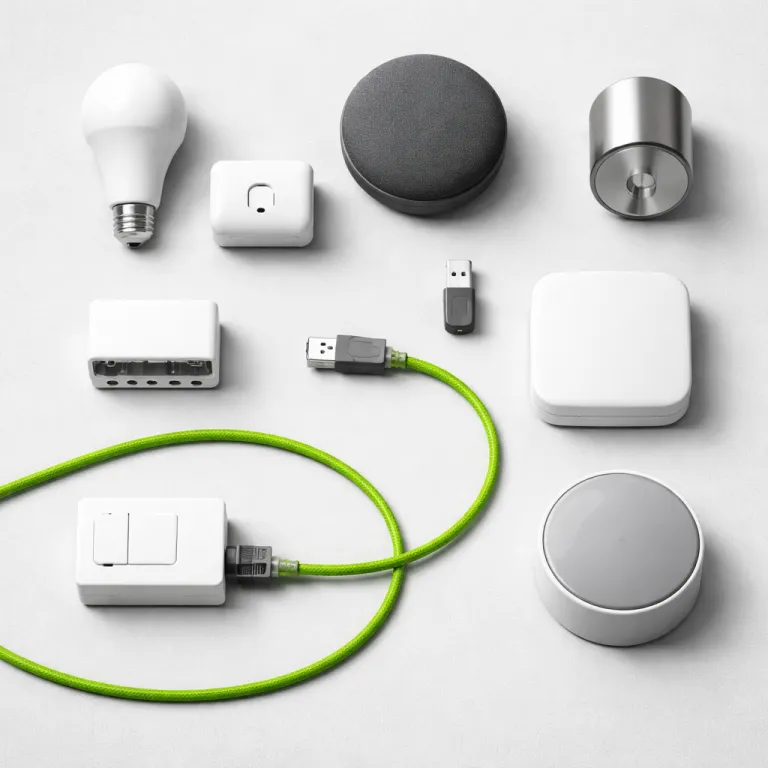
Why a Matter smart home premium ecosystem finally feels coherent
A genuinely Matter smart home premium experience starts with one quiet promise: everything elegant in your home simply works together. When the Matter standard underpins your smart home devices, your lighting, climate, shading, and audio stop behaving like rival brands and start acting like a single well trained équipe. That shift matters more in a luxury home where the price of frustration is not just financial but aesthetic, because a glitchy app or stubborn switch ruins the calm you paid to curate.
At its core, Matter is an open connectivity standard from the Connectivity Standards Alliance (CSA) that lets certified products from Apple, Google, Amazon, Samsung, and others speak a common language over IP. A Matter smart ecosystem means your Amazon Echo, Apple Home hubs, and Google Home speakers can all control the same Matter devices without awkward workarounds or vendor lock in, which finally makes premium home automation feel like infrastructure rather than a hobby. For affluent owners used to commissioning custom systems, this shared layer quietly lowers long term cost by reducing bespoke integrations that break whenever one product line changes.
The most interesting shift is psychological, not technical, because a Matter compatible smart home feels less like a gadget collection and more like a considered interior project. You can choose a sculptural table lamp, a discreet smart switch, or architectural smart light strips based on design and materials first, then check that they are Matter devices second. When border router support is built into your existing hubs, enabled devices join the network with minimal ceremony, and the technology recedes into the background where true luxury prefers it to stay.
How Matter reshapes luxury control, from voice to tactile interfaces
Voice control used to be the noisy guest in an otherwise quiet room, but a Matter smart home premium setup lets it become a discreet concierge. When Matter smart standards unify your enabled devices, Alexa, Google Assistant, and Siri on Apple Home no longer compete for territory, they simply offer different accents on the same service. That means your Amazon Echo in the kitchen, a Google Home in the study, and a HomePod near the bedroom lamp can all control the same smart home scenes without you remembering which assistant owns which product.
In practice, this matters most when you layer voice with tactile luxury controls, because no one wants to shout at a speaker during a dinner party. High end keypads from brands like Lutron Palladiom or Control4 can coexist with Matter devices such as smart light bulbs, a Govee ambient table lamp, or a designer smart switch that talks to your border router behind the scenes. You still get the satisfying click of a machined metal switch while the app voice commands remain available for complex scenes, like lowering shades, dimming light bulbs, and adjusting music with a single phrase.
For security and access, a Matter smart home premium installation pairs well with curated services such as smart camera and garage door opener integration that respect architecture. Those systems can sit alongside devices Amazon sells, bespoke gate controllers, and certified locks, all controlled through your preferred assistant without juggling multiple logins. The result is a home automation environment where work, leisure, and arrival rituals feel choreographed rather than cobbled together from mismatched products.
The hidden economics of a Matter smart home premium build
On paper, a fully automated luxury home can run from roughly 10 000 to well beyond 50 000 euros, yet the more interesting number is the lifetime cost of integration. Traditional proprietary smart home products often lock you into one vendor, so every new lamp, switch, or sensor requires a specialist visit and another invoice. With Matter devices, the certified layer reduces those hidden costs because a new product that supports Matter Thread or Wi Fi can usually join your existing home automation fabric without rewiring your digital life.
Consider lighting as a concrete example where design and budget intersect in a Matter smart home premium project. You might specify artisan fixtures in the dining room, then use smart light bulbs from a brand like Govee in secondary spaces, while a sculpted table lamp in the library hides a Matter compatible module that talks to your border router. All of these devices, including more mainstream devices Amazon promotes, can be controlled through one app voice interface or through Apple Home, Google Home, and Amazon Echo simultaneously, which means you are paying for aesthetics and performance rather than duplicated control systems.
The same logic applies in the kitchen, where premium hood insert technology increasingly ties into the broader smart home narrative. A high end ventilation system, like those discussed in this guide to elevating kitchen design with integrated hoods, can sit alongside Matter smart sensors that monitor air quality and trigger scenes. Over time, the price you pay for a Matter smart home premium ecosystem is offset by the freedom to swap individual products as your taste evolves, without tearing out the underlying control backbone.
From drones to dimmers, what unified luxury tech actually feels like
Once you live with a Matter smart home premium setup, you start expecting the same quiet coherence from every other luxury gadget you own. The way your smart home devices coordinate lighting, climate, and access sets a benchmark for how a professional grade drone or a high end audio system should integrate into your daily rituals. That is why guides to professional grade luxury drones now talk about app ecosystems and automation hooks in the same breath as sensors and optics.
In a well executed Matter smart environment, the transition from arriving home to settling in becomes a single fluid gesture. A smart switch near the entrance can trigger a scene where the hallway lamp glows at 30 percent, light bulbs in the living room shift to warm white, and your preferred assistant quietly announces any missed deliveries through the nearest Amazon Echo or Google Home speaker. Because the system is controlled through a shared Matter layer, you can adjust that ritual from any app voice interface, whether you reach for Apple Home on your phone or speak to Google Assistant in the kitchen.
This coherence also changes how you evaluate new products, because you start asking how each product will work with the rest of your home rather than chasing isolated features. A new table lamp is judged not only on its marble base and linen shade but on whether it is Matter compatible, supports Matter Thread for reliability, and plays nicely with Google SmartThings or other hubs you already own. Luxury, in this context, is not the number of enabled devices you accumulate but the calm, predictable way they behave together when the day finally slows down.
Design first, protocol second: curating a Matter smart home premium interior
For design literate owners, the most liberating aspect of a Matter smart home premium project is the ability to choose objects for their form, then quietly ensure they speak the right digital language. You can specify a bronze wall lamp from a boutique maker, pair it with hidden smart light modules, and still have it controlled by Apple Home, Google Home, or an Amazon Echo without visible compromise. Matter smart compatibility becomes a checklist item, not a design constraint, which is a subtle but profound shift for high end interiors.
In living spaces, this means mixing statement pieces with almost invisible infrastructure, so the technology supports the architecture rather than shouting over it. A slim smart switch in a finish that matches your hardware can sit beside a more traditional dimmer, while Matter devices behind the scenes ensure both respond to the same scenes and schedules. Because the border router role is often handled by hubs you already own, such as a smart speaker or a dedicated controller, you avoid the clutter of extra boxes and blinking lights that used to betray even the most carefully planned smart home.
Bedrooms and studies benefit from the same philosophy, where comfort and quiet take precedence over spectacle. A single table lamp with a Matter compatible bulb, a few carefully chosen enabled devices like motorized shades, and a restrained use of app voice control can create a space that feels analog at first glance yet responds instantly when you need it. In the end, the real luxury of a Matter smart home premium interior is not the specification sheet but the way the room feels when you sit down, exhale, and everything simply responds.
Key statistics on Matter smart home premium adoption
- Matter 1.3 is backed by Apple, Google, Amazon, and Samsung through the Connectivity Standards Alliance, with industry projections from the CSA and major analysts pointing toward hundreds of millions of compatible devices within a few years as more categories gain support.
- The ultra luxury home automation market is valued in the tens of billions of euros, with steady annual growth expected over the next decade as standards based ecosystems replace proprietary platforms and integrators shift toward Matter centric designs.
- Comprehensive smart home installations in high end properties typically range from about 10 000 to more than 50 000 euros, depending on scope and customization, with Matter enabled projects often reallocating budget from protocol translation hardware to design and commissioning.
- Unified standards such as Matter significantly reduce long term integration costs by minimizing vendor lock in and simplifying device onboarding across Wi Fi and Thread networks, especially as Matter 1.3 expands support for appliances, energy management, and richer scene control.
Frequently asked questions about Matter smart home premium ecosystems
Is a Matter smart home premium setup worth the investment for an already automated house ?
If you already have a sophisticated system, adopting Matter is less about replacing everything and more about future proofing. You can keep existing wired infrastructure while gradually adding Matter devices, which reduces reliance on proprietary bridges and custom code. Over time, this hybrid approach lowers maintenance costs and makes it easier to integrate new products without calling an integrator for every change.
How does Matter change the way voice assistants work together in a luxury home ?
Matter allows different voice assistants to control the same smart home devices, so Alexa, Google Assistant, and Siri can coexist without territorial conflicts. You might use an Amazon Echo in one room and a HomePod in another, yet both can adjust the same lights or shades. This flexibility lets you choose assistants based on sound quality, design, or privacy preferences rather than compatibility alone.
Do I still need a professional integrator for a Matter smart home premium project ?
Matter simplifies device onboarding, but a luxury level installation still benefits from professional design and commissioning. An experienced integrator can coordinate lighting design, network planning, and control interfaces so the home feels cohesive rather than piecemeal. The difference is that they spend more time on experience and aesthetics, and less time wrestling with incompatible protocols.
Will Matter make my existing smart home devices obsolete ?
Most existing devices will continue to work as they do today, even if they never gain Matter support. The standard mainly affects how new products join your ecosystem and how easily they interoperate. Many brands are releasing firmware updates or new models that are Matter compatible, so you can upgrade gradually instead of replacing everything at once.
How should I prioritize upgrades when starting a Matter smart home premium journey ?
Begin with categories that shape daily experience most strongly, such as lighting, access, and climate. Replacing key switches, primary light bulbs, and a few central hubs with Matter compatible options gives you an immediate sense of the new coherence. From there, you can extend the ecosystem to secondary rooms, outdoor spaces, and more specialized devices as your needs and tastes evolve.