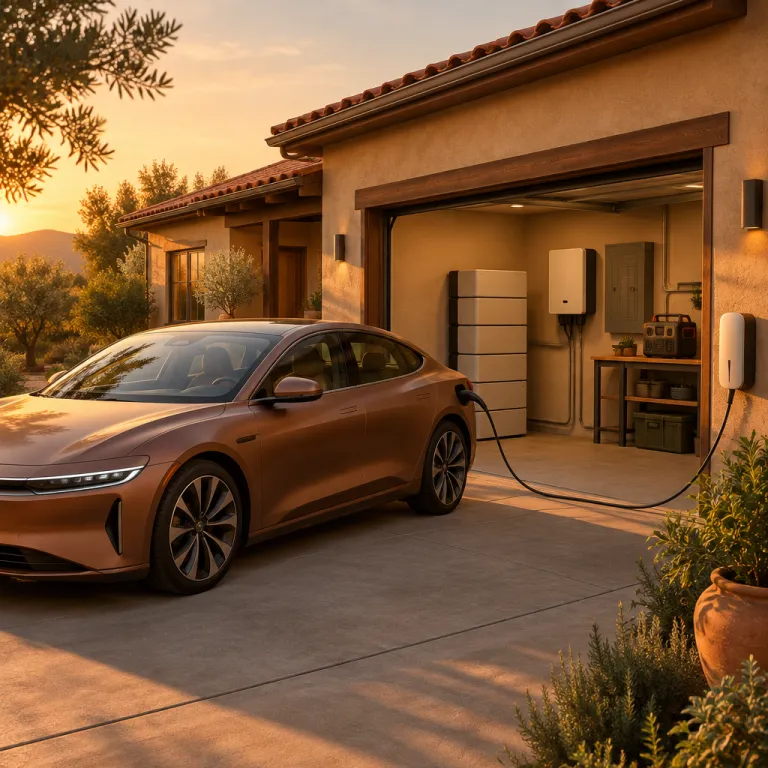
From fast charging to bidirectional thinking in luxury EVs
Range and fast charging used to define every luxury electric car conversation. Today, bidirectional charging luxury EV V2H capability quietly reshapes what a premium vehicle is supposed to do, turning an elegant car into a mobile energy asset. Once you have lived with an electric car that can send power back through a bidirectional charger, it becomes hard to accept a six figure vehicle that only pulls electricity from the grid.
Most affluent buyers now know the difference between slow and rapid charging, yet very few can clearly explain the gap between V2L, V2H, and V2G. V2L, or vehicle to load, lets the battery pack feed external charging for individual devices through a simple plug or charging port, while V2H, or vehicle to home, uses bidirectional charging to run your entire residence through a dedicated transfer system. V2G, or vehicle to grid, goes one step further by letting compatible electric vehicles send electricity back into the wider electricity grid, effectively turning your car into a controllable vehicle load within the broader vehicle grid.
Luxury brands now face a new expectation from clients who think in terms of infrastructure, not just performance. A premium electric car that is capable of powering your house during an outage, or arbitraging electricity prices, becomes part of your long term wealth strategy rather than just another depreciating vehicle. When you evaluate electric cars, you are no longer only comparing acceleration and leather quality, you are comparing types of bidirectional architectures, bidirectional chargers, and how gracefully the car, the charger, and your home energy system will support each other over a decade.
How V2H actually works when your EV powers the house
Vehicle to home sounds simple, but real bidirectional charging for V2H is a carefully choreographed system. The electric vehicle, the bidirectional charger, the home transfer switch, and the electricity grid must all coordinate so that power flows safely from the battery pack into your domestic circuits without back feeding the street. A luxury EV that is technically capable of V2H but sold without a certified gateway, proper support, and a compatible charger will not legally power your house, no matter how advanced the car looks.
GM’s Ultium based EVs such as the Cadillac Lyriq integrate bidirectional hardware through the GM Energy ecosystem, while Ford’s F 150 Lightning pairs its large battery with the Intelligent Backup Power system, which uses a dedicated transfer setup to isolate the home from the grid during outages. That contrast matters for a buyer who cares about how a long range electric truck or electric car behaves as a home battery, because V2L through a simple external charging socket is not the same as full V2H. When you read about a vehicle grid ready model, always ask whether the bidirectional charging is limited to a portable outlet for devices or whether it can truly handle whole home vehicle load through a professionally installed charging port and gateway.
On the road, the same hardware that enables V2H often shapes how the car handles ultra fast charging and long distance touring. If you are planning grand touring across the United States or even to regions like Australia, the way your EV manages power flow in both directions will influence how it behaves at high power DC chargers and at home. For a deeper sense of how a refined EV feels on long journeys while managing serious energy throughput, it is worth reading about the real world experience of 350 kW charging on luxury EV road trips, then mapping those insights onto models that also offer robust V2H.
The financial logic of using a luxury EV as an energy asset
For a high net worth buyer, the most interesting part of bidirectional charging luxury EV V2H is not the emergency backup story, it is the quiet financial calculus. A large battery pack sitting in your garage is stranded capital if it only ever accepts charging from the grid, but once that same battery can push electricity back into your home, it becomes a flexible energy instrument. Your electric vehicles start to look less like cars and more like mobile storage nodes that can smooth your electricity bill and hedge against volatility in the electricity grid.
Think of a flagship electric car with a 100 kWh or larger battery as a design object that also happens to be a serious energy reservoir. When paired with rooftop solar and a smart bidirectional charger, that vehicle can charge during off peak hours or sunny periods, then feed your home during expensive evening peaks, reducing long term energy costs while maintaining comfort. In markets such as parts of Australia or California, where dynamic tariffs and grid instability are common, a well specified V2H capable EV can meaningfully change how you structure your home infrastructure investments, just as bio based materials are changing how you think about sustainable luxury interiors in areas like bio based luxury design.
There is also a subtle portfolio effect when your garage contains multiple electric cars with bidirectional charging support. Two or three compatible EVs, each capable of V2H, can collectively cover longer outages, support critical devices, and even allow you to size a smaller stationary battery because the vehicle load can be orchestrated intelligently. For the affluent buyer who already invests in art, architecture, and technology, the next logical step is to treat electric vehicles as part of a diversified energy strategy rather than isolated transport objects.
The messy reality of standards, ecosystems, and battery wear
Under the elegant surface of every luxury EV with bidirectional charging lies a tangle of standards and ecosystem decisions. Not every electric car with a DC fast charging port is capable of V2H, and not every charger marketed as bidirectional will integrate cleanly with your existing home energy system. Some brands lock V2H behind proprietary hardware, while others limit you to specific utilities or narrow vehicle grid programs that may not align with how you actually use your vehicles.
Battery wear is another concern that sophisticated buyers rightly raise when they hear about frequent charging and discharging for home use. Modern EV battery chemistry and thermal management are designed to handle thousands of cycles, and controlled V2H use at moderate power levels is generally less stressful than repeated high power DC fast charging. Still, if you plan to use your electric vehicles as daily energy shuttles, you should ask the manufacturer for explicit guidance on how V2H affects the warranty on the battery pack, the bidirectional charger, and the rest of the high voltage system.
Fragmentation also appears in the way different markets handle regulations and incentives for bidirectional chargers and V2H capable EVs. A setup that is fully approved in Australia may not yet be recognized in certain U.S. states, and the same electric vehicles can have different software limitations depending on local grid rules. This is where a thoughtful buyer treats the EV, the home charger, the electricity provider, and even adjacent technologies like wireless solar backup camera systems as one integrated ecosystem, rather than a pile of disconnected gadgets.
What to ask before you sign for a bidirectional luxury EV
Walking into a showroom for a six figure EV, you should be armed with sharper questions than range and acceleration. Ask first whether the specific trim of the electric car you are considering is truly capable of bidirectional charging luxury EV V2H, or whether the hardware is present but disabled pending future software or regulatory changes. Clarify whether the brand offers a complete V2H package, including a certified bidirectional charger, transfer switch, and ongoing support, or whether you will be left to assemble the system yourself with third party installers.
Then move to the practicalities of how the vehicle will behave as part of your domestic energy architecture. Request clear numbers on maximum V2H power output, how long the car can sustain that power for typical household loads, and how the system prioritizes critical devices during an outage. Insist on understanding how the EV will coordinate with rooftop solar, existing home batteries if you have them, and any vehicle grid or demand response programs your electricity provider offers.
Finally, interrogate the ownership experience over the full life of the vehicle. Ask how software updates might expand or restrict V2H functions, how the warranty treats heavy V2H use, and what happens if you change homes or electricity providers. A luxury EV that elegantly integrates charging, bidirectional power flow, and whole home support is not just a car, it is a long term infrastructure decision that should be evaluated with the same rigor you apply to architecture, art, and other enduring assets.
FAQ
How is V2H different from V2L and V2G in a luxury EV ?
V2L, or vehicle to load, lets your EV power individual devices through an outlet or dedicated plug, usually at modest power levels suitable for tools or entertainment equipment. V2H, or vehicle to home, uses a bidirectional charger and transfer switch to feed your entire house safely, isolating it from the grid during outages. V2G, or vehicle to grid, goes further by allowing your electric vehicles to send electricity back into the public electricity grid under utility control, turning your car into a managed vehicle load within a broader vehicle grid program.
Will using V2H wear out my EV battery faster ?
Any additional charging and discharging contributes to battery wear, but controlled V2H use at moderate power is typically less stressful than repeated high power DC fast charging. Modern luxury EVs are engineered with robust battery management systems that keep the battery pack within safe temperature and state of charge windows during bidirectional charging. For peace of mind, you should review the manufacturer’s warranty terms and ask specifically how frequent V2H use is treated for the traction battery and related components.
Do all luxury electric cars with fast charging support V2H ?
Not every electric car that supports rapid charging is capable of full V2H, even if it has a modern DC charging port. Some models only offer V2L through external charging sockets, which can power devices but not an entire home, while others require specific bidirectional chargers and home gateways that may not yet be available in all regions. Before you buy, confirm that the exact configuration you are considering has certified V2H support, compatible hardware, and a clear installation path for your property.
Can I use multiple EVs together to power my house ?
Using several electric vehicles together for home backup is technically possible, but it depends on how your energy system is designed. Some advanced home energy management platforms can coordinate multiple V2H capable EVs and stationary batteries, treating each car as a separate battery pack that contributes to overall resilience. You will need an installer who understands both EV charging and whole home energy systems to design a setup that safely orchestrates multiple vehicle loads without overcomplicating daily use.
Is V2H worth prioritizing over other luxury EV features ?
For many affluent buyers, V2H is now as strategically important as range or interior design, because it turns a luxury EV into part of a broader energy and resilience plan. If you live in an area with grid instability, high electricity prices, or frequent storms, the ability to power your home from your car can be more valuable than marginal performance upgrades. Even in more stable regions, V2H capable electric cars offer a unique blend of sustainability, practicality, and long term financial logic that aligns well with a thoughtful, infrastructure minded approach to luxury technology.