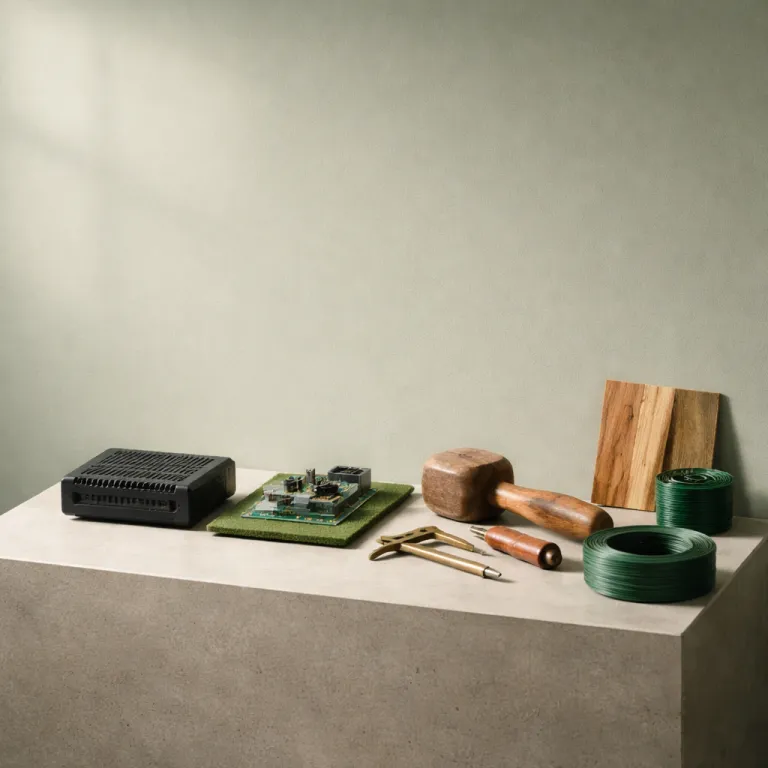
AI, materials and the new language of collectible devices
Milan Design Week technology now treats circuitry as a medium for art. Across milan and the wider milano design district, the 64th Salone del Mobile in april presents AI driven objects where interface, architecture design and material research merge into one coherent project. For luxury tech collectors, this design festival turns every connected device into a potential site specific installation rather than a disposable tool.
At Rho Fiera and Fiera Milano, the dedicated AI Innovation Lab shows how generative tools reshape design workflows without flattening authorship. Curated teams demonstrate how neural networks propose chassis geometries, lighting patterns and acoustic chambers that human designers then refine, creating a new courtesy between machine intelligence and craft expertise. The result is a wave of prototypes that feel closer to limited edition art pieces than to mass market mobile milano hardware.
Materially’s exhibition “The New State of Materials” anchors this shift with bio based composites, translucent ceramics and recycled alloys tailored for wearable and audio tech. Here, Milan Design Week technology is not about thinner screens but about how a carbon negative shell or a plant based textile strap changes the emotional weight of a device on your wrist. Visitors move through the space like a salone audience in a contemporary palazzo, reading spec sheets the way they would wall labels in a museum of design love.
From salone del Mobile to fuorisalone: tech as architecture for the hand
Across the salone del Mobile halls, EuroCucina quietly becomes a laboratory for embedded interfaces and responsive surfaces. Induction slabs hide under veined stone, while AI assisted lighting tracks ingredients on the counter, turning kitchen architecture into a calm, luminous operating system. Milan design insiders read these installations as blueprints for future luxury tech gadgets that disappear into architecture design rather than shouting from it.
Outside Rho Fiera, the fuorisalone events scattered through brera design district, Isola Design and Superstudio Design in Tortona extend this conversation into the city fabric. One site specific installation might wrap a palazzo courtyard in responsive mesh that maps visitors’ movement, while another transforms a former military hospital into a sound reactive corridor that nods to the Baggio military past of the area. In each case, Milan Design Week technology uses light, sound and data as structural elements, not decorative afterthoughts.
Brands fluent in both fashion and circuitry lean into this hybrid language. Louis Vuitton presents portable audio objects that sit between trunk making and sculpture, while Prada Frames frames research on interfaces as cultural commentary rather than pure product marketing. Even when kelly wearstler appears in conversations about interiors, her influence on layered textures and brutalist silhouettes is visible in concept speakers and charging totems that feel like small pieces of collectible architecture for the desk.
Luxury gadgets as curated art: from mobile rituals to collectible runs
For the design conscious collector, the most telling Milan Design Week technology experiments are not the loudest screens but the quietest rituals. Google’s collaboration with ECAL, the University of Art and Design Lausanne, focuses on mobile concepts that study how fingers rest, swipe and pause, then translate those gestures into new forms and weights. These projects treat the smartphone as a daily art object, a pocket sized installation whose choreography matters as much as its camera module.
Across milano, smaller galleries and temporary spaces host curated exhibitions where limited run devices are presented like jewelry. One palazzo room might stage a single wireless speaker on a plinth, its chassis milled from reclaimed aluminium showcased under museum lighting, while another space in a design district townhouse aligns a row of concept wearables like a line of sculptures. Visitors move slowly, guided by courtesy minded docents who speak as comfortably about impedance curves as about Italian art history.
This year’s Milan Design Week technology narrative makes one thing clear for high end buyers. The future of luxury tech lies in projects where salone rigor meets fuorisalone experimentation, where mobile milano objects are conceived as architecture for the body and the room. The most compelling gadgets now feel less like upgrades and more like permanent additions to a personal collection, as considered as a chair by a master or a photograph on the wall.
Key figures shaping Milan’s luxury tech design moment
- The 64th edition of Salone del Mobile hosts thousands of exhibitors across Rho Fiera and Fiera Milano, with EuroCucina acting as a central hub for technology integrated kitchen architecture.
- Materially’s “The New State of Materials” brings together international innovators in bio based and circular materials, many of which are being tested for use in wearables and connected home devices.
- The AI Innovation Lab at Salone del Mobile focuses on artificial intelligence applied to design workflows, from early concept generation to manufacturing optimization.
- Google and ECAL, the University of Art and Design Lausanne, present mobile focused concepts that examine how device form factors shape daily gestures and rituals.
Questions luxury tech collectors are asking about Milan’s design scene
How does Milan Design Week technology influence the look and feel of future gadgets ?
Milan Design Week technology influences future gadgets by treating them as part of a broader architecture design ecosystem rather than isolated objects. Prototypes at Salone del Mobile and fuorisalone show devices embedded into surfaces, textiles and furniture, which encourages brands to prioritize materials, tactility and spatial presence over raw specifications. For collectors, this means upcoming products are likely to feel more like integrated design pieces and less like standalone electronics.
Why should a luxury tech collector pay attention to Salone del Mobile and fuorisalone events ?
Salone del Mobile and the surrounding fuorisalone events function as an early signal system for where high end technology is heading. While consumer electronics fairs focus on near term launches, Milan’s design week reveals longer term thinking about form, materials and cultural narratives. Attending or closely following these exhibitions helps collectors identify which brands treat technology as art and which simply iterate on existing templates.
What role do AI and new materials play in Milan’s luxury tech projects ?
AI in Milan Design Week technology is used as a creative partner that proposes structures, patterns and interactions, which designers then refine through their own sensibility. New materials, from bio based composites to advanced ceramics, allow these AI informed forms to be realized in ways that feel luxurious, durable and sustainable. Together, they enable devices that are both technically advanced and emotionally resonant, aligning with the expectations of design led collectors.
How are fashion and luxury houses shaping the conversation around tech objects in Milan ?
Fashion and luxury houses such as Louis Vuitton and Prada use Milan’s design week to position tech objects within their broader cultural universe. Rather than releasing standard gadgets, they present limited runs, installations and research projects that connect craftsmanship, heritage and interface design. This approach reframes devices as extensions of a brand’s aesthetic language, which appeals strongly to collectors who value coherence across their wardrobes, interiors and technology.
Where in Milan are the most forward looking tech related installations usually found ?
The most forward looking tech related installations typically appear in a mix of official Salone del Mobile halls at Rho Fiera and satellite spaces across the city. Brera design district, Isola Design and Superstudio Design in Tortona consistently host experimental projects that blur boundaries between art, product and architecture. Historic palazzi and unconventional venues, including repurposed industrial sites and former medical or military buildings, often provide the most memorable backdrops for these site specific works.
References
- ArchDaily
- Designboom
- Salone del Mobile Milano official communications