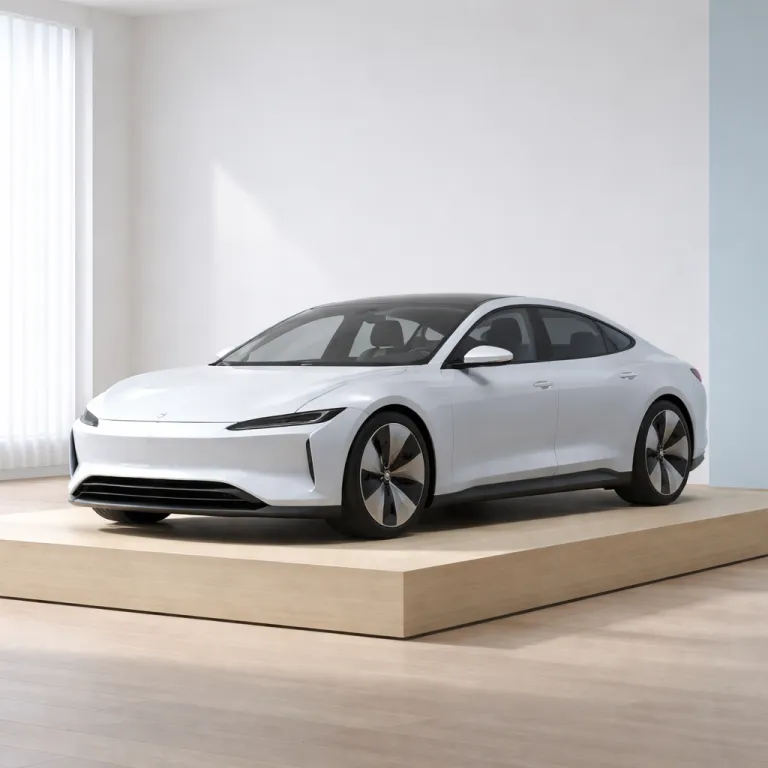
Mercedes EQS range as the new luxury baseline
The latest Mercedes EQS range pushes electric luxury into a different psychological space. With an internally measured WLTP figure of up to 926 km (according to preliminary Mercedes-Benz data for the updated EQS 450+ with the larger battery, pending final type approval and market-specific homologation), this flagship EV reframes what usable range means for daily life and long distance touring. For affluent drivers used to S-Class refinement, the shift from combustion to electric now feels like a gain, not a compromise.
Mercedes-Benz has reworked more than a quarter of the EQS vehicle hardware, a change outlined in the brand’s 2024 technical briefing on the facelifted model and subsequent engineering presentations. The company pairs new in-house drive units with a two-speed transmission on the rear axle, allowing the electric motor to operate in an efficient rev band at both urban and sustained autobahn velocities. That engineering move matters more than any headline range number, because it stabilises energy use when the car is heavy with passengers and luggage and running at high speeds. In practice, and based on internal route simulations under WLTP-derived assumptions, the extended range means the typical owner can drive from Paris to Milan with a single short charging stop, rather than planning every leg around infrastructure; Mercedes’ own indicative long-haul consumption scenarios assume roughly 18–20 kWh/100 km at a steady 120–130 km/h in mild conditions.
The Mercedes EQS 2026 range story is therefore less about electric cars catching up and more about Mercedes-Benz quietly surpassing its own combustion benchmarks. From the driver’s seat, carefully tuned cabin acoustics, the Air Balance fragrance and filtration system and the near-silent electric powertrain combine to create a different kind of long-haul calm. For buyers cross-shopping large luxury sedans and an electric SUV or two, the EQS now feels like the default choice rather than the experiment.
Battery, charging and steer by wire as real world differentiators
The leap in the Mercedes EQS 2026 range comes from cell chemistry and system voltage, not marketing spin. The latest lithium-ion battery pack, with a usable capacity quoted internally at around 118 kWh (gross capacity slightly higher, according to Mercedes-Benz engineering data shared in pre-launch briefings) and higher energy density than the earlier 108 kWh unit, is paired with an 800 V electrical architecture that allows the electric vehicle to recover hundreds of kilometres of range in a short high-power charging session, provided the station can deliver the current. That means the starting Mercedes ownership experience shifts from planning around chargers to simply topping up during natural breaks, especially in regions where EPA-rated figures are already conservative compared with WLTP.
On a suitable DC fast charger, Mercedes’ internal charging-curve simulations and early pre-production tests indicate that the EQS can move from 10 to 80 % state of charge in roughly 25–30 minutes, with peak charging power well above 200 kW under ideal conditions (battery preconditioned, ambient temperature around 20 °C, high-output charger). A simplified view of the indicative charging profile looks like this:
| State of charge | Approx. charging power | Typical time window* |
|---|---|---|
| 10–40 % | 200–250 kW | ~10 minutes |
| 40–80 % | 130–180 kW | ~15–20 minutes |
| 80–100 % | Below 80 kW | ~20 minutes (typically skipped on trips) |
*These figures are indicative estimates based on Mercedes-Benz development data rather than final homologation results, and they can vary with charger model, grid supply, temperature and driving history. They nevertheless illustrate how the 800 V system shortens real-world stop durations compared with earlier 400 V based Mercedes electric cars.
Mercedes engineers have paired the new pack with steer-by-wire technology, which decouples the steering wheel from the front axle mechanically while preserving feedback through software and electric actuators. The system is designed with multiple layers of redundancy, including backup power supplies and fail-safe control paths, so that steering assistance remains available even if one component fails. At low speeds, the rear axle can turn opposite the fronts to shrink the turning circle, making this large EQS feel closer to a compact Benz GLC in tight city streets. At higher speeds, the system subtly aligns both axles for stability, which long-distance drivers will feel as a planted, almost rail-like character that flatters even tired hands on the steering wheel late at night.
Inside, the Balance Cabin concept extends beyond sound insulation to thermal management and Air Balance filtration, keeping the interior air clean during repeated fast-charging stops on busy motorway corridors. Standard features now include more advanced thermal preconditioning, so the battery reaches its optimal temperature window before you arrive at a high-power charger, protecting both performance and long-term health. For tech-focused buyers who learn Mercedes systems quickly, the interface now surfaces charging forecasts, energy flow diagrams and range predictions with more transparency, which makes the whole electric SUV and sedan line-up feel more trustworthy.
Positioning against rivals and the meaning of excess range
The timing of the expanded Mercedes EQS 2026 range is not accidental, arriving as BMW prepares its refreshed i7 for Auto China with a similar price band. Where the BMW leans into theatre, the EQS leans into restraint, using its extended range and efficient EQS 4MATIC-style all-wheel-drive systems to make long-distance travel feel uneventful. For many buyers used to Mercedes-AMG sedans and large SUVs, that quiet competence will matter more than acceleration numbers.
From a product strategy view, Mercedes-Benz is using this EQS as a halo for its broader electric portfolio, including upcoming electric SUV variants that share much of the charging and battery technology. The brand is also tightening vertical integration, with in-house drive units and transmissions that reduce dependence on suppliers and allow faster iteration of software features and efficiency tweaks. That approach will likely filter down to more accessible models, from the Benz EQS flagship to the more compact Benz GLC electric SUV derivatives, creating a consistent feel across the range.
Practicalities still matter in this segment, and the EQS now addresses them with a more usable cargo capacity and a flatter floor, even as the rear seats remain focused on lounge-like comfort. Depending on specification, curb weight sits in the 2,500–2,700 kg band, yet careful suspension tuning and the low-mounted battery keep body control in check. Top Gear-style performance metrics remain strong, but the real story is how the extended range and refined charging experience change behaviour, turning what was once range anxiety into a quiet confidence. For those tracking the latest news on electric luxury, the EQS now reads less like a tech experiment and more like the new baseline for what a large, long-legged electric vehicle should be before it goes on sale in key markets; Mercedes’ own preliminary figures quote a boot volume in the region of 610–650 litres depending on configuration, which aligns with the car’s role as a long-distance luxury shuttle.
Key figures on the extended Mercedes EQS range
- WLTP-rated range of up to 926 km for the latest long-range variant, representing a major increase over the previous EQS generation and placing the model at the top of the current electric luxury segment for long-distance capability, subject to final certification and market-specific test cycles.
- High-voltage 800 V electrical architecture enabling significantly faster DC charging sessions, reducing typical fast-charge stop durations compared with earlier 400 V based Mercedes electric cars when connected to compatible high-output chargers.
- More than 25 % of vehicle components newly developed or substantially refined for this EQS update, including in-house drive units and a two-speed rear transmission focused on high-speed efficiency and reduced energy consumption, according to Mercedes-Benz engineering briefings.
- Rear axle steering angles increased compared with earlier EQS versions, improving low-speed manoeuvrability and high-speed stability for this large luxury sedan.
- Battery pack energy density improved through updated cell chemistry, allowing the extended Mercedes EQS 2026 range without a proportional increase in vehicle mass or a compromise in ride comfort.
Questions affluent buyers also ask about the Mercedes EQS range
How does the extended Mercedes EQS range change long distance travel ?
The extended Mercedes EQS 2026 range allows most inter-city trips to be completed with either no charging stop or a single short high-power session, depending on driving style, weather and speed. This reduces the need to plan routes obsessively around charging infrastructure, especially in regions with dense fast-charging networks. For many owners, the car now behaves more like a traditional long-range S-Class diesel in practice, but with quieter progress and lower running emissions.
Is the new Mercedes EQS battery technology different from earlier models ?
Yes, the latest EQS uses updated cell chemistry and an 800 V system architecture that together improve both efficiency and charging performance compared with earlier 400 V based versions. The pack offers higher usable energy without a proportional increase in weight, which is crucial for maintaining handling balance and ride comfort. These changes underpin the significant increase in WLTP range while also supporting faster DC charging sessions and more consistent performance during repeated fast charges.
How does steer by wire affect the driving experience in the EQS ?
Steer-by-wire in the Mercedes EQS removes the direct mechanical link between the steering wheel and front axle, replacing it with electronic control and carefully tuned feedback. The system incorporates redundant sensors, control units and power supplies so that steering assistance remains available even if one path fails, and it is calibrated to feel natural rather than artificial. At low speeds, the system can turn the rear wheels opposite the fronts to reduce the turning circle, making the large sedan easier to place in tight spaces. At higher speeds, it coordinates both axles for stability, giving the car a calm, precise feel on motorways and fast country roads.
What is the practical cargo capacity of the Mercedes EQS for daily use ?
The EQS offers a generous boot with a wide opening and a relatively low loading sill, making it suitable for luggage, golf bags or business travel equipment. While exact litres vary by configuration and market, Mercedes-Benz preliminary figures indicate a volume in the 610–650 litre band, and the flat floor enabled by the electric platform helps maximise usable cargo capacity and makes it easier to slide heavy items in and out. For most owners, the space will comfortably handle both family travel and executive airport runs without compromise.
How does the EQS compare with rival electric luxury sedans ?
The extended Mercedes EQS 2026 range places it at or near the top of the segment for long-distance capability, competing directly with models such as the BMW i7 and high-specification versions of the Tesla Model S. Where some rivals emphasise outright acceleration or screen-heavy cabins, the EQS focuses on refinement, efficiency and a cohesive luxury experience. Buyers prioritising quietness, ride comfort and understated technology integration will likely find the EQS more aligned with traditional Mercedes S-Class values, while still benefiting from the latest electric drivetrain advances.