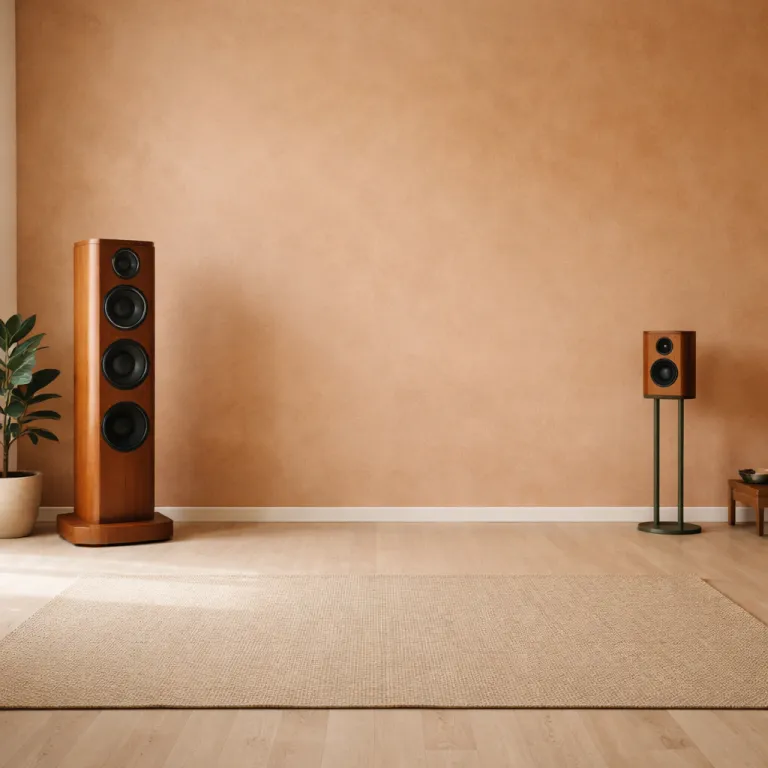
The new extremes of the luxury audio market
The new extremes of the luxury audio market
The luxury audio market premium speakers landscape has split into two starkly different worlds. At one extreme sit objects like Bang & Olufsen’s Beolab 90 Zenith and Monarch editions, which function as both audio equipment and sculptural statements in the global luxury ecosystem. At the other, brands such as Devialet, Sonos and Apple fill the mass premium tier with compact speakers that deliver surprisingly high fidelity sound quality for a far lower price point.
Bang & Olufsen’s Beolab 90 Zenith uses 289 individually anodized aluminium spheres per speaker, crowned with mother of pearl, to turn a high performance audio system into something closer to a contemporary art installation. The Monarch edition replaces the cool metallic aesthetic with rosewood lamellas and ochre aluminium, yet both share the same 8,200 watt amplifier systems and 18 driver architecture that can flood a large room with controlled, high audio precision. At roughly £410,000 per pair and limited to ten sets each according to Bang & Olufsen’s official Beolab 90 special-edition product pages (accessed May 2024), these speakers are designed for an international collector who treats sound systems the way others treat rare sculptures.
On the other side of the market, Devialet’s Phantom Ultimate 108 dB starts at a far more accessible $1,900 and still offers 1,100 watts of power, deep bass down to 14 hertz and a compact form that can fill a living room with surprisingly quality sound. Opera de Paris editions of this audio speaker line add 22 karat gold leaf by Ateliers Gohard, details confirmed in Devialet’s official Phantom I 108 dB Opera de Paris specifications (2023), proving that even at this lower price point, design and craftsmanship still matter to the discerning consumer. Yet when you map the global audio market from these Phantoms up to the Beolab 90 Zenith and Monarch, you notice a hollowing out of the middle where traditional premium audio once thrived, a pattern echoed in dealer interviews and second hand listings that show slower turnover and heavier discounting for mid tier floorstanders launched after 2018.
Where did the $10K–$50K sweet spot go ?
The segment between roughly $10,000 and $50,000 per pair of speakers used to define the culture of high fidelity listening rooms. This was where brands like Wilson Audio, Bowers & Wilkins and Focal Grande Utopia built reputations for high performance audio speakers that balanced artisanal build quality with a still realistic price point for serious enthusiasts. Today that middle tier is being squeezed from above by ultra limited art pieces and from below by streaming optimised sound systems that deliver more than enough sound quality for most listeners.
Wilson Audio still produces reference level audio speakers that can anchor a dedicated theater room with carefully planned theater seating and multi channel amplifier systems, but their natural habitat is increasingly the top one percent of the consumer base. Bowers & Wilkins continues to refine its 800 Series, often seen in international recording studios, yet many aspirational buyers who once stretched for these speakers now settle for smaller premium audio systems that integrate seamlessly with televisions and streaming boxes. As one long time listener quoted in an ecoustics market analysis (2023) put it, “I used to dream of new Wilsons; now a used pair and a great streaming amp feel like the smarter upgrade.” The result is a shrinking market size for that traditional audiophile middle class, even as the overall premium audio market grows from about $10.7 billion to $11.8 billion in a single year according to a 2023 premium audio market report by Future Market Insights.
Acoustic treatment and accessories tell the same story, where premium audio diffuser panels once reserved for dedicated listening rooms now appear in more affordable, design forward products aimed at broader audiences. A detailed guide to elevating your sound experience with premium diffuser panels illustrates how even mid range spaces can now achieve quality sound without investing in ultra expensive speakers. As the tools to optimise room acoustics, amplifier channel configuration and multi speaker sound systems become cheaper and more accessible, and as resale platforms show robust demand for used Wilson Audio and Bowers & Wilkins models at 40–60 percent below original list price, the justification for spending $20,000 on a pair of brand new speakers alone becomes harder for many consumers.
Art objects at the top, mass excellence at the bottom
The Beolab 90 Zenith and Monarch editions crystallise a shift where the most expensive speakers are no longer just about high fidelity audio but about narrative, rarity and visual drama. Each speaker becomes a curated object that signals taste in the same way a limited edition watch or a bespoke piece of furniture does in a carefully composed room. When a pair costs more than many apartments, the conversation moves from sound systems and amplifier channels to provenance, design collaborations and long term cultural value.
Devialet plays a different game, using radical industrial design and advanced digital signal processing to deliver high performance from compact audio systems that sit comfortably on a console or shelf. The Phantom Ultimate can operate as a single speaker or as part of a stereo pair, and in both configurations it aims to fill domestic spaces with immersive music that flatters compressed streaming formats. For many global consumers, this level of sound quality, combined with app based control and multi room audio integration, feels like the rational end point of premium audio, especially when Devialet Phantom specs rival older, bulkier amplifiers and subwoofers in real world listening tests.
Between these poles, the traditional luxury audio market premium speakers segment struggles to articulate why a $25,000 floorstanding speaker is meaningfully better than a $3,800 Phantom or a well tuned Wilson Audio or Bowers & Wilkins system bought second hand. Mounting options such as premium speaker hanging brackets and discreet wall mounts let design conscious owners integrate smaller audio speakers into refined interiors without the visual bulk of grande Utopia scale cabinets. As more international brands focus on compact, high audio solutions that respect architecture and furniture, and as Beolab 90 price levels drift into ultra luxury territory, the old logic of giant towers dominating a living room feels increasingly out of step with contemporary lifestyles.
The democratization paradox and the future audiophile community
Streaming platforms, better codecs and smarter audio equipment have democratised access to quality sound in a way that would have seemed impossible a decade ago. A design led apartment can now host a modest yet high fidelity setup built around a turntable with a built in phono preamp, as outlined in this guide to experiencing high fidelity sound with an integrated preamp. When even entry level systems can deliver convincing stereo imaging and respectable dynamics, the cultural role of the mid tier audiophile system inevitably changes.
For the luxury tech gadgets passionate audience, the question becomes whether to treat speakers as tools for music or as collectible art objects that happen to produce sound. The Beolab 90 Zenith and Monarch, the Focal Grande Utopia and certain Wilson Audio flagships clearly belong to the latter category, where the market report metrics of market size and channel share matter less than the emotional impact of owning something vanishingly rare. At the same time, brands like Sonos and Apple quietly fill millions of rooms with multi room audio systems that normalise good enough sound quality for a broad consumer base.
This bifurcation risks hollowing out the audiophile community that once gathered around shared reference points in the $10,000 to $50,000 range, where enthusiasts compared amplifier channel topologies, debated theater seating layouts and traded market report data on new audio speakers. As the luxury audio market premium speakers category stretches from half million dollar art pieces to sub $2,000 streaming hubs, the middle class of listeners who once saved for Wilson Audio, Bowers & Wilkins or Focal Grande systems may increasingly turn to either used gear or compact, integrated sound systems. The future of high fidelity culture may depend on whether brands can reimagine that middle ground not as a compromise, but as a place where design, performance and price point align for a new generation of global, design conscious collectors.
Key figures reshaping the premium audio landscape
- The premium audio market is projected to grow from about $10.7 billion to $11.8 billion in a single year, indicating overall expansion even as the traditional mid tier segment contracts (ecoustics, market analysis based on Future Market Insights 2023 industry research).
- Bang & Olufsen’s Beolab 90 Zenith and Monarch editions are each limited to just ten pairs worldwide, positioning these speakers closer to contemporary art pieces than to conventional audio equipment (Bang & Olufsen, Beolab 90 Zenith and Monarch official product pages, accessed May 2024).
- Devialet’s Phantom Ultimate 108 dB delivers 1,100 watts of power and bass extension down to 14 hertz at a starting price of $1,900, illustrating how high performance sound systems have become accessible at far lower price points than traditional flagship speakers (Devialet, Phantom I 108 dB Opera de Paris product specifications, 2023).
- The Beolab 90 platform uses 18 drivers and up to 8,200 watts of amplification per speaker, demonstrating how extreme engineering and amplifier channel density are increasingly reserved for ultra high end, limited edition systems (Bang & Olufsen, Beolab 90 technical documentation, 2024 update).