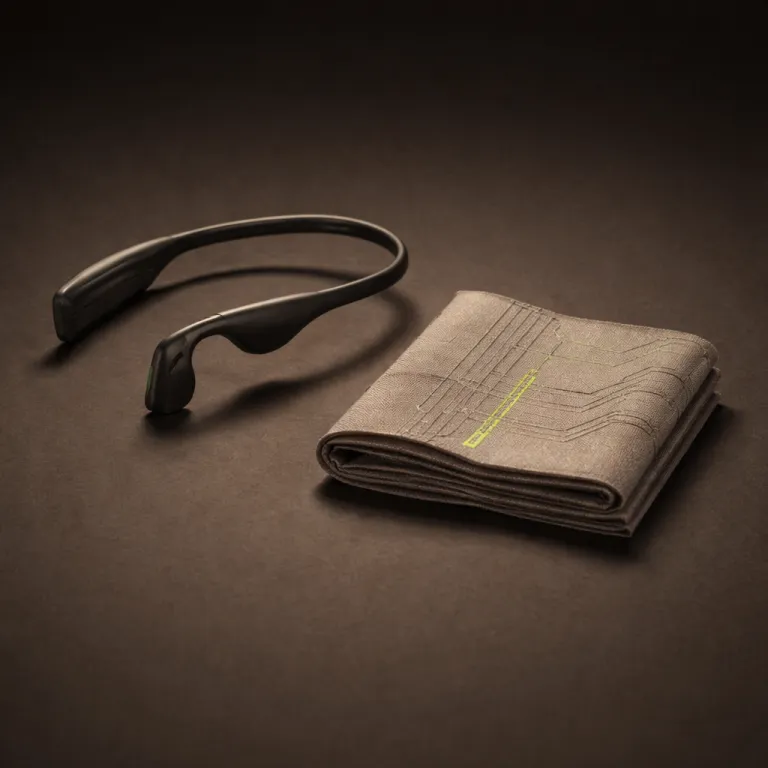
Why invisibility is becoming the new luxury signal
Invisible wearable technology in 2026 is less about spectacle and more about intent. For affluent users who already own multiple wearable devices, the next upgrade is a health tracker that vanishes into daily life while still streaming biometric data in real time. The status symbol shifts from a visible smartwatch to silent, medical‑grade wellness systems that physicians can read but strangers cannot see.
This shift tracks broader wellness and digital health trends where continuous health monitoring matters more than screen size. Luxury clients now expect clinical‑style sensors for heart rate, blood pressure, sleep and fitness tracking, yet they want these capabilities woven into rings, textiles and open‑ear audio rather than another rectangular fitness tracker on the wrist. The most interesting discreet wearables in this market are defined by design restraint, multi‑day battery life and a user experience that respects privacy concerns instead of broadcasting metrics on a glowing display.
For this audience, a smart ring that looks like a polished platinum band but functions as a full health monitor is more compelling than diamond‑studded smartwatches. Invisible wearable technology in 2026 reframes value around discretion, accurate sensor data and seamless integration with physicians rather than around obvious branding. The result is a new class of smart rings, textile‑based fitness trackers and open‑ear audio devices that feel like jewelry or tailoring first and technology second, yet still match or exceed the battery life and health‑tracking depth of many traditional fitness trackers.
Open-ear audio as the new everyday companion
Open‑ear earbuds have become the quiet star of invisible wearable technology for luxury commuters and frequent flyers. Instead of sealing the ear canal, these wearable devices rest just outside it, using ultra‑thin drivers and directional audio technology to create a private sound bubble while preserving situational awareness. For users who move between studios, boardrooms and galleries, that balance between fidelity and presence matters more than raw volume.
Premium open‑ear wearables now integrate subtle health monitoring without turning into obvious fitness trackers. Devices in this category can track heart rate and basic activity data from the ear, feeding information into digital health dashboards that physicians can review alongside sleep and wellness metrics. Commercial examples include open‑ear designs from brands such as Sony and Shokz that pair audio features with optical or photoplethysmography sensors, and some models advertise resting heart‑rate accuracy within a few beats per minute when worn consistently.
The design language has shifted from glossy plastic to matte ceramics, recycled titanium and plant‑based polymers that appeal to eco‑luxury sensibilities. Battery life quietly stretches past a working day, with many high‑end models targeting 8–12 hours of continuous playback plus multiple recharges from a compact case, and the user experience focuses on effortless pairing, adaptive sound and intuitive gesture control rather than app clutter. For readers interested in curated designer editions of such wearables, the most relevant deep dive on crafted innovation in smart devices can be found in this analysis of wearable tech designer editions for connoisseurs of crafted innovation.
Textile sensors and the rise of the sentient wardrobe
Textile‑based sensors are where invisible wearable technology becomes genuinely transformative for wellness‑focused wardrobes. Instead of clipping a fitness tracker to a waistband, users slip into a merino T‑shirt with conductive yarns that handle heart rate, respiratory tracking and posture monitoring across the entire torso. The device disappears into the garment, while the biometric data streams to a phone or hub in real time.
For eco‑luxury early adopters, this approach solves two problems at once; it removes visual tech clutter and reduces the need for multiple plastic devices. High‑end brands now experiment with organic cotton, recycled nylon and bio‑based elastane, embedding medical‑grade sensors that approach the accuracy of a clinical device for specific metrics like heart rate variability and sleep staging. Peer‑reviewed validation studies on textile ECG systems, such as work by Paradiso and colleagues on fabric‑integrated electrodes and later trials on smart shirts for long‑term monitoring, have reported heart rate accuracy above 95% compared with hospital‑grade monitors, and when these wearables sync with digital health platforms, physicians can interpret long‑term health monitoring trends without asking patients to wear conspicuous fitness trackers day and night.
Designers are also rethinking cut and drape to protect privacy concerns around health data. Some collections route sensor modules to hidden plackets or side seams, making it impossible to distinguish a smart garment from a standard piece on the rail. For a broader perspective on how such hybrid devices reshape personal style while keeping technology discreet, it is worth reading the editorial on how luxury tech fashion hybrid devices are redefining personal style, which situates textile‑based wearable technology within larger fashion trends.
Smart rings, medical grade ambition, and the quiet hand
Smart rings sit at the center of invisible wearable technology because they condense serious health monitoring into a piece of jewelry. A single ring‑based tracker can log heart rate, blood oxygen, sleep cycles and basic fitness data while presenting itself as a brushed gold band or a ceramic signet. For users who dislike bulky fitness trackers, this form factor finally aligns medical‑grade ambition with everyday elegance.
The latest generation of smart rings now competes directly with traditional fitness trackers by offering longer battery life and more nuanced wellness insights. Leading models typically run four to seven days on a single charge, and some position themselves as near‑clinical quality for specific metrics, while others pursue formal regulatory clearance for defined health monitoring functions such as arrhythmia detection or blood pressure estimation. Commercially, devices like the Oura Ring, Circular Ring and Ultrahuman Ring Air illustrate this category; several have published validation studies on sleep staging and heart rate variability, and a subset of ring‑based platforms has begun seeking regulatory review for features like irregular rhythm notifications, even though most still market themselves primarily as wellness tools.
Designers collaborating with specialist health‑tech brands show how fashion‑forward rings and bands can carry serious technology without visual noise. These wearables treat the user experience as a choreography of small gestures: a twist to enter fitness mode, a tap to mark meditation, a subtle haptic to suggest earlier sleep. As smart rings and other ring‑based devices mature, the luxury market will likely favor those that feel like heirloom pieces first and connected instruments second, even while they quietly stream health data in real time.
From wrist fatigue to ambient ecosystems of invisible devices
The most sophisticated expression of invisible wearable technology in 2026 is not a single gadget but an ecosystem of ambient devices. A user might wear open‑ear audio for calls, a smart ring for health monitoring and a textile‑based base layer for detailed fitness and sleep tracking, with each wearable sharing data through one encrypted hub. Instead of one dominant device, multiple sensors collaborate to create a continuous picture of wellness that physicians can interpret when needed.
This ecosystem approach raises legitimate privacy concerns, especially when wearable health data and broader medical records intersect with insurance or employment contexts. Luxury buyers increasingly ask how each device handles data retention, whether the most sensitive metrics are processed locally or in the cloud and how easily a physician can access reports without exposing unrelated information. Technically, that means checking for end‑to‑end encryption of data in transit, hardware‑backed secure enclaves or similar protections for data at rest, and clear options to store summaries on the phone while keeping raw biometric streams off shared cloud servers.
For many readers, the next step will be integrating these invisible wearables with equally discreet smart home systems that avoid flashy control panels. A considered overview of such high‑end integrations, from climate control to security, is available in this guide to high‑end smart home devices that justify premium pricing, which pairs naturally with an invisible wearable stack. In the end, the real luxury is not another notification on your wrist but a calm environment where technology listens more than it speaks and where every device earns its place by how it feels against the skin.
FAQ
Are invisible wearables as accurate as traditional fitness trackers ?
Accuracy depends on sensor placement, algorithm quality and the specific metric being measured. Many smart rings, textile sensors and open‑ear devices now reach or approach medical‑grade performance for heart rate and sleep tracking, especially when worn consistently. Published evaluations of smart rings and textile ECG garments, for example, have shown heart rate error margins in the low single digits compared with reference monitors, but for clinical decisions physicians still treat them as complementary tools rather than replacements for dedicated medical device equipment.
How should I think about privacy concerns with invisible wearable technology 2026 ?
Invisible wearables generate continuous biometric streams and health‑adjacent data, which can be sensitive if misused. Before buying, examine how the brand encrypts information, whether it shares records with third parties and how easily you can delete or export your history. Look for explicit statements about on‑device processing versus cloud analysis, options to keep raw data local and the ability to grant your physician time‑limited access to specific reports rather than your entire account, which can reduce long‑term risk.
Can smart rings and textile sensors replace my smartwatch entirely ?
For many luxury users, a smart ring plus textile‑based garments can handle most health monitoring, sleep analysis and passive fitness tracking. However, smartwatches still excel at glanceable notifications, on‑device apps and detailed workout controls that some users value. The most balanced approach is often a mix of invisible wearables for continuous data and a visible device only when active control is required.
What should I prioritise when choosing eco luxury invisible wearables ?
Focus on material choices, repairability and the brand’s long‑term software support commitments. Recycled metals, bio‑based polymers and responsibly sourced textiles matter, but so does the promise of updates that keep the device secure and functional for years. A slightly thicker device with replaceable components often has a better environmental profile than an ultra‑thin sealed gadget destined for early replacement.
How do physicians actually use data from invisible wearables ?
Most physicians treat wearable health streams as context rather than as diagnostic proof, looking for trends in sleep, heart rate or activity that support clinical impressions. When devices provide clear, exportable reports, a physician can quickly scan weeks of data instead of relying on vague patient recollections. The value lies less in single readings and more in long‑term patterns that invisible wearable technology in 2026 can capture effortlessly, especially when the ecosystem combines ring‑based metrics, textile ECG traces and open‑ear activity data into one coherent view.