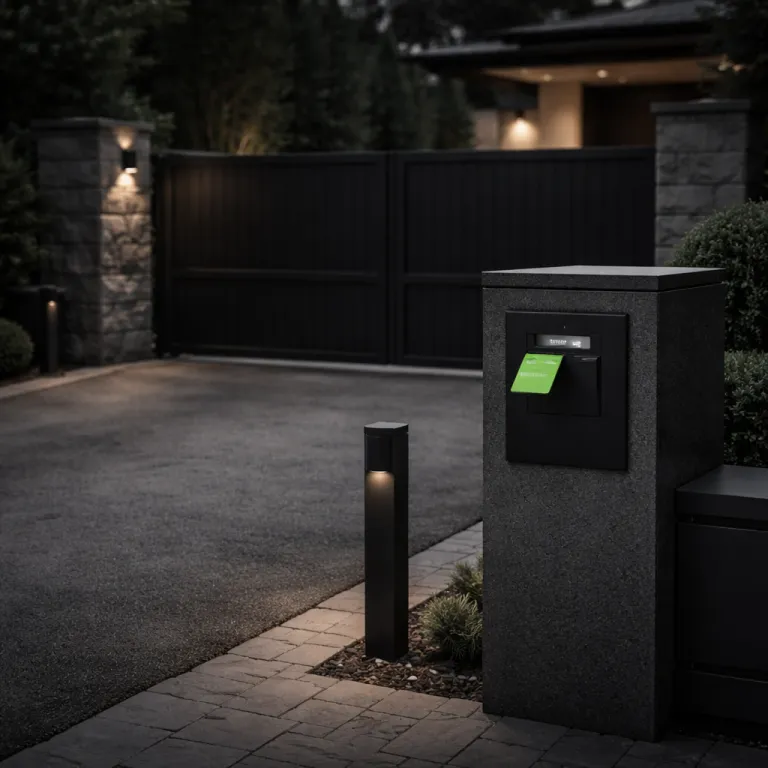
Luxury smart home security systems for high end residences
From gadget clutter to a coherent luxury smart home security system
For a high net worth homeowner, a luxury smart home security system starts where mainstream smart homes stop. The aim is not more devices but fewer, better integrated systems that feel invisible until security matters, then utterly present and under precise control. In a well designed luxury home or estate, every camera, sensor, and lock should feel as considered as the marble flooring and the home design language.
Affluent homeowners often begin with piecemeal smart devices and basic home security systems, then quickly hit the ceiling of what consumer platforms can elegantly manage. A truly luxury smart home security system treats the residence as a single organism, where security systems, lighting systems, climate control, and entertainment systems share one secure nervous system instead of a tangle of apps. The most resilient smart homes use professional monitoring and advanced automation to orchestrate cameras, automated lighting, intelligent climate, and even the smart kitchen so the entire home security posture and estate security perimeter adapt to how you actually live.
In this context, security is not a separate layer bolted onto homes but a core part of the architecture of custom homes. A luxury home benefits when home automation, voice controlled interfaces, and energy efficiency features are specified at the same time as stone, glass, and steel, not after the fact. When security systems and entertainment are planned together, you avoid the common trap where a cinema room, a bank of kitchen appliances, and exterior lighting all compete on the same fragile Wi Fi network, undermining both efficiency and security; a properly engineered design instead uses wired backbones and segmented wireless networks to keep performance predictable and to support long term maintenance.
Biometric access versus credentials in a luxury residential context
Access control is where a luxury smart home security system most visibly departs from mass market smart home products. Keypads and plastic fobs feel out of place in luxury homes where the door hardware is milled brass, the lighting is bespoke, and the overall design is curated. Biometric systems, when properly specified, align better with the expectations of homeowners who want both security and a frictionless experience at primary entrances and private suites.
Fingerprint readers, facial recognition, and even palm vein scanners now integrate into high end security systems and smart homes without the sci fi theatrics. As an illustrative example, a premium smart lock might use an inductive or infrared charging module concealed in the frame so the lock remains powered without visible cables or constant battery swaps, which matters when the front door of a luxury home is a 200 kilogram pivot slab of oak and bronze. In practice, robust deployments pair biometric access with encrypted credential backups using standards such as AES 256 and TLS 1.2+ for communications, so a luxury smart home can still grant temporary access to staff, guests, or contractors without handing over permanent keys or undermining home security.
For secondary entrances, garages, and service doors, a layered approach works best in large homes. You might use biometric access for family, app based credentials for staff, and time limited codes for deliveries, all managed through one secure security system dashboard. This is where a specialist integrator earns their fee, mapping the realities of how a home is used to a hierarchy of access rights that respects privacy, security, and the rhythms of daily automation rather than forcing everyone through the same crude system; a deeper technical breakdown of local AI access control is explored in this analysis of local AI processing for smart home security.
Local AI, cameras, and the case for on premises intelligence
Once you move beyond a basic doorbell, video becomes the backbone of any luxury smart home security system. High resolution cameras, thermal sensors, and radar based presence detection now sit discreetly in soffits and landscaping, preserving the clean lines of luxury homes while extending the perimeter of home security. Typical estate deployments use 4K cameras with wide dynamic range and low light performance, combined with dedicated perimeter detection zones that distinguish between wildlife, vehicles, and people.
Cloud based systems remain convenient, yet they raise obvious privacy and cybersecurity concerns for custom homes with art collections, staff, and frequent guests. The current trend at the top end is clear; local AI processing keeps footage inside the home, where advanced technology in a dedicated rack analyzes motion, faces, and patterns without sending raw video to remote servers. This approach improves security, reduces latency for automation triggers like automated lighting or intelligent climate responses, and supports energy efficiency because the system can dim lighting systems, adjust climate control, and even power down entertainment systems when no one is present, while still allowing encrypted remote viewing when required.
For a luxury home, the difference between a cloud camera and a local AI camera is not a spec sheet detail but a lifestyle one. Local processing means your security systems can recognize family members, staff, and regular visitors, while treating unknown faces and vehicles with heightened scrutiny, all without exporting your daily routines to a third party. It also allows tighter integration with climate control strategies such as those described in this guide to smart temperature mastery for luxury interiors, where occupancy data from cameras and sensors informs intelligent climate scenes that balance comfort, discretion, and efficiency; many high end systems also support configurable video retention windows, for example 7–30 days on premises depending on storage and privacy preferences.
Unifying locks, lighting, and alerts into one coherent interface
The hallmark of a mature luxury smart home security system is not how many devices it includes but how calmly it behaves. When a gate opens at night, the right lighting scenes should fade up, cameras should track the approach, and the interior should remain serene unless a genuine anomaly occurs. That orchestration only happens when home automation, lighting systems, and security systems are designed as one ecosystem rather than a patchwork of apps, with a central controller coordinating on premises AI, access control, and perimeter detection.
Specialist integrators working on luxury homes now treat security, entertainment, and climate as three faces of the same control problem. A single interface on a wall panel or tablet can show the status of every security system zone, every smart kitchen appliance, and every entertainment system, while still feeling simple enough for guests to use without a manual. When done well, the experience is almost hotel like; you tap “Goodnight” and the home security arms, automated lighting shifts to perimeter only, intelligent climate glides into an energy efficiency mode, and entertainment systems power down in a single, graceful sequence that can also be logged for audit purposes.
Audio is an underrated part of this integration, especially in larger homes. A discreet chime in the primary suite, a subtle volume dip in the media room, or a spoken alert through the whole home audio system can convey security events without drama or panic, and this is where a carefully specified high end audio backbone such as the setups discussed in this overview of elevated luxury home audio systems becomes part of the security fabric. The goal is a home where security, lighting, and entertainment systems collaborate so naturally that you rarely think about the underlying technology until it quietly saves you from a problem, whether that is a water leak, a forced door, or an unexpected vehicle at the perimeter.
The cybersecurity layer for a 200 device luxury residence
In a serious luxury smart home security system, cybersecurity is no longer an afterthought; it is a primary design constraint. A modern luxury home can easily host more than 200 connected devices once you count cameras, access control, lighting keypads, climate sensors, kitchen appliances, and entertainment systems. Each of those devices is a potential entry point, which is why cybersecurity now ranks among the top buying criteria for premium smart homes in industry surveys and in reporting from sources such as ITP.net.
The network for such homes should be treated like a small corporate infrastructure, with segmented virtual LANs, dedicated security appliances, and continuous monitoring. Guest Wi Fi, staff tablets, and voice controlled assistants belong on different network segments than security systems, cameras, and core home automation controllers, so a compromised entertainment device cannot pivot into the security system. Local AI processing for video and access control reduces the attack surface further, because sensitive data stays inside the home instead of traversing public networks where encryption and vendor practices vary in quality; guidance from the National Institute of Standards and Technology (NIST) on securing Internet of Things devices provides a useful baseline for these designs.
Affluent homeowners increasingly retain specialist firms to audit their smart homes annually, much as they would review financial structures or insurance coverage. That audit should include penetration testing of remote access, verification that strong encryption and multi factor authentication are enforced, and a review of how professional monitoring partners connect into the home network. The most resilient luxury homes pair strong digital hygiene with physical redundancy, so that even if one system fails or is compromised, the overall home security posture remains intact and the lived experience of comfort, efficiency, and control is preserved.
FAQ
Is a luxury smart home security system really safer than a standard setup ?
When properly designed, a luxury smart home security system is significantly safer than a standard consumer setup because it uses enterprise grade networks, local AI processing, and professionally integrated devices. The key is that security systems, cameras, lighting, and access control are engineered as one architecture rather than a collection of retail gadgets. Without that integration and cybersecurity focus, more devices can actually mean more risk instead of more protection, especially in large estates with complex perimeter detection needs.
How many connected devices are typical in high end smart homes ?
Large luxury homes often exceed 200 connected devices once you include cameras, sensors, lighting keypads, climate control modules, kitchen appliances, and entertainment systems. That scale makes a robust network, segmented systems, and professional monitoring essential rather than optional. It also explains why cybersecurity expertise now matters as much as interior design when planning a modern luxury home and why many owners adopt policies aligned with NIST style best practices.
Should I prioritize biometric locks over traditional keys in my luxury home ?
Biometric locks are usually the better choice for primary entrances in a luxury home because they align with the design language and reduce the risk of lost or copied keys. The best approach combines biometrics for family members with encrypted digital credentials and time limited codes for staff and guests. This layered strategy keeps access flexible while maintaining a strong overall home security posture and clear audit trails for who entered which zone and when.
Do I still need professional monitoring if I have local AI and advanced cameras ?
Local AI and advanced cameras dramatically improve detection quality, but professional monitoring remains valuable for high net worth homeowners. A monitoring center can coordinate emergency response, verify alarms, and act when you are traveling or unreachable. The most robust luxury smart home security system uses AI to filter noise and human operators to handle the rare but critical events, combining on premises intelligence with off site response capabilities.
How often should a luxury smart home be audited for cybersecurity risks ?
For a complex luxury home with extensive home automation and security systems, an annual cybersecurity audit is a sensible minimum. Any major renovation, system expansion, or change of integrator is also a good moment to reassess the network and device landscape. Regular reviews keep the security system aligned with evolving threats while preserving the refined, low friction experience you expect from a luxury residence and its integrated estate security infrastructure.
References
ITP.net – reporting on cybersecurity as a key buying criterion for premium smart homes.
Consumer Technology Association – coverage of high end smart locks and access control showcased at CES.
National Institute of Standards and Technology (NIST) – guidelines on securing Internet of Things devices in residential environments.
Best practices checklist for luxury smart home security
- Treat the residence as one integrated system: unify access control, cameras, lighting, climate, and entertainment under a single secure platform.
- Use biometric access for primary entrances, backed by encrypted digital credentials and time limited codes for staff and guests.
- Prefer on premises AI for video analytics and access control, keeping raw footage and identity data inside the home.
- Design the network like a small enterprise: VLAN segmentation, dedicated firewalls, and separate SSIDs for guests, staff, and critical systems.
- Specify high resolution (typically 4K) cameras with clearly defined retention periods and privacy zones for sensitive areas.
- Follow NIST aligned guidance for IoT security, including strong encryption, regular firmware updates, and multi factor authentication for remote access.
- Schedule annual cybersecurity and system health audits, and reassess after any major renovation or technology upgrade.