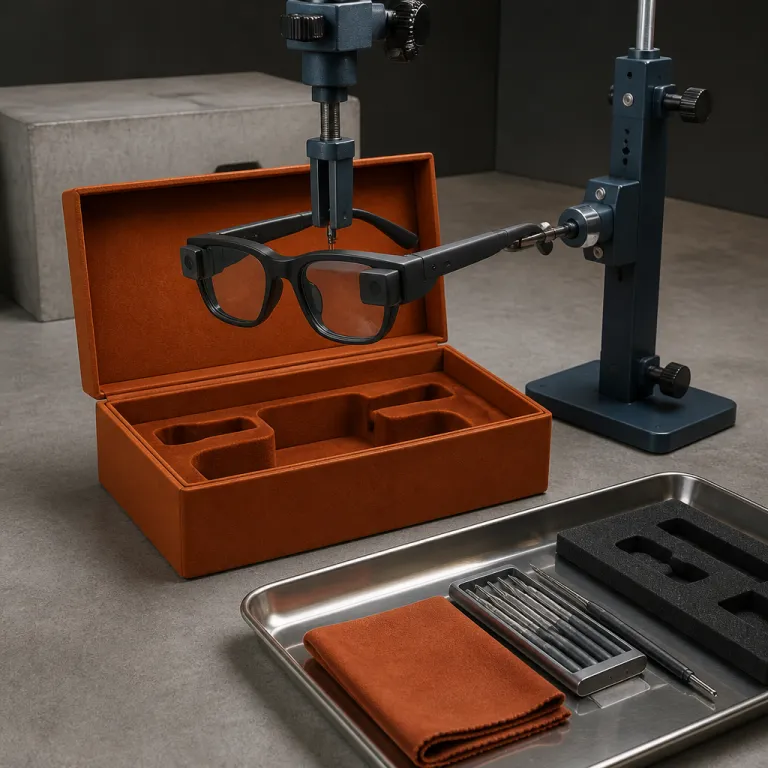
Snap SPECS AR glasses premium design enters true luxury territory
Snap SPECS, a pair of augmented reality glasses with a premium design, arrives at 2 195 dollars and lands squarely in the luxury eyewear category. The smart glasses concept is not new, but this release reframes augmented reality as a design object first and a spatial computing device second, with feature choices clearly aimed at architects, creative directors, and collectors. For an audience used to paying similar price points for handcrafted acetate frames, the cost feels less like tech sticker shock and more like a calculated entry into a new computing category.
Snap announced SPECS at the Augmented World Expo in Long Beach, positioning the hardware as a human scale gateway to spatial computing rather than a head mounted display for gamers. According to Snap’s AWE presentation and early launch materials, the 132 gram frame uses Swiss TR90 polymer, a material usually seen in high end sports glasses, and the electrochromic lenses shift from clear to tinted in around ten seconds, which makes these smart glasses viable both in studio lighting and on a sunlit terrace. That balance of materials, weight, and field view management shows how this luxury AR eyewear tries to make spatial computing feel as acceptable as a pair of designer specs from Gentle Monster or Ray Ban.
The 51 degree field view equates to roughly a 115 inch virtual screen at three metres, which is narrower than what Apple Vision Pro offers but more than enough for messaging, navigation, and quick reference content. Snap’s own technical brief cites dual Snapdragon processors and around 7 millisecond motion to photon latency to keep virtual objects stable, so the product behaves more like a discreet heads up display than a cinematic visor, and that choice matters for anyone who wants connected glasses to blend into daily life. Early hands on impressions from AWE attendees also describe the overlays as steady during head turns, though they note that long sessions may still feel more constrained than with a full headset. For readers who already track high end smart glasses tests, the SPECS positioning sits closer to refined everyday eyewear than to experimental headsets covered by outlets such as Mashable or by Apple Vision Pro marketing.
Key technical specifications (Snap launch data)
Weight: approximately 132 g | Field of view: about 51° (≈115" at 3 m) | Processors: dual Snapdragon chipsets | Motion-to-photon latency: ~7 ms | Lenses: electrochromic, clear-to-tint in ~10 s
Design, materials, and the new social acceptability of smart glasses
The most radical part of the Snap SPECS AR glasses premium design is not the hardware list but the way the frame looks and feels on the face. Two frame sizes, a 47 millimetre option and a larger variant with prescription inserts, signal that this product wants to live in the same drawer as your favourite optical specs, not in a gadget box. The electrochromic lenses, subtle cameras, and careful weight distribution mean these smart glasses will read as considered eyewear in a boardroom rather than as experimental tech that dominates your presence.
Snap’s move echoes a broader pattern where Samsung’s Galaxy Glasses partner with Gentle Monster and Meta works with Ray Ban, proving that the smart glasses category now depends on fashion houses as much as on chip designers. For design conscious buyers who already compare advanced AR eyewear such as the devices reviewed in this AI AR smart glasses test, the question is no longer whether the tech works but whether the glasses feature set respects personal style and social context. Snap’s choice of Swiss TR90 polymer, muted finishes, and a compact charging case that adds four full charges, for a total of around twenty hours of mixed use according to early briefings, shows that the product team understands how luxury buyers evaluate both hardware and daily ritual.
Social acceptability killed early experiments like Google Glass, and Snap SPECS aims to avoid that fate by making every visible element feel intentional. Cameras are integrated into the frame lines, the field view is tuned to keep digital overlays from spilling into peripheral vision, and the overall silhouette stays closer to classic specs than to a visor. For a reader used to evaluating a watch or a cuff as an extension of identity, this design led approach to augmented reality turns spatial computing into something you can wear to an opening night without explaining the tech first. The trade off is that the understated frame leaves less room for aggressive cooling or oversized batteries, so real world battery life and comfort will depend heavily on how often you use camera and AR features rather than just passive display.
Value, ecosystem, and how SPECS fits between Apple Vision and everyday eyewear
At 2 195 dollars, the Snap SPECS AR glasses premium design invites direct comparison with Apple Vision Pro and other high end headsets. The price will seem steep if you treat SPECS as an accessory, but more reasonable if you see the product as a first step toward replacing key smartphone functions with spatial computing anchored in your glasses. For a design professional who already rotates between multiple frames and a premium smartwatch, the idea that these smart glasses will handle messaging, navigation, and lightweight spatial computing tasks starts to justify the investment.
Apple Vision Pro remains better suited for immersive work and entertainment, while Snap SPECS focuses on glanceable overlays and camera centric use cases that align with Snap’s social platform. That means the Snap ecosystem will likely prioritise quick capture, contextual prompts, and lightweight spatial computing experiences rather than full room virtual environments, and this distinction matters for how you evaluate the hardware as a luxury product. For readers who already own advanced wearables such as the GPS smartwatch reviewed in this premium fitness tracker test, SPECS sits as the next logical step in a layered personal tech stack.
Strategically, Snap’s leadership, including CEO Evan Spiegel, is betting that credit for the next wave of augmented reality will go to brands that make devices people actually want to wear in public. While Snap CEO Evan Spiegel and the broader Snap Inc. team have not yet detailed every privacy policy and terms privacy nuance for SPECS, the company’s history with ephemeral content suggests that Snap will try to frame data handling as a differentiator in this product category. Potential buyers should still expect camera indicators, clear consent flows, and evolving policies as regulators focus more closely on face based interfaces. For now, what matters to luxury buyers is that these glasses will continue the shift from phone centric computing to face based interfaces, and that this discreet headset will quietly normalise augmented reality in the same way that high end connected homes, such as those explored in this ultra connected luxury home feature, have normalised invisible tech in architecture.
Key competitive and ecosystem considerations for affluent buyers
For affluent early adopters, the Snap SPECS AR glasses premium design raises pointed questions about ecosystem lock in and long term value. The product sits at the intersection of fashion, social media, and spatial computing, which means its success depends as much on software updates and content partnerships as on the current hardware. Buyers who already navigate Apple Vision, Meta, and Samsung ecosystems will need to read the fine print on app support, privacy policy commitments, and how terms privacy evolve as augmented reality usage scales.
From a competitive standpoint, Snap SPECS must coexist with Apple Vision Pro, Meta Ray Ban smart glasses, and emerging spatial computing devices that treat glasses as the primary interface. Each product category targets a different balance of immersion, social acceptability, and field view, and SPECS clearly prioritises everyday wear over cinematic experiences, which aligns with the way many design professionals actually use tech. That means these AR specs will likely become a secondary screen for notifications, quick capture, and context aware prompts, while larger headsets remain tools for focused work or entertainment sessions.
For readers who treat tech as part of a curated collection, the question is whether this product will age gracefully in both aesthetic and functional terms. The Swiss TR90 frame, neutral colour palette, and discreet branding suggest that the feature set has been tuned for longevity, while over the air updates should extend the life of the spatial computing capabilities. In a market where hardware cycles can feel relentless, the Snap SPECS AR glasses premium design offers a rare proposition: a pair of smart glasses that aims to hold its place in your rotation as confidently as a favourite mechanical watch or a limited run piece of furniture, provided that Snap sustains software support and keeps the ecosystem vibrant enough to justify daily wear.
References
Snap Inc. investor relations newsroom ; Apple newsroom ; Meta newsroom.