




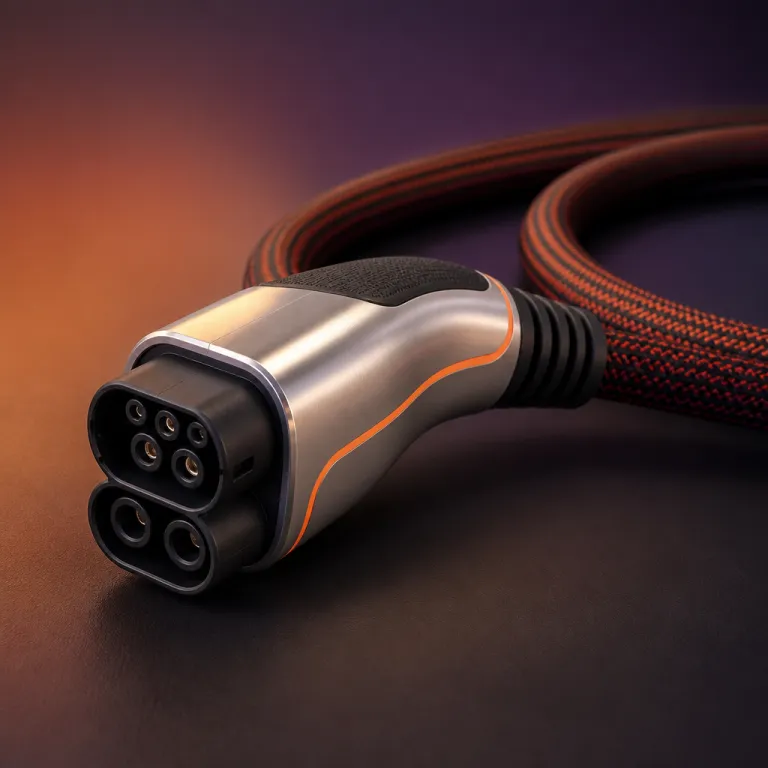
Why voltage architecture, not horsepower, defines modern luxury electric vehicles
Luxury electric vehicles are entering a quiet arms race that has nothing to do with horsepower. The real divide now runs between 400 volt and 800 to 880 volt systems, and this voltage architecture shapes how your luxury electric car charges, performs over long miles, and feels to use on a demanding day. If you care about how your electric cars age in a garage already filled with cars best in every category, voltage is the specification that separates the merely new from the genuinely future proof.
Think of a high voltage system as the unseen concierge of your luxury electric driving experience. At 800 to 880 volts, the same current delivers more power, which means faster DC charging, cooler running components, and more efficient power delivery to the motors at autobahn speeds measured in serious mph. That is why the Porsche Taycan and the latest Porsche Taycan Turbo GT, the Audi e tron GT, and the upcoming Ferrari electric supercar lean into 800 volt plus architectures while many mass luxury electric vehicles from BMW, Mercedes Benz, and Tesla Model lineups still rely on 400 volt systems that limit real world fast charging to around 150 to 250 kilowatts.
For a buyer cross shopping a Porsche Taycan, a Lucid Air, a Mercedes Benz EQS, and a BMW iX, the spec sheet noise can be distracting. You will see every brand claiming the best electric range miles, the best luxury interiors, and the rankings best acceleration in mph seconds, often backed by impressive EPA estimated range numbers that look similar on paper. Yet when you view the long term ownership experience, from spontaneous weekend escapes to winter ski runs, the ability of an 880 volt system to sustain high charge rates and stable performance matters more than a few extra est range miles that you rarely use.

What 880 volt systems actually change in daily driving
On a typical Friday, voltage architecture decides whether your luxury electric car feels liberating or slightly compromised. Arrive at a 350 kilowatt charger in a Porsche Taycan or a future BMW iX3 with 800 volt hardware, and you can add meaningful range miles in the time it takes to answer a few messages and view photos of your next hotel on your phone. In practice, going from 10 to 80 percent in roughly 18 minutes at up to 350 kilowatts means your luxury electric vehicles can cover hundreds of miles in a day with short, predictable pauses rather than long, frustrating stops.
By contrast, a 400 volt luxury electric SUV that peaks at 150 to 200 kilowatts will often taper earlier, stretching that same 10 to 80 percent session well beyond 25 minutes, especially once the battery warms after several hard acceleration runs to high mph. The difference sounds small on paper, yet over a year of grand touring those extra minutes accumulate into hours, subtly reshaping how far you are willing to roam in your electric cars on a spontaneous weekend. This is why the most interesting Mercedes Benz projects, such as the long range EQS concepts with extreme efficiency, are now being discussed in the context of higher voltage platforms and why detailed previews of the next generation EQS highlight a shift away from compromise toward architectures that support both long range and rapid charging, as explored in depth in this analysis of the future Mercedes Benz EQS and its extended range capabilities.
Thermal management is the other daily benefit that rarely makes the advertisement headlines but transforms the feel of luxury electric vehicles. Higher voltage allows thinner cables and more efficient inverters, which reduces heat buildup under repeated launches and sustained high speed cruising, so your best luxury sedan or SUVs best model maintains consistent performance instead of throttling back. For the owner who already has a combustion Mercedes Benz AMG or a classic Porsche in the garage, that consistency is what makes an electric car feel like a true peer rather than a tech experiment that shines only in short bursts.
Why voltage matters more than range for multi car luxury garages
For many affluent enthusiasts, luxury electric vehicles are not the only cars in the driveway. When you already own a V12 grand tourer or a track focused Porsche, the electric cars in your collection serve a different role, often handling urban commutes, cross border business trips, and quiet late night drives where instant torque and near silent air suspension matter more than drama. In that context, obsessing over the absolute best electric EPA estimated range miles makes less sense than prioritizing how quickly your luxury electric car recovers range at high power chargers.
Consider a Lucid Air with its impressive EPA est range and a Porsche Taycan with a shorter official est range but an 800 volt system that can sustain very high charge rates. If you typically drive 250 to 350 miles between stops, both electric vehicles will cover your needs, yet the Taycan or Audi e tron GT will often spend less time plugged in on a high power network thanks to their voltage advantage. That is why rankings best lists that focus only on range miles without weighting charging performance can mislead luxury buyers who value time and flexibility more than theoretical maximum distance.
There is also a psychological dimension that spec sheets rarely capture but you will feel on the road. Knowing that your best luxury electric sedan can gain meaningful miles in under twenty minutes encourages more spontaneous detours, from a last minute dinner in another city to a scenic coastal loop where you stop to view photos of the sunset while the car quietly sips electrons. For a deeper look at how premium audio and communication technologies are reshaping the in cabin experience of every luxury electric car, including how advanced public address systems change the ambience during those charging pauses, this analysis of automotive public address systems in high end cars offers a useful complement to the voltage discussion.
The infrastructure reality along premium driving routes
Voltage architecture only pays off if the charging infrastructure can match it, and this is where a clear view of your typical routes matters. Across major European corridors, from Paris to Milan or Munich to Lake Como, 350 kilowatt chargers are now common enough that an 800 to 880 volt luxury electric car can realistically plan fast hops between high power stations. In North America, the densest clusters of 350 kilowatt units sit along coastal interstates and around affluent metro areas, which aligns well with where many luxury electric vehicles actually live and accumulate their miles.
Owners used to the curated experience of a Mercedes Benz lounge or a Porsche track day should think of charging networks as another layer of hospitality rather than a mere utility. Some premium locations now integrate artful lighting, comfortable seating, and even curated advertisement content on large displays that show rotating view photos of the latest electric cars, subtly nudging you to shop for your next car while you wait. The risk is that poorly designed advertisement continue loops can cheapen the ambience, so the best luxury networks keep the messaging restrained and focus on clear information such as EPA est range added, charging power in kilowatts, and estimated time remaining in minutes and seconds rather than intrusive calls to continue reading promotional content.
For now, 350 kilowatt units remain a minority compared with 150 kilowatt chargers, which means that a 400 volt luxury electric SUV can still feel adequate if your driving is mostly regional and your shop, office, and home all have AC charging. Yet as more 800 volt platforms arrive, including the BMW iX3 and future Lucid Air variants, the gap between cars best suited to exploit high power infrastructure and those limited by their 400 volt roots will widen. If your long term plan includes frequent grand touring on routes already rich in high power chargers, choosing an 800 volt or higher architecture today is a quiet way to future proof your electric vehicles against the next decade of infrastructure upgrades.
Which luxury brands are leading on 800 volt and 880 volt platforms
Among current luxury electric vehicles, Porsche has been the most vocal champion of 800 volt systems, using the Taycan and Porsche Taycan Turbo GT as rolling proof that higher voltage can coexist with everyday usability. Audi followed with the Audi e tron GT, sharing much of the same core architecture and delivering similar charging performance that makes these electric cars feel like true long distance athletes. Lucid took a different path with the Lucid Air, focusing on extreme efficiency and very long EPA est range miles, yet still embracing a high voltage approach that allows strong fast charging when you find a capable station.
Mercedes Benz has moved more cautiously, with current EQ models such as the EQS and EQE using 400 volt systems while concept studies and future platforms hint at a shift toward 800 volt hardware to support both better charging and more compact packaging. BMW, for its part, has confirmed that the BMW iX3 and other Neue Klasse models will adopt 800 volt architectures, signaling a clear break from earlier electric vehicles that shared too much with combustion platforms. Tesla Model variants, including the Model S and Model X, still operate on 400 volt systems, relying on the strength of the Supercharger network rather than voltage alone, which works well today but may look less advanced as 880 volt supercars reach the market.
For buyers tracking rankings best lists of luxury electric sedans and SUVs best suited to fast touring, the pattern is clear. The brands that treat voltage as a core part of their engineering story, rather than a footnote beneath glossy photos and lifestyle advertisement campaigns, are the ones building electric cars that will feel modern longest. If you want a more playful angle on how premium mobility tech extends beyond cars into other forms of transport, this guide to the ultimate speaker bicycle experience for luxury tech enthusiasts shows how the same design thinking now shapes everything from supercars to high end bicycles.
How to read spec sheets and marketing with a voltage first mindset
When you next view a glossy brochure or tap through a configurator to view photos of your preferred trim, resist the urge to focus first on horsepower, 0 to 100 km/h in mph seconds, or the latest in car entertainment. Instead, scroll down to the technical section and look for the system voltage, peak DC charging power, and the curve that shows how long the car can hold that power before tapering. Those three numbers, more than any advertisement slogan about best electric performance or best luxury ambience, tell you how the car will feel on a long day of mixed driving.
EPA estimated range remains useful, yet you should pair it with a realistic sense of your own usage and the charging landscape you frequent. A car with slightly lower EPA est range miles but an 800 volt system that can repeatedly pull near 300 to 350 kilowatts on compatible chargers will often beat a higher range 400 volt rival in real world door to door times. That is especially true for luxury electric vehicles that will be driven briskly, loaded with passengers and luggage, and expected to maintain consistent performance without the cabin filling with the sound of cooling fans fighting excess heat in the battery and inverters.
From a shopping perspective, treat voltage architecture as a quiet filter before you even step into a shop or schedule a test drive. Shortlist the electric vehicles that combine a refined interior, strong safety ratings, and an 800 volt or higher platform, then compare how each brand balances range, charging, and driving dynamics. The result will not always point to the same cars best suited for every lifestyle, yet this voltage first approach ensures that when you continue reading spec sheets or skim the fine print beneath the bold advertisement continue banners, you are focusing on the one specification that truly shapes how your next luxury electric car will age in a rapidly evolving ecosystem.
Statistics that shape the future of high voltage luxury EVs
- High voltage systems around 800 to 880 volts enable peak DC charging rates of up to 350 kilowatts, allowing many luxury electric vehicles to charge from 10 to 80 percent in roughly 18 minutes on compatible hardware, compared with 25 minutes or more for similar 400 volt cars on lower power chargers.
- Most mass luxury electric platforms still operate at 400 volts, which typically limits real world fast charging to between 150 and 250 kilowatts, meaning that even when the charger is rated higher, the car itself becomes the bottleneck for adding range miles quickly.
- Lithium ion battery pack costs are projected by multiple industry analysts to fall toward roughly 80 dollars per kilowatt hour within the next product cycle, making larger battery packs economically viable and increasing the importance of voltage architecture for managing heat and maintaining charging speed.
- The global luxury electric vehicle market is forecast by several market research firms to exceed 200 billion dollars in annual value within the next few years, with SUVs and crossovers representing around 60 percent of that volume, which pushes brands to design high voltage platforms that can scale across both sedans and SUVs best suited to family use.
- BMW has publicly indicated that its upcoming Neue Klasse models, including the BMW iX3 replacement, will adopt 800 volt architectures, signaling a broader industry shift in which high voltage systems move from niche sports sedans like the Porsche Taycan into mainstream luxury electric vehicles across multiple segments.
FAQ about 880 volt architecture in luxury electric vehicles
Why does 880 volt architecture charge faster than 400 volt systems ?
Higher voltage allows the same power to be delivered with lower current, which reduces heat in cables and components and lets the car safely accept higher kilowatt levels for longer periods. In practice, an 800 to 880 volt luxury electric car can sustain charging near 300 to 350 kilowatts on compatible stations, while many 400 volt cars peak lower and taper earlier. The result is shorter stops to add the same number of miles, especially between 10 and 80 percent state of charge.
Is an 800 or 880 volt system always better for every driver ?
High voltage systems are most beneficial for drivers who regularly use high power DC fast chargers on long trips. If you mainly charge at home or at work and rarely exceed regional distances, a well engineered 400 volt luxury electric car can still feel perfectly adequate. For frequent grand touring on routes with 350 kilowatt chargers, however, 800 volt platforms provide a noticeably more convenient experience.
Which luxury brands currently offer 800 volt or higher electric vehicles ?
Porsche offers the Taycan range on an 800 volt platform, and Audi uses a similar architecture in the e tron GT. Lucid employs a high voltage system in the Lucid Air, while several upcoming BMW and Mercedes Benz models are expected to adopt 800 volt hardware as part of new dedicated EV platforms. Some future supercars are targeting even higher voltages around 880 volts to support extreme performance and very rapid charging.
Does higher voltage improve performance as well as charging ?
Yes, higher voltage can improve performance indirectly by enabling more efficient power delivery and better thermal management. With less heat in the cables and inverters, the car can sustain high power output for longer without throttling, which is valuable for repeated acceleration runs or extended high speed driving. The driving feel becomes more consistent, which is important in luxury electric vehicles that are expected to perform predictably in all conditions.
How can I tell if a luxury EV uses 800 volt architecture when shopping ?
Most manufacturers list system voltage and peak DC charging power in the technical specifications section of their brochures or online configurators. Look for mentions of 800 volt or similar wording, and check whether the car can accept 270 kilowatts or more on DC fast chargers, which usually indicates a high voltage platform. If the information is not obvious, asking the dealer directly about system voltage is a simple way to clarify before you commit.