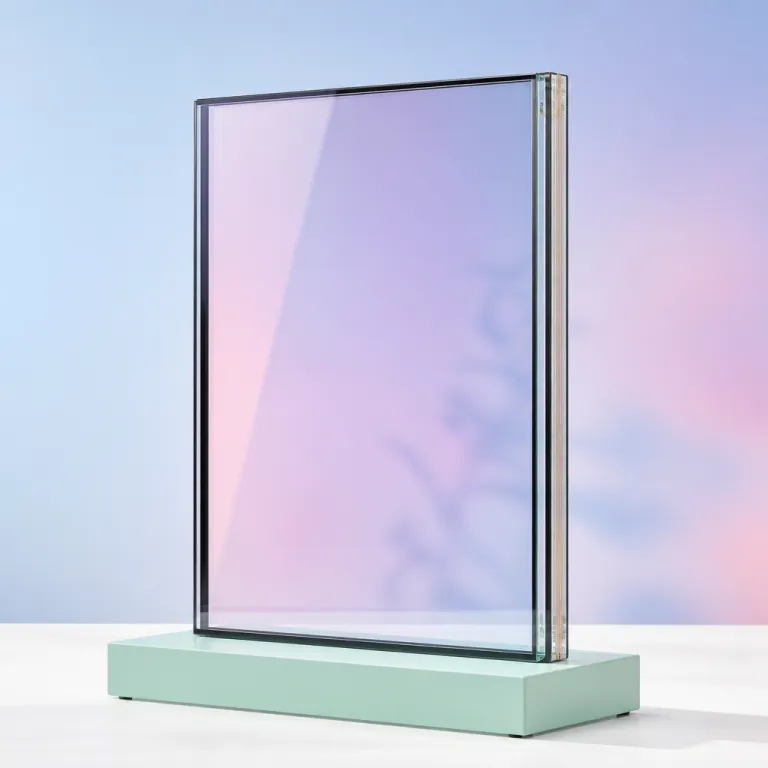
Perovskite solar BIPV luxury architecture as a new design language
Perovskite solar BIPV luxury architecture is not a passing trend; it is a material shift in how the building envelope is conceived. For the first time, solar energy, integrated photovoltaics, and architectural glass converge so completely that the facade itself becomes a quiet power generation system. For a design led homeowner, that means every pane of glass, every facade panel, and even vertical walls can work as a solar cell without shouting about technology.
Traditional crystalline silicon solar panels sit on a roof like an afterthought, while perovskite thin film can be deposited directly onto glass and curtain walls to create a seamless facade. These thin layers are light compared with heavy silicon modules, yet they can still deliver competitive power output even under low light conditions that are typical in dense urban districts. Early commercial perovskite modules now reach around 18–22% efficiency, versus roughly 20–23% for premium silicon, and research cells have already passed 25%, showing how quickly the technology is maturing (for example, see NREL and Oxford PV efficiency tables). The result is a modern building where the best view and the best energy performance finally share the same square metre of glass.
In this context, BIPV solutions stop being a compromise and become a credible default for eco luxury projects. Architects can specify solar glass for windows, skylights, and limited roof space while maintaining customizable transparency and precise control over how much light passes into each room. Typical visible light transmission can be tuned from about 20% for high power generation to 50–60% for clearer views, as shown in manufacturer datasheets from European BIPV suppliers, giving designers a calibrated tool rather than a blunt instrument. Perovskite solar cell technology turns the entire building into a finely tuned instrument for energy, light, and comfort rather than a box with panels bolted on top.
Perovskite versus silicon: aesthetics, efficiency, and the feel of light
Silicon solar panels built the industry, but they were never designed for a penthouse facade. Their solar cell structure is efficient yet visually heavy, and the standard blue black modules fight against refined glass and stone palettes in luxury architecture. Perovskite thin film technology, by contrast, can be tuned for color, transparency, and light pass characteristics, which lets integrated photovoltaics slip into a curtain wall as naturally as low iron glass.
On paper, high efficiency silicon still leads in some long term field data and established reliability metrics, while perovskite solar cells excel in low light and angled light that real buildings actually experience. That matters when a modern building has vertical walls, deep overhangs, and limited roof area, because power generation can no longer rely only on the roof space. When you treat every facade surface, every strip of glass, and even spandrel panels as solar panels, the total power output quickly overtakes a conventional roof only array. In practice, a facade that delivers on the order of 120–170 kWh per square metre per year in a good solar climate, as reported in early BIPV case studies from Switzerland and the Netherlands, can rival or exceed a small rooftop system on the same property.
For the eco luxury early adopter, the more interesting difference is tactile rather than numerical. Perovskite BIPV glass can be specified with customizable transparency so that living rooms glow with softened daylight while the building envelope quietly harvests solar energy in the background. A solar BIPV curtain wall becomes less a gadget and more a luminous skin, closer to a tailored suit than a technical jacket, and that shift in feeling is what makes perovskite solar BIPV luxury architecture so compelling for design purists who also care about carbon.
For collectors who already appreciate refined solar powered field watches, the same logic applies at architectural scale, and resources like this deep dive into solar powered field watches show how discreet energy harvesting can feel luxurious when executed with the right materials.
From roof panels to full facades: how BIPV reshapes the luxury home
The most radical shift in perovskite solar BIPV luxury architecture is spatial rather than purely technical. Instead of treating the roof as the only real estate for solar panels, architects now distribute solar cell surfaces across the entire building envelope, from the roof to the facade and down to the lowest vertical walls. This approach is especially powerful for villas and penthouses with limited roof space but generous glass areas facing high quality views.
Imagine a coastal home where the south facing curtain wall is a continuous expanse of solar glass, with each pane acting as a thin film power generator while still framing the horizon. The owner no longer has to choose between a clean roof line and serious power generation, because the facade itself becomes a solar asset that works in both high sun and low light conditions. Even the so called dead zones of a commercial building, such as spandrel bands and opaque facade panels, can host integrated photovoltaics without changing the visual rhythm of the architecture.
Real projects already use BIPV curtain walls and glass roofs to replace standard cladding, and they show how solar panels can be elevated from equipment to finish material. European manufacturers such as Saule Technologies and Onyx Solar, along with pilot projects in Switzerland and the Netherlands, have demonstrated colored perovskite and BIPV glass on offices, schools, and residential buildings, with performance documented in public case studies and technical brochures. For readers who want to understand how this compares with more conventional rooftop systems, a useful primer on whether solar panels are examples of cutting edge technology helps frame the leap from add on hardware to fully integrated surfaces. Once you see a modern building where every visible surface contributes to power output, it becomes difficult to accept a luxury home that wastes its facade on passive glass alone.
Cost, payback, and the quiet ROI of solar facades
For luxury clients, the real question is rarely whether solar works, but whether perovskite solar BIPV luxury architecture justifies its premium over standard glass and cladding. The answer lies in understanding that BIPV glass, thin film laminates, and solar curtain walls replace existing materials rather than simply adding solar panels on top. When the facade, roof, and windows already require high performance glazing and weatherproofing, the incremental cost of integrated photovoltaics can be far lower than a separate rooftop system with heavy mounting hardware.
Perovskite thin film and advanced film technology also reduce structural demands, because the modules are light compared with traditional silicon solar panels, which can be heavy on delicate roof structures. Typical BIPV glass weighs in the range of 20–30 kg per square metre, similar to laminated safety glass, while framed rooftop modules with racking can add 15–25 kg per square metre on top of the roof build up, according to manufacturer datasheets and structural guidelines. That weight reduction matters for cantilevered roofs, large glass atriums, and modern building designs where roof space is fragmented by terraces and pools. Over time, the power generation from every solar cell embedded in the building envelope offsets both the material premium and part of the operational energy bill, especially in regions with high cooling loads where solar shading and energy harvesting work together.
Payback in this segment is not only about years to amortize cost. A facade built with customizable transparency solar glass can reduce glare, improve interior comfort, and protect art collections from harsh light while still delivering strong power output in low light conditions. As a simple illustration, a 150 m² BIPV facade in a sunny climate producing 20,000–25,000 kWh per year at an electricity price of $0.20 per kWh can generate $4,000–$5,000 of energy value annually, while the incremental installed cost over high end facade glass might be in the range of $400–$700 per square metre depending on specification, based on ranges reported in recent BIPV market studies. For owners who already invest in high end EVs and fast charging infrastructure, the ability to feed clean energy from their own integrated photovoltaics into the garage aligns with the experiential focus described in analyses of the luxury EV road trip and ultra fast charging, where the quality of the journey matters as much as the numbers on a spec sheet.
Designing with light: from faq BIPV to real world material choices
Most faq BIPV conversations start with efficiency charts, but the more interesting questions for luxury tech connoisseurs are about light, tactility, and control. Perovskite solar BIPV luxury architecture lets you specify how much light passes through each glass zone, how the color of that light feels on stone floors, and how the facade reads from the street at night. Customizable transparency in solar glass means a bedroom can have a softer, warmer light pass profile, while a double height living room can enjoy clearer views with slightly lower power output per square metre.
Architects now treat BIPV solutions as part of the palette alongside stone, timber, and metal, choosing between thin film laminates, framed solar panels, and structural glass units with integrated photovoltaics. A curtain wall on a commercial building might prioritize maximum power generation, while a private residence might balance solar cell density with a more delicate visual grain in the glass. Even the roof can be handled differently, with solar tiles on pitched areas and near invisible thin film on flat roof sections where mechanical equipment would otherwise dominate. In all cases, fire performance, impact resistance, and safety glass standards such as EN 13501 or UL 1703 must be met, so the BIPV units are tested not just as energy devices but as full facade components.
For the eco luxury early adopter, the most satisfying projects are those where the building envelope feels coherent, with no visible jump between active and non active glass. When every surface, from the smallest window to the broadest facade, participates in energy harvesting, the technology stops feeling like a gadget and starts feeling like a new architectural standard. That is the quiet promise of perovskite solar BIPV luxury architecture, where solar energy, BIPV glass, thin film modules, high performance facades, perovskite cell technology, and carefully managed light all converge into one seamless design language for modern buildings.
FAQ
How does perovskite BIPV differ from traditional rooftop solar panels ?
Perovskite BIPV integrates the solar cell directly into glass, facades, and other building envelope elements, while traditional rooftop solar panels are mounted as separate hardware on top of the roof. This integration allows architects to use vertical walls, curtain walls, and windows for power generation, which is ideal for projects with limited roof space. It also enables customizable transparency and more refined aesthetics compared with heavy framed modules.
Is perovskite solar suitable for low light urban environments ?
Perovskite solar cells perform well in low light and diffuse light conditions, which makes them suitable for dense urban areas where direct sun is often blocked. When used as thin film on facades and curtain walls, they can harvest energy from reflected and angled light that traditional silicon panels on a flat roof might miss. This characteristic is particularly valuable for modern building designs with tall neighbors and complex shading patterns.
Can BIPV glass maintain clear views while generating energy ?
BIPV glass can be manufactured with customizable transparency, allowing a balance between clear views and solar cell coverage. In living spaces where views are critical, designers can specify lower density patterns so more light passes through, while still contributing to overall power output. Less view sensitive areas, such as spandrel zones or stair cores, can use denser patterns to maximize power generation.
What types of buildings benefit most from perovskite BIPV facades ?
Buildings with large glass areas and limited roof space benefit most from perovskite BIPV facades, including luxury residences, penthouses, and high end commercial building projects. These structures can turn their curtain walls, vertical walls, and even skylights into active solar surfaces without compromising design intent. The result is a modern building where aesthetics, comfort, and energy performance are aligned.
Does integrating BIPV increase structural load on the building ?
Perovskite thin film and advanced BIPV glass are generally lighter than traditional framed silicon solar panels, which reduces structural load compared with mounting heavy modules on the roof. Because BIPV replaces standard glass or cladding rather than adding extra layers, the net weight increase can be modest. Structural engineers still need to verify each project, but in many cases integrated photovoltaics simplify rather than complicate the load path.
How do lifecycle, warranty, and certification compare with silicon PV ?
Conventional silicon PV modules typically carry 20–30 year performance warranties and have decades of field data, while commercial perovskite BIPV products are newer and often offer shorter or more tightly specified guarantees. Perovskite cells can be more sensitive to moisture, heat, and UV exposure, so robust encapsulation and laminated glass assemblies are critical to slow degradation, and many products are still undergoing extended testing under standards such as IEC 61215 and IEC 61730. Most perovskite formulations also contain small amounts of lead, which raises end of life and regulatory questions; manufacturers address this with encapsulation layers, recycling strategies, and compliance with hazardous substance rules, but building owners should review environmental declarations and certification documents alongside traditional metrics like efficiency and payback.