Why a 1200 mm CCTV camera now belongs in a luxury residence
A 1200 mm CCTV camera used to be reserved for industrial perimeters and critical infrastructure. Today, affluent homeowners integrate this ultra long range surveillance hardware into landscaped estates, cliffside villas, and urban penthouses to extend discreet monitoring far beyond the property line. The result is a new category of smart home elegance where security, optics, and architecture merge into one coherent experience.
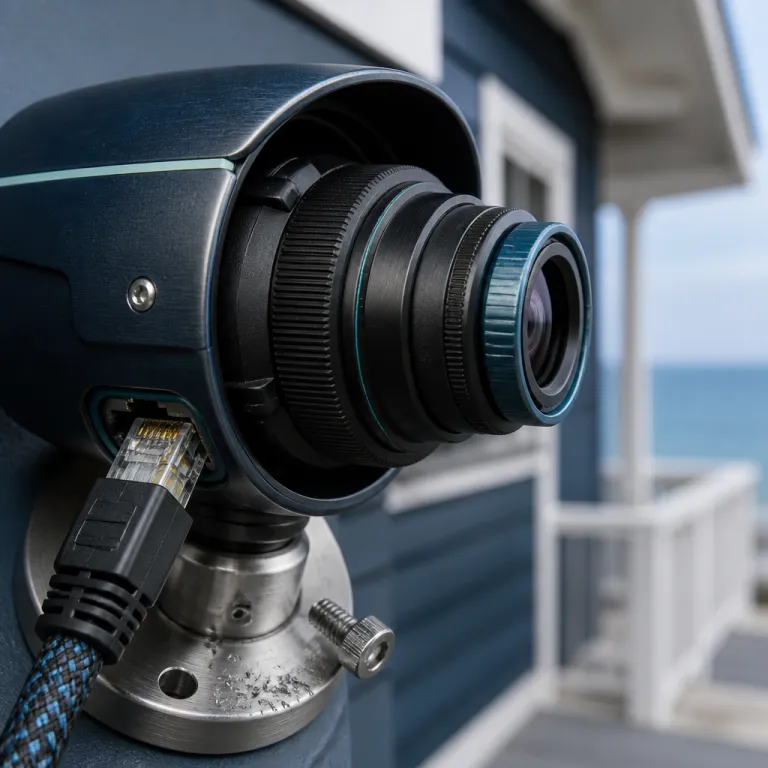
At the heart of this shift is optical technology that no longer looks like a military leftover. A premium 1200 mm security camera pairs a large diameter telephoto lens with precise optical zoom control, so the hardware can be recessed into façades or hidden in sculptural housings without compromising image quality. Designers now specify cameras with coaxial zoom modules, integrated laser rangefinder units, and auto tracking software that quietly follows movement while the visible hardware almost disappears.
Luxury clients also expect multi spectrum performance from their surveillance systems, not just basic daylight views. High end models combine a primary optical camera with a thermal imaging channel and often a dedicated NIR sensor to capture near infrared light for subtle night vision. This blend of thermal, visible, and NIR coverage allows a single 1200 mm CCTV camera to monitor several hectares of land while maintaining a refined visual footprint on the property. In practice, integrators report that one well sited long range unit can replace several conventional short focal length cameras on large estates, provided local privacy rules and sightline constraints are respected.
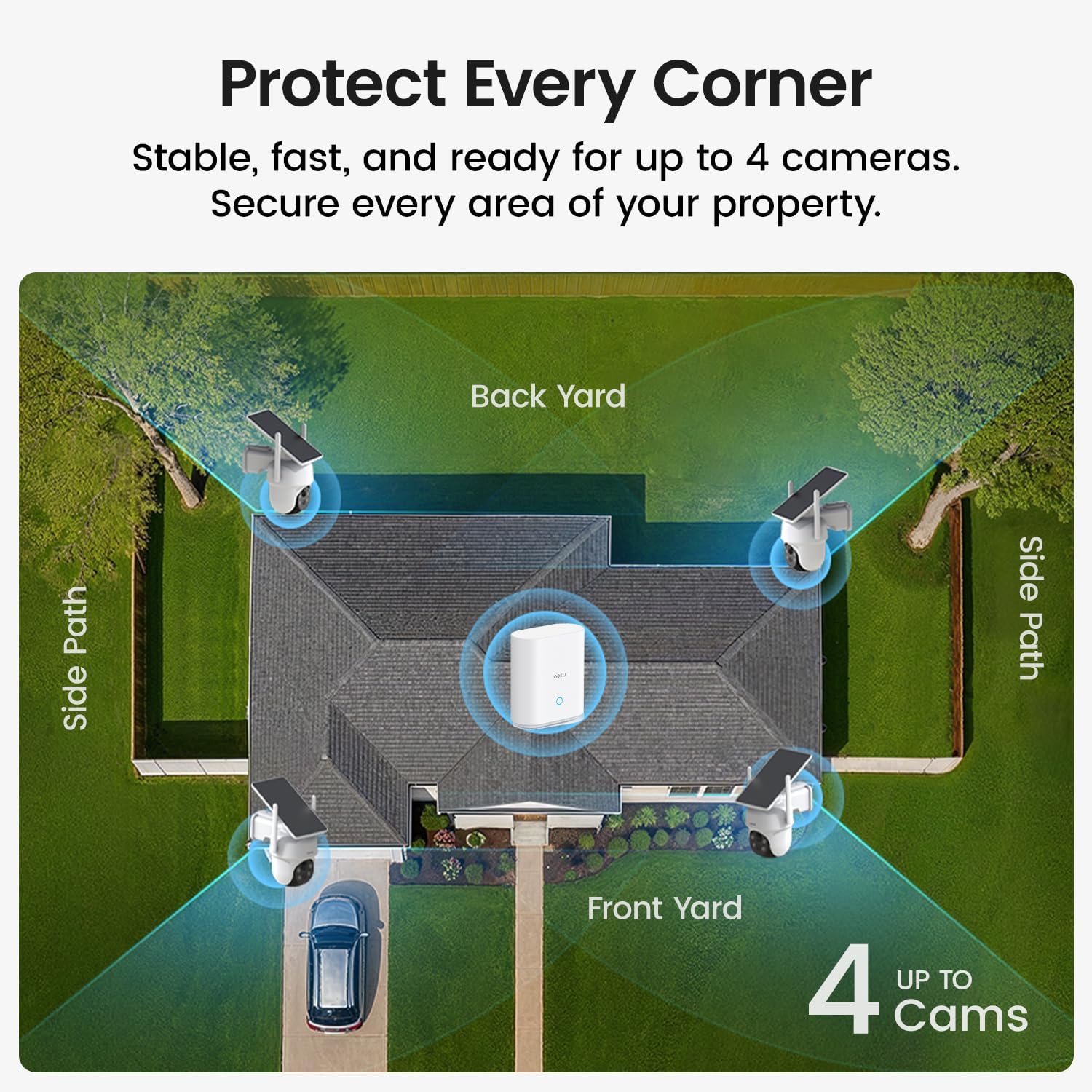
- + No subscription required — use locally without recurring fees
- + Solar-powered for extended, cable-free operation
- + Wireless design allows flexible placement and easy installation
- + 360° pan & tilt with auto-tracking for broad coverage
- + 2K color night vision improves low-light detail compared with basic IR

Optical mastery: focal length, aberrations, and long range clarity
Choosing a 1200 mm CCTV camera is essentially a lesson in focal length and optical discipline. At such an extreme telephoto setting, any chromatic aberration or mechanical vibration is brutally magnified, so only a carefully engineered lens assembly can deliver the crisp detail luxury clients expect on their wall sized displays. This is why serious integrators look for brands that publish real optical data on zoom chromatic control, aberration performance, and long range modulation transfer function (MTF) in their datasheets rather than relying on marketing claims.
Manufacturers in Hangzhou have become reference players in this niche, especially those like Tianying Optical that design coaxial zoom blocks specifically for 1200 mm surveillance optics. A typical high grade module will combine optical zoom and digital refinement, using multi element glass to minimize color fringing while a coaxial control line manages focus, iris, and zoom through a single cable. When paired with a PTZ camera head, this coaxial zoom architecture allows the 1200 mm CCTV camera to pan smoothly across a bay or vineyard without losing focus at maximum magnification, although real world clarity will still depend on atmospheric turbulence, humidity, and heat shimmer over long distances.
For collectors who treat their security system as a design object, the internal engineering matters as much as the exterior finish. Integrators often specify a thermal channel alongside the main optical camera, plus a compact laser rangefinder to provide precise distance data for auto tracking algorithms. In a well tuned system, the PTZ camera, rangefinder, and zoom spotter software work together so that a single operator can manage multiple viewpoints from a minimalist burglar alarm keypad that becomes the discreet centerpiece of a luxury smart home control wall; this is where refined hardware and subtle interface design truly intersect, and where published MTF curves and focus repeatability figures from the manufacturer become directly relevant to the viewing experience.
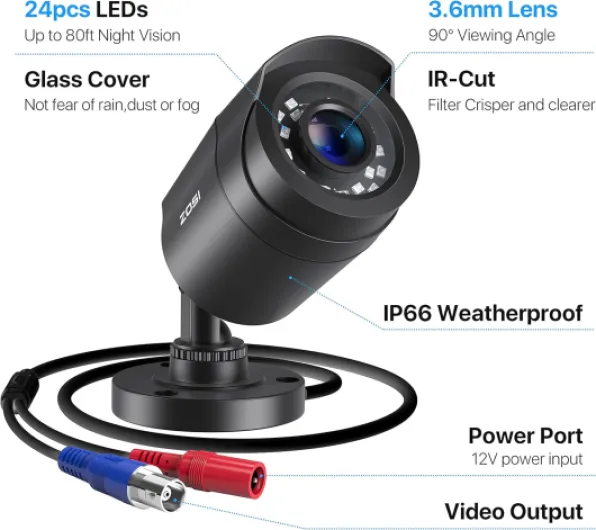
- + 4-pack provides broad coverage
- + 1080P HD resolution for clear video
- + 80ft night vision for low-light monitoring
- + Weatherproof design for indoor/outdoor use
- + TVI analog compatible with 1080P/5MP/4K HD DVR systems
Night vision, NIR, SWIR and thermal elegance in a private estate
Once the sun sets, a 1200 mm CCTV camera reveals its real value on a large property. Long range night vision is no longer about harsh floodlights and grainy monochrome feeds, but about layered spectral imaging that respects both privacy and aesthetics. Owners want to see a person walking along a distant jetty or tree line, while their guests experience only soft landscape lighting and no intrusive glare.
To achieve this, integrators combine NIR channels, SWIR modules, and a dedicated thermal camera into a single multi sensor head. Near infrared and short wave infrared allow the lens to capture subtle reflections from foliage, water, and fabrics, while thermal imaging isolates heat signatures without revealing facial details at extreme range. This mix of NIR, SWIR, and thermal surveillance gives the 1200 mm CCTV camera a nuanced view of the estate that can be tuned for privacy rules and local regulations. Field tests cited in IFSEC Global’s coverage of multi sensor PTZ systems indicate that such multi spectrum configurations can significantly reduce nuisance alarms compared with single band cameras when analytics are properly calibrated.
On the software side, auto tracking and NIR analytics help the system decide when to zoom, when to switch spectral bands, and when to alert the homeowner. The same ambient AI logic that predicts comfort preferences in advanced residences, as explored in discussions about a home that predicts your mood, is now being applied to surveillance workflows. In practice, this means the cameras and zoom spotter modules quietly adapt to patterns of life on the property, so the owner only sees curated, high value events instead of endless raw feeds, while logs and audit trails document how the algorithms behaved in case a security review or regulatory inquiry is required.
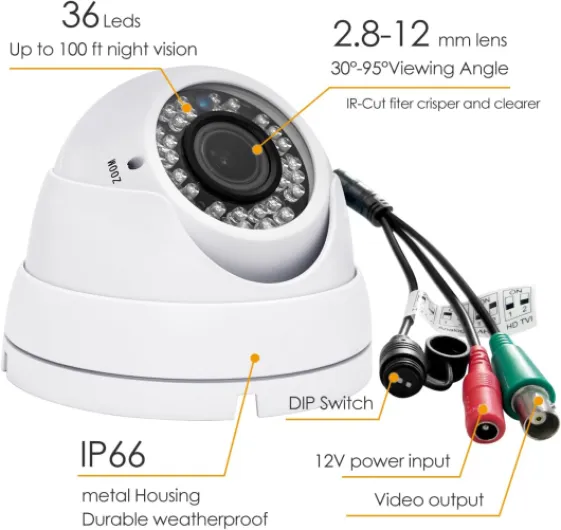
- + 1080P HD resolution for clear video
- + 4-in-1 compatibility (TVI/AHD/CVI/CVBS) works with most analog DVRs
- + Varifocal 2.8–12mm lens allows adjustable field of view
- + Weatherproof metal housing for durable outdoor use
- + 36 IR LEDs for enhanced night vision
From Hangzhou to Yiwu Tianying: the supply chain behind luxury optics
Behind every refined 1200 mm CCTV camera installed in a Côte d’Azur villa or Swiss lakeside chalet lies a dense optical supply chain. Cities like Hangzhou have become hubs for high precision camera modules, where companies such as Tianying Optical engineer long range zoom blocks that later receive bespoke housings and finishes in Europe or the Middle East. Yiwu Tianying and similar suppliers often handle the transition from industrial batches to low MOQ runs tailored for boutique integrators.
For luxury projects, minimum order quantity is a strategic lever rather than a constraint. A low MOQ allows designers to commission a limited series of cameras with custom anodized finishes, silent PTZ motors, and specific focal length configurations optimized for a single estate. Integrators will often specify multiple units with slightly different focal ranges, pairing a 1200 mm zoom spotter with shorter focal length CCTV modules to create layered surveillance without visual clutter, and to ensure redundancy if one sensor requires maintenance.
Quality control at this level goes far beyond basic functional tests. Optical engineers measure chromatic aberration across the full zoom range, verify off axis behavior in mixed lighting, and validate that the coaxial zoom control remains precise after thousands of cycles. When the final cameras arrive on site, the system integrator fine tunes each zoom profile, calibrates the laser rangefinder, and aligns auto tracking parameters so that the entire surveillance network behaves like a single, coherent instrument rather than a collection of separate devices. Serious buyers should expect to see factory test reports or third party verification, not just a generic quality certificate.
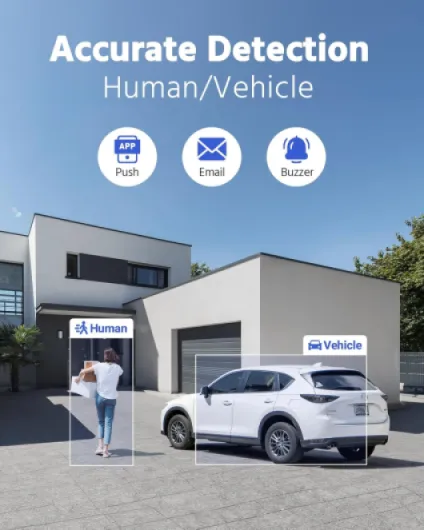
- + AI Human/Vehicle Detection for smarter alerts and fewer false alarms
- + H.265+ compression saves storage and bandwidth
- + Color Night Vision with smart dual light improves nighttime ID
- + IP67 weatherproof rating — suitable for outdoor use
- + Includes 1TB hard drive so system is ready to record
Integrating a 1200 mm CCTV camera into smart home luxury
For a luxury client, a 1200 mm CCTV camera is never just a piece of security hardware. It becomes part of a broader smart home narrative that includes architectural lighting, acoustic design, and even immersive entertainment technologies such as high end AR glasses. When these elements are orchestrated correctly, the cameras fade into the background while their data quietly enhances comfort, safety, and the overall sense of control.
Modern control platforms allow the optical feeds, thermal overlays, and NIR spotter alerts to appear contextually on tablets, wall panels, or large format displays. A homeowner might tap a single icon to bring up a long range view from the 1200 mm zoom spotter, then seamlessly switch to a wide angle PTZ camera for context, all while the system maintains coaxial zoom synchronization and accurate focal length metadata. For readers interested in how such interfaces can feel almost invisible, the broader conversation about top luxury AR glasses shows how visual information can be layered without overwhelming the user, and why latency, color accuracy, and contrast ratios matter when viewing long range imagery.
Security integrators now work alongside interior designers to ensure that cameras, lenses, and coaxial cabling routes respect the home’s aesthetic language. This can mean hiding a CCTV module inside a sculpted column, or using a custom enclosure that echoes the finish of exterior light fixtures while still allowing full optical zoom travel. The most successful projects treat every 1200 mm CCTV camera as both a precision instrument and a design object, where high technology is present but never visually aggressive, and where the control logic is documented so that future upgrades or regulatory changes can be implemented without tearing apart finished interiors.
Choosing specifications: what luxury buyers should demand from long range CCTV
When commissioning a 1200 mm CCTV camera for a high value residence, the specification sheet deserves the same attention as a bespoke watch or yacht tender. Buyers should insist on documented optical performance, including measured chromatic aberration across the zoom range, verified focal length tolerances, and clear data on night vision sensitivity in both NIR and SWIR bands. A serious manufacturer will provide indicative figures for detection, recognition, and identification distances under defined thermal and visible light conditions, often using standards similar to Johnson criteria and test setups referenced in IFSEC Global or Omdia technical notes.
Functionally, the system should combine optical zoom, digital stabilization, and auto tracking into a coherent workflow. The PTZ head must move with enough precision that the laser rangefinder and zoom chromatic compensation algorithms can maintain focus on a subject at several kilometers, even in crosswinds. For estates with complex topography, multiple cameras with different focal lengths can be networked so that a long range zoom spotter hands off targets to shorter focal length CCTV units for closer inspection, while software rules enforce masking zones and privacy boundaries defined in consultation with legal advisers.
From a procurement perspective, MOQ and customization options matter because they determine how well the hardware can be tailored to the property. Working with suppliers in Hangzhou or Yiwu Tianying through an experienced integrator ensures access to the latest Tianying Optical modules, SWIR blocks, and NIR spotter sensors. As ambient AI becomes more prevalent in luxury homes, as seen in discussions about the comfort problem with ambient AI, the 1200 mm CCTV camera will increasingly act as both a guardian of the perimeter and a data rich sensor feeding the home’s broader intelligence layer, with clear documentation of what data is stored, where it is processed, and how long it is retained.
Key figures shaping the ultra long range CCTV market
- According to Omdia’s Video Surveillance and Analytics Intelligence Service, the global professional video surveillance equipment market exceeded 20 billion USD, with high end PTZ systems and long range lenses representing a fast growing premium segment; Omdia’s methodology is based on vendor shipment data and channel interviews rather than speculative forecasts.
- MarketsandMarkets reports that thermal camera shipments for commercial and residential security have grown by more than 15% annually in recent years, driven by demand for perimeter protection in luxury estates and critical infrastructure, with detailed breakdowns by application and sensor resolution in their published market studies.
- Industry testing cited by IFSEC Global indicates that a well engineered 1200 mm focal length optical zoom system can extend human detection ranges to more than 5 km under clear conditions, compared with around 500 m for conventional short focal length CCTV cameras; however, fog, rain, and heat haze can reduce these figures dramatically in real deployments.
- Manufacturers contributing to IFSEC Global case studies report that multi sensor heads combining optical, NIR, SWIR, and thermal channels can reduce false alarms by up to 70% compared with single spectrum setups, when paired with advanced auto tracking analytics and carefully tuned alarm thresholds.
- Custom low MOQ production runs for luxury projects typically add 10–25% to the base hardware cost, but they enable bespoke finishes and focal configurations that significantly enhance integration into high end architecture and can simplify long term maintenance by standardizing on a single optical platform.
FAQ about 1200 mm CCTV cameras in luxury smart homes
Is a 1200 mm CCTV camera excessive for a private residence ?
For compact urban apartments, a 1200 mm CCTV camera is unnecessary, but for large coastal estates, vineyards, or properties with extensive waterfront, the long range capability is highly relevant. It allows early detection of activity far beyond the immediate boundary, giving security teams more time to respond. In luxury contexts, this extended reach is often considered part of a layered protection strategy rather than an excess, provided that local surveillance laws, neighbor sightlines, and data protection rules are carefully observed.
How does a 1200 mm focal length affect image quality ?
An extreme focal length magnifies both detail and imperfections, so optical design becomes critical. High end lenses use multiple elements and special coatings to control chromatic aberration and maintain sharpness across the zoom range. When combined with precise PTZ mechanics and stabilization, a 1200 mm CCTV camera can deliver remarkably clear images even at several kilometers, although haze, dust, and thermal distortion in the air will always limit the practical resolution compared with the theoretical MTF values in the datasheet.
Do long range CCTV systems compromise the aesthetics of a luxury home ?
They do not have to, provided the hardware is specified and integrated thoughtfully. Custom housings, recessed mounts, and coordinated finishes allow cameras, lenses, and coaxial cabling to blend into the architecture. Many luxury projects treat each CCTV module as a design element, ensuring that high technology supports rather than dominates the visual language of the property, and that visible components comply with any heritage or planning restrictions on the building.
What is the role of thermal, NIR, and SWIR in residential surveillance ?
Thermal, NIR, and SWIR channels extend visibility beyond what standard optical cameras can capture, especially at night or in adverse weather. Thermal cameras highlight heat signatures, NIR sensors enhance low light detail, and SWIR modules improve contrast through haze or smoke. In a multi sensor 1200 mm CCTV camera, these bands work together to provide reliable detection while allowing the homeowner to fine tune privacy and image style, and to comply with any local guidance on how identifiable individuals may appear in recorded footage.
How should buyers evaluate suppliers such as Tianying Optical or Yiwu Tianying ?
Buyers should look for transparent optical specifications, proven experience with long range focal lengths, and the ability to support low MOQ customization. Working through a reputable integrator helps translate industrial components from Hangzhou or Yiwu Tianying into finished systems that meet luxury expectations. It is essential to review real project references and verify that the supplier’s coaxial zoom, auto tracking, and zoom spotter technologies perform reliably in demanding residential environments, ideally supported by independent test reports or IFSEC and Omdia case studies rather than unverified brochures.
References
- Omdia – Video Surveillance and Analytics Intelligence Service (market sizing and premium PTZ segment data, based on vendor reporting and channel research)
- MarketsandMarkets – Thermal Imaging Market and Video Surveillance Market reports (growth rates, deployment trends, and application breakdowns for perimeter security)
- IFSEC Global – Industry analysis on long range PTZ and multi sensor cameras (detection range benchmarks, multi spectrum false alarm statistics, and case studies of coastal and critical infrastructure deployments)
Example specification snapshot for a 1200 mm luxury CCTV system
| Focal length range | 60–1200 mm continuous optical zoom, F/5.6 at 1200 mm |
| Optical construction | 18 glass elements in 13 groups, low dispersion and aspheric components |
| MTF performance | >40% at 50 lp/mm on axis at full telephoto under 550 nm illumination, as measured on an optical bench in controlled laboratory conditions |
| Stabilization | Hybrid optical and electronic stabilization, rated to compensate ±0.5° vibration, with performance verified during factory acceptance testing |
| Multi spectrum sensors | 4K visible sensor, 640×512 thermal core, 2 MP NIR/SWIR channel in a single head |
| Environmental rating | IP66 housing, -30 °C to +60 °C operating range, coastal corrosion resistant finish |