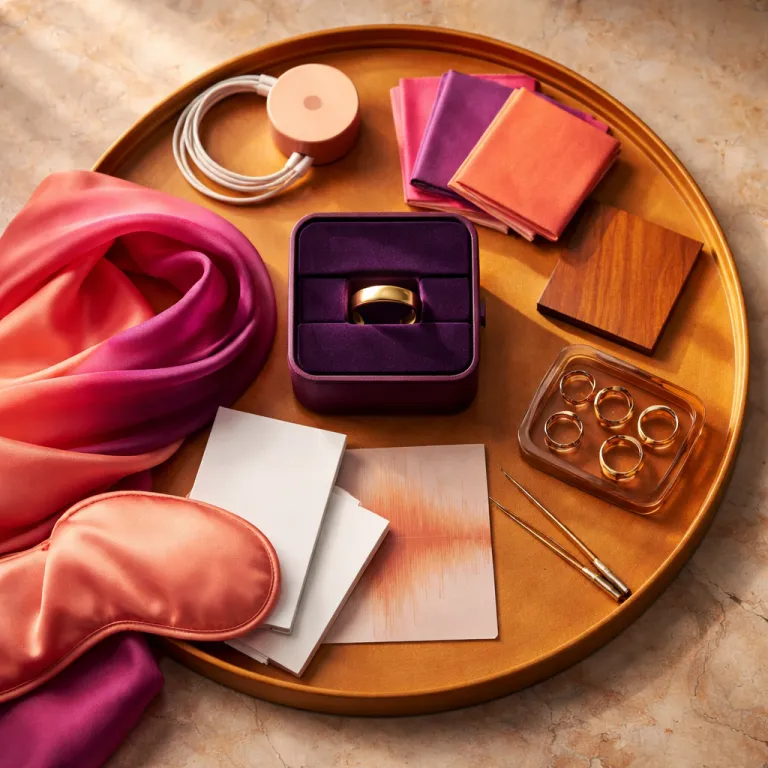
From fitness gadget to fashion object: the rise of designer wearable technology
Designer wearable technology has shifted from gym accessory to wardrobe signature. Luxury maisons now treat every wearable as a piece of design first, then as technology that quietly serves health and fitness in the background. This change in view is reshaping how smart devices enter daily life for the design conscious collector and for anyone building a coherent ecosystem of connected accessories.
The Gucci x Oura ring is the clearest proof that a wearable can be fine jewelry before anything else. Released in 2022 at a launch price around €950, it wraps Oura’s third generation smart ring platform in black titanium and PVD coated gold, with water resistance to 100 m and a typical battery life of four to seven days. Under the band, Oura hides advanced sensors that track sleep stages, heart rate variability and recovery in real time, yet the form factor reads as a signet ring rather than a fitness tracker. That single object reframes wearable technology as a category where human factors, comfort usability and body dynamics matter as much as raw sensor accuracy.
Apple and Hermès took a different route, using the Apple Watch as a neutral tech core and wrapping it in hand stitched Barénia leather and polished stainless steel. Since the first Apple Watch Hermès collection in 2015, successive generations have added brighter always on displays, ECG and blood oxygen sensors, fall detection and up to 18 hours of mixed use battery life, while keeping the same basic case geometry. Here the wearable devices become canvases for product design, with interchangeable straps turning one piece of wearable tech into a small collection of objects that match different aspects of daily life. The result is a design wearable that feels at home beside a mechanical chronograph, not in a gym locker.
This fashion first approach forces engineering teams to rethink how they are designing wearable hardware from the inside out. Sensors must curve with the wrist, antennas must hide under enamel or leather, and manufacturing processes must respect both health safety regulations and luxury finishing standards such as nickel release limits and hypoallergenic coatings. When done well, these devices offer a rare combination of smart function and tactile pleasure that justifies their place in a curated collection and supports long term daily wear.
Fashion houses versus engineering labs: who really shapes the wearable form factor ?
When fashion directors lead a project, the form factor of a wearable often starts with mood boards, not circuit diagrams. They think in silhouettes, proportions and how the technology will sit against skin, long before a single sensor is specified. That is why wearables from Hermès, Thom Browne or Gucci feel like coherent design objects rather than mini computers strapped to the body, and why their straps, clasps and finishes echo existing leather goods or jewelry lines.
By contrast, engineering led wearable devices usually begin with a stack of components and a list of fitness tracking requirements. The result can be technically impressive wearable tech that still looks like a prototype, with product design decisions made to accommodate batteries, radios and optical sensors instead of human factors. Luxury collaborations invert that hierarchy, forcing the tech to adapt to the design rather than making the user adapt to the device, and often accepting higher tooling costs or more complex assembly to preserve the intended silhouette.
Samsung’s collaborations with Thom Browne show how far this can go when a fashion house is given real control. The limited edition Galaxy wearables arrive with tailored straps, engraved cases and packaging that feels closer to a couture accessory than a mass market smart device, and the numbered runs have created a genuine collector market with resale premiums reported well above original retail for pristine sets. For readers who want a broader view of such crafted collaborations in wearable technology, the curated guide to wearable tech designer editions for connoisseurs offers a useful reference point.
This tension between fashion and tech is not cosmetic ; it shapes user experience at a deep level. A design wearable that respects body dynamics and comfort usability will be worn for longer periods, generating more meaningful health data and a more accurate report of the user’s life patterns. When the main content of the design process treats the human as the starting point, skip main engineering compromises become less visible, and the final wearable technology piece feels inevitable rather than forced, even when it contains complex radios, batteries and optical modules.
Health tracking as a luxury accessory: when wellness stops looking like fitness
The most interesting shift in designer wearable technology is the move from overt fitness trackers to discreet health companions. Oura’s ring form factor proved that a wearable focused on sleep and recovery can hide in plain sight as jewelry, while still delivering real time insights into human physiology such as nightly heart rate variability, temperature trends and respiratory rate. That single idea opened the door for fashion houses to treat health as a lifestyle narrative rather than a gym metric.
Gucci’s take on the Oura ring shows how far this narrative can stretch without losing technical credibility. Under the interlocking G motif, the same smart sensor array tracks temperature, heart rate and movement, turning micro variations in body dynamics into a continuous report on readiness and stress, yet the user experiences it as a piece of design that simply fits into daily life. This is luxury health tech in practice, where the devices offer biometric depth without shouting about steps or calories, and where the companion app translates raw data into simple readiness or sleep scores.
Apple Watch Hermès follows a similar path, but with a more visible tech presence that still respects fashion codes. The watch remains recognisably a piece of wearable tech, yet the hand crafted leather, carefully tuned color palettes and refined product design soften its fitness tracking persona into something closer to a dress watch with a hidden health dashboard. For collectors interested in the more discreet, even covert side of health and security focused wearables, the analysis of the allure of high end wearable surveillance devices offers a parallel lens on how sensors and smart features can vanish into accessories.
As this luxury health segment matures, human factors and health safety standards will only grow more demanding. Designing wearable devices that sit against skin for twenty four hours requires careful attention to materials, coatings and manufacturing processes, especially when metals, ceramics or exotic leathers are involved. The best fashion tech collaborations treat these constraints as part of the design brief, turning comfort usability into a quiet form of luxury that the wearer feels every time the device disappears on the body and still delivers reliable health metrics.
Inside the object: how luxury materials reshape sensors, batteries and manufacturing
Look beneath the polished surfaces of any designer wearable technology piece and you will find a complex negotiation between aesthetics and engineering. A ring like Gucci x Oura or a cuff style wearable from a niche atelier must fit batteries, radios and optical sensors into millimetres of space without compromising comfort. That is where manufacturing processes become a decisive part of product design rather than an afterthought, from multi part casings to laser welded seams and precision cut sensor windows.
Traditional fitness trackers often rely on plastic shells and straightforward assembly, which gives engineers freedom but limits tactile appeal. Luxury wearables, by contrast, may use gold, titanium, ceramic or sapphire, each material imposing its own constraints on antenna performance, heat dissipation and health safety, so every sensor window and charging contact must be designed with surgical precision. The result is that designing wearable hardware at this level feels closer to watchmaking than to consumer electronics, with tolerances measured in fractions of a millimetre and extensive reliability testing.
These constraints also influence user experience in subtle ways that matter to a design literate audience. A bracelet style wearable technology piece with a rigid metal form factor must account for body dynamics as the wrist flexes, or the sensor will lose skin contact and degrade real time data quality, which in turn undermines the value of any health or fitness report. When devices offer haptic feedback or smart notifications, the weight distribution and strap design can make the difference between a reassuring tap and an intrusive buzz, especially during sleep or long workdays.
For collectors building a coherent ecosystem, the same principles apply to other categories such as high end audio. A thoughtfully engineered wireless speaker system that respects room acoustics and materiality, like those reviewed in the guide to refined room filling wireless sound, follows the same philosophy as a well executed design wearable. In both cases, the main content of the design process is about aligning technology with human rituals, so the tech becomes an invisible partner rather than a noisy protagonist.
Can fashion houses sustain the tech investment behind luxury wearables ?
The unresolved question in designer wearable technology is not whether the objects are desirable, but whether fashion houses can maintain the pace of tech investment. Hardware cycles, software updates and evolving health regulations move far faster than seasonal collections, and that mismatch creates real strategic tension. A smart ring or watch that stops receiving updates becomes a dead accessory, no matter how beautiful the design or how refined the materials.
Partnership models offer one pragmatic answer, as seen in Apple x Hermès, Samsung x Thom Browne and Gucci x Oura. In each case, a tech company owns the core platform, sensor stack and long term software roadmap, while the fashion partner focuses on design, materials and storytelling, which allows both sides to play to their strengths without overextending. For the user, this structure can translate into better long term support, more reliable health and fitness tracking, and a user experience that evolves over time instead of ageing like last season’s bag.
Yet even within these partnerships, the economics of wearable technology remain demanding. Continuous research into human factors, comfort usability and body dynamics, along with rigorous testing for health safety, requires specialised équipes and laboratories that do not fit neatly into a traditional fashion house P&L, and the temptation to treat wearables as short term marketing exercises is strong. The brands that will matter in this space are those willing to treat designing wearable devices as a core capability, not a side project, and to invest in firmware, cloud services and data protection as seriously as they invest in leather sourcing.
For the design conscious collector, the most sustainable strategy is to evaluate each wearable as both an object and a service. Look beyond the surface design wearable appeal and ask how often the platform has been updated, how transparent the company is about sensors and data handling, and whether the devices offer clear pathways for repair or replacement over time. In the end, the real luxury in wearable tech is not just the feel of leather or metal on your wrist, but the quiet confidence that the smart layer will still be working, and working well, years from now.
FAQ
Are designer wearables as accurate as traditional fitness trackers ?
Accuracy in designer wearable technology depends less on branding and more on the underlying sensor platform. Collaborations like Gucci x Oura or Apple x Hermès use the same sensor arrays and algorithms as their standard counterparts, so fitness tracking and health metrics are generally comparable. The main variables are fit, form factor and how consistently the user wears the device in daily life, especially during sleep and exercise.
What should I prioritise when choosing a luxury wearable for health tracking ?
Start with sensor quality, battery life and software support, then evaluate design and materials. A wearable that looks exquisite but sits loosely on the wrist or finger will compromise real time data and reduce the value of any health report. Aim for a balance where comfort, body dynamics and user experience align with your aesthetic preferences and with the specific health insights you actually plan to use.
Do fashion house collaborations hold their value better than standard wearables ?
Limited editions such as Samsung x Thom Browne or early Apple Watch Hermès runs have shown stronger resale performance than mainstream models. Collectability depends on numbered production, distinctive design and the cultural weight of the fashion partner, not just the tech specifications. Over time, the most iconic design wearable pieces tend to be those that feel timeless even as technology evolves and software features are added.
How important are materials for health safety and comfort in luxury wearables ?
Materials directly affect skin compatibility, weight, thermal comfort and long term wearability. High grade stainless steel, titanium and ceramics generally perform well for health safety, while certain coatings, adhesives or leathers require careful testing to avoid irritation during continuous wear. A well executed wearable technology piece will pair premium materials with thoughtful ergonomics so the device effectively disappears on the body and can be worn day and night.
Can a single designer wearable replace both a traditional watch and a fitness tracker ?
For many users, a well chosen piece such as an Apple Watch Hermès or a Gucci x Oura ring can cover both style and health needs. The key is to match the device’s capabilities, from notifications to fitness tracking depth, with your actual habits and wardrobe. Some collectors still prefer a mechanical watch for formal settings and a discreet health focused wearable for continuous monitoring, especially when they want sleep or recovery data without a bright screen.
