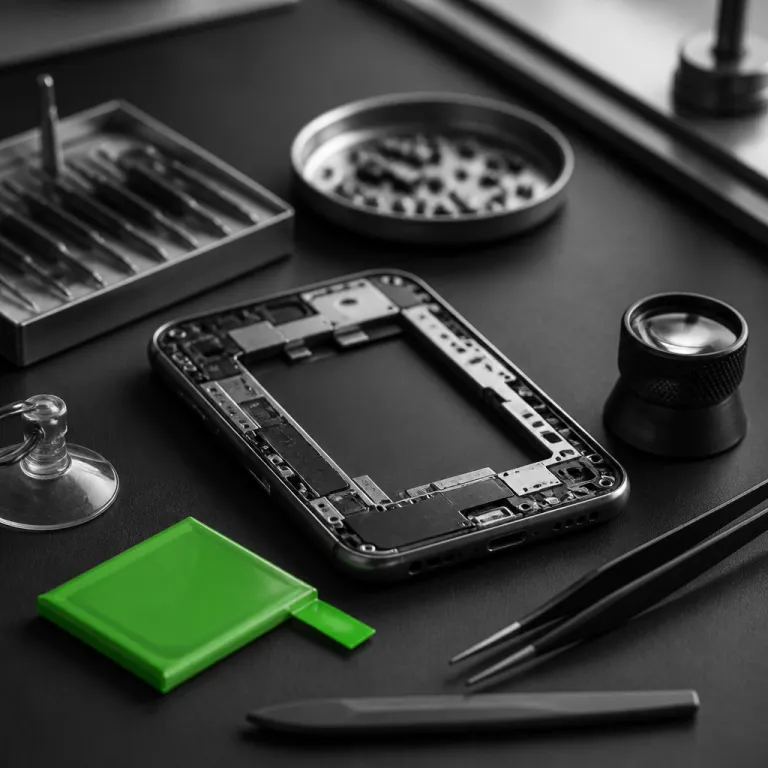
When exclusivity meets a screwdriver: luxury tech repairability as a new status marker
Luxury tech repairability right to repair premium is no longer a fringe concern for hobbyists. Among affluent consumers, the right for a consumer to keep a beloved product in service is starting to feel as aspirational as a limited edition finish, because longevity and repair now signal discernment rather than thrift. In this world, repairability becomes a quiet flex, a way of saying you buy products to live with them, not just to post them.
Look at Sennheiser’s Momentum 5, which offers a user replaceable battery at around 399,99 dollars and treats repair as part of the design language rather than an afterthought. By contrast, Sony’s 1000X Collexion at roughly 650 dollars is fully sealed in leather and steel, a product that radiates craftsmanship while making independent repair almost impossible once the battery fades. Both products are premium, yet they embody a philosophical split about whether fixing things should be visible or hidden behind proprietary parts and authorized repair networks.
For a luxury tech gadgets passionate audience, the question is not whether repair is technically possible but whether companies are willing to make repairability a first class feature. The luxury tech repairability right to repair premium debate is about whether a product’s aura depends on being untouched, or whether a long standing relationship with a device, supported by spare parts and transparent repair initiatives, can feel even more exclusive. When consumers independent of brand controlled channels can access high quality repair parts without compromising design, the environmental impact shrinks while the emotional bond deepens.
Apple sits at the center of this tension, with design products that are obsessively finished yet often constrained by parts pairing and tightly controlled authorized repair programs. The brand’s policy choices around independent repair and third party access to spare parts show how a single company can shape the repair movement far beyond the united states, because its products define what premium looks like for an entire category. When Apple leans into longevity repairability through official repair initiatives and when it reduces waste by supporting more open access to repair parts, it signals to other manufacturers that repair is compatible with luxury.
Regulatory pressure is accelerating this shift, as right to repair legislation advances in the European Union and several US states. For luxury brands, the regulatory landscape is not just about compliance costs but about whether they frame right repair as a burden or as a new canvas for design, service, and storytelling. The smartest companies will treat the luxury tech repairability right to repair premium conversation as a chance to redefine value, not as a threat to margin or mystique.
Craftsmanship, secrecy, and the myth that repair makes products feel cheap
High end tech has long borrowed from haute horlogerie, yet it often ignores the watch industry’s most radical idea, that true luxury is inherently repairable. A mechanical watch is designed so that a repair expert can service it for decades, with spare parts catalogues, exploded diagrams, and a culture that treats fixing things as a craft rather than a cost center. No one argues that a Patek feels less premium because an independent repair atelier can overhaul it.
In consumer electronics, manufacturers frequently claim that sealed designs are necessary for water resistance, thinness, or structural integrity. Sometimes that is true, but just as often the choice reflects a policy preference for proprietary parts, tight control over authorized repair, and a desire to keep consumers dependent on brand owned channels. When companies say that opening a product will inevitably damage it, they are really saying that they chose not to design products with repairability in mind.
Apple’s approach illustrates this duality, as the company produces products that feel like jewelry yet often rely on parts pairing that can block third party repair even when the physical work is flawless. For a luxury tech gadgets passionate buyer, this raises a simple question about luxury tech repairability right to repair premium expectations, whether the right to maintain a device should be as fundamental as the right to choose a finish or storage tier. When consumers independent of official channels face software locks after a legitimate repair, the environmental impact and the perceived fairness of the ecosystem both suffer.
There is also a cultural hangover from decades of planned obsolescence, when the cost of repair was deliberately pushed above the cost of replacement. That logic made sense for mass market products, but it clashes with a clientele that thinks in terms of heirlooms, collections, and long standing ownership cycles. For these consumers, the real cost is not just the invoice for repair parts but the environmental waste and the loss of a familiar object that has already been integrated into their daily rituals.
As right to repair laws evolve in the united states, regulatory frameworks are starting to challenge the idea that luxury can justify locking out independent repair. Brands that cling to the narrative that repair wrong equals brand dilution will find themselves out of step with a repair movement that now includes affluent, design literate buyers. If you are evaluating premium devices for your office or hospitality space, even something as seemingly intangible as an AI driven concierge or virtual receptionist should be assessed through this lens, and guides on how to choose the best AI virtual receptionist for lead qualification in the luxury tech sector can help align service tech with the same repairability values you expect from hardware.
Luxury tech repairability right to repair premium thinking reframes craftsmanship as something that must survive the first battery cycle and the second owner. When companies design products so that a repair expert can access internal parts without destroying adhesives or finishes, they are not cheapening the object, they are acknowledging that true exclusivity outlives a warranty card. The brands that understand this will treat every screw, gasket, and software lock as a design decision with both aesthetic and environmental consequences.
From sealed headphones to serviceable watches: how categories signal value over time
The contrast between Sennheiser’s Momentum 5 and Sony’s 1000X Collexion captures how two similar products can send very different signals about longevity. A user replaceable battery tells the consumer that the manufacturer expects the product to stay in rotation for years, while a sealed design implies that the cost of future repair will likely exceed the perceived value. For a luxury tech gadgets passionate audience, that subtext matters as much as the spec sheet.
In the watch world, the expectation of service is baked into the purchase, with brands maintaining long standing archives of repair parts and documentation. Even when only authorized repair centers can access certain components, the assumption is that the product will be supported for decades, not just a single product cycle. That mindset aligns naturally with the luxury tech repairability right to repair premium ethos, where longevity repairability becomes part of the story you are buying.
By contrast, the secondhand market for luxury tech products remains thin, precisely because repairability and policy support are inconsistent. A sealed pair of headphones or a smartphone with aggressive parts pairing is harder to value on the secondary market, since the next owner cannot easily assess future repair costs or access to spare parts. When companies open their repair initiatives and publish clear information about repair parts availability, they not only reduce environmental waste but also unlock residual value that benefits both first and second owners.
There is a quiet repair movement among affluent consumers who send their devices to boutique independent repair studios that specialize in premium materials, from ceramic watch cases to titanium laptops. These repair expert teams treat each product like a mechanical watch, cataloguing parts, tracking environmental impact, and advising on when repair is justified versus when replacement is the more responsible choice. For them, fixing things is not a budget move but a design decision that respects both craftsmanship and the planet.
Digital services are starting to mirror this thinking, with high end productivity tools and calendars positioning themselves as long term companions rather than disposable apps. When you evaluate something like a fluid calendar redefining time management for luxury tech enthusiasts, you are implicitly asking whether the service will be maintained, updated, and interoperable over time, just as you would ask whether a watch brand will stock gaskets and dials. The same luxury tech repairability right to repair premium logic applies, because longevity in software reduces cognitive waste in much the same way that longevity in hardware reduces material waste.
For hardware, the environmental and financial costs of non repairable products are becoming harder to ignore, especially as regulatory bodies in the united states and abroad scrutinize waste streams. Companies that design products with accessible spare parts, transparent cost structures, and support for third party and independent repair will find that their devices hold value better on the secondhand market. In a world where status is increasingly tied to sustainability, that retained value is itself a form of luxury.
Regulation, reputation, and why the cost to keep will define future luxury
Right to repair legislation is often framed as a battle between regulators and manufacturers, but in the luxury segment it is really a referendum on what premium should mean. When regulatory bodies push for open access to repair information and spare parts, they are not attacking craftsmanship, they are challenging planned obsolescence as a business model. For a luxury tech gadgets passionate audience, this aligns with a broader shift toward environmental accountability and transparent policy.
In the united states, recent state level right repair laws have already forced some manufacturers to publish repair manuals and make certain parts available to consumers and independent repair shops. These changes may feel incremental, yet they chip away at the assumption that only authorized repair centers should touch premium products, regardless of cost or convenience. As more companies respond to pressure from both regulators and consumers, the luxury tech repairability right to repair premium narrative will move from niche to mainstream.
Brands that embrace this shift early can turn repair initiatives into a differentiator, offering tiered service experiences that respect both environmental impact and the desire for white glove treatment. Imagine a concierge style program where a repair expert collects your headphones or smartphone, performs a certified independent repair using original repair parts, and returns the product with a refreshed warranty and a detailed environmental report. In that scenario, fixing things becomes part of the luxury ritual, not a sign that something went wrong.
The economics support this direction, because the true cost of non repairable products includes not only manufacturing costs but also reputational damage and regulatory risk. Companies that cling to proprietary parts and aggressive parts pairing may enjoy short term service revenue, yet they also face growing pressure from a repair movement that now includes institutional investors, policy makers, and high net worth consumers. Over time, the brands that align their policy choices with environmental goals will likely see stronger loyalty and higher resale values for their products.
For individual buyers, the practical question is simple, what will this device cost me to keep over ten years, not just to buy today. When you evaluate solar powered security systems or outdoor webcams for refined security and design, for example, you should be asking whether panels, batteries, and camera modules are modular, whether third party service is supported, and whether the manufacturer publishes clear guidance on repair. That is how luxury tech repairability right to repair premium thinking translates into concrete purchasing decisions that reduce waste and extend product life.
As the market matures, the line between authorized repair and independent repair will blur, with certified third party specialists offering experiences that match or exceed brand owned boutiques. The brands that thrive will be those that treat consumers independent of their own service channels as partners in reducing environmental impact, not as threats to control. In that future, the most coveted devices will be the ones that feel as good to maintain as they do to unbox, because luxury will be measured by how gracefully a product ages in your life.
Key figures shaping luxury tech repairability and right to repair
- A report from the European Commission found that extending the lifetime of all smartphones and tablets in the EU by just one year would save around 2,1 million tonnes of CO₂ equivalent emissions annually, which underscores how longevity repairability in premium products can materially reduce environmental impact.
- According to a study by the US Public Interest Research Group, repairing instead of replacing common consumer electronics could save an average household in the united states up to 330 dollars per year, a figure that scales significantly when applied to higher cost luxury tech products.
- Data from the Ellen MacArthur Foundation indicates that circular economy strategies, including repair and refurbishment, could reduce global greenhouse gas emissions by up to 39 % across key sectors, highlighting how repair initiatives in luxury tech can contribute meaningfully to broader climate goals.
- Research by iFixit shows that smartphones with higher repairability scores tend to retain resale value better over time, suggesting that luxury tech repairability right to repair premium features can directly influence secondhand pricing and total cost of ownership.
- A survey by Deloitte found that more than 60 % of younger consumers consider a brand’s environmental policy when making purchasing decisions, which means that companies embracing open access to spare parts and independent repair are better positioned with the next generation of luxury buyers.