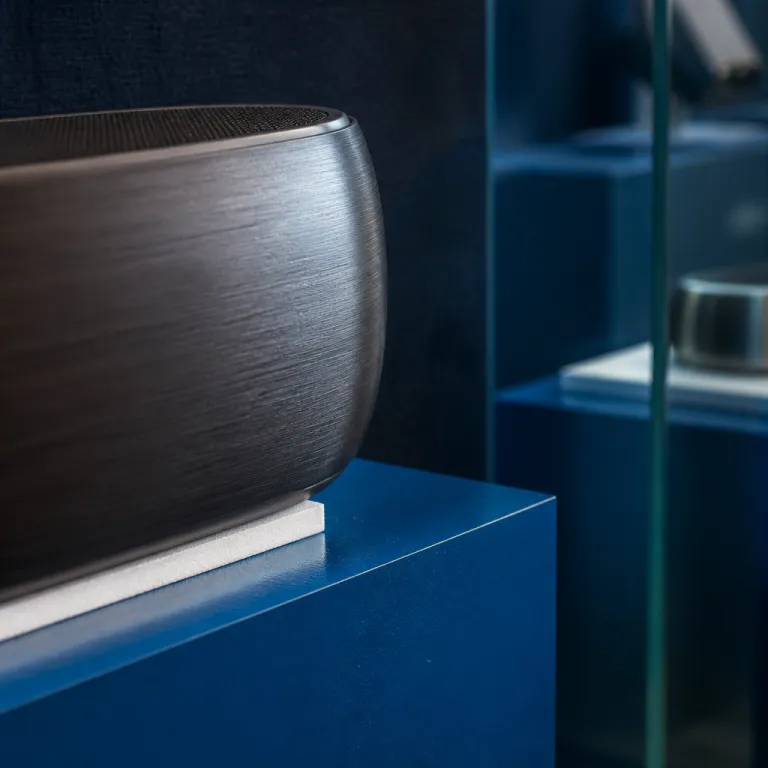
From electronics store to curated gallery: how luxury tech reframes desire
Walk into a leading luxury tech retail gallery and the shift is immediate. The main luxury tech retail gallery experience design principle is that the space should feel closer to a Chelsea art show than a crowded electronics store, and that change quietly rewires how you evaluate every product in front of you. In this kind of luxury retail environment, you are not comparing specifications ; you are reading a visual story about what kind of person owns this object.
The Apple Store was the first mass market example luxury observers like to cite, but the new wave of luxury brands goes further by treating each device as a collectible sculpture rather than a gadget on a shelf. Bang & Olufsen flagships use retail design strategies borrowed from contemporary galleries, placing speakers on stone plinths in generous experiential spaces where customers can walk around them and feel the sound as a three dimensional material. That is luxury tech retail gallery experience design at work ; the store experience becomes a slow, choreographed encounter instead of a transactional moment under fluorescent lighting.
Devialet’s showrooms push this design luxury logic even harder with sparse layouts, darkened ceilings, and tight gallery lighting that isolates each Phantom speaker in its own halo. The product feels less like audio technology and more like a piece of futuristic jewelry, and that emotional shift lets the brand add narrative weight and pricing power without saying a word. When luxury retailers treat sound systems as art objects, the retail space itself becomes part of the product and customers start collecting experiences, not just devices.
Dyson’s Demo stores offer another example luxury insiders study closely, because they turn vacuum cleaners and hair tools into tactile installations. The store design invites you to test airflow on real hair, trace the curve of a sculpted handle, and understand the technology through touch rather than through a spec sheet pinned to a display. That is the gallery effect in luxury retail ; the experience is curated so carefully that the story of the brand feels inevitable by the time you reach the checkout.
For design conscious collectors, this shift matters because it aligns luxury fashion level aesthetics with high performance technology in a single coherent story. You are no longer forced to choose between a beautiful space and a serious product, since the best luxury brands create environments where both coexist and reinforce each other. In these unique store concepts, retail design becomes a form of storytelling that quietly signals future luxury values long before the next campaign drops.
Behind the scenes, design trends in these stores borrow heavily from museum practice, from controlled sightlines to carefully calibrated acoustics. The most interesting trends luxury strategists track involve how brands use negative space, sustainable materials, and digital layers to choreograph movement through the store. When a luxury tech retail gallery experience design is done well, every step you take through the space feels intentional, and every pause in front of a display adds another chapter to the story you are building in your head.
Art world tactics in luxury tech: scarcity, staging, and the power of context
Gallery style retail design borrows three core tactics from the art world ; scarcity, staging, and context. Instead of lining every wall with every product, luxury retailers now show a limited selection of hero pieces, which makes each display feel more precious and more considered. That scarcity primes customers to treat technology as collectible design rather than as interchangeable hardware.
Bang & Olufsen’s Beolab speakers, for instance, often appear in store experiences as single monolithic forms in a living room vignette, not as rows of boxes in a warehouse style retail space. Devialet’s Phantom is typically shown alone on a pedestal, with the rest of the space left intentionally quiet so that the sound and the sculptural form can carry the story. This kind of luxury tech retail gallery experience design uses space as a material ; the emptier the room, the louder the brand message feels.
Context is where the art world parallel becomes most obvious for design luxury enthusiasts. In a traditional electronics store, a television is a rectangle on a wall, but in an innovative retail gallery it might be framed like a painting, surrounded by curated furniture and luxury fashion objects that echo its materials. The same product suddenly feels like a piece of collectible design, because the store design has rewritten its story through association.
Digital layers now add another dimension to this gallery effect, especially when brands create augmented reality moments that extend the physical display. Smart mirrors in luxury fashion flagships already let customers see garments in different colors and contexts, and the same technology is migrating into luxury tech retail where you can visualize speakers in your own loft or see headphones styled with your usual wardrobe. These digital experiences turn the store experience into a hybrid exhibition, where physical and virtual storytelling blend into a single narrative arc.
Some of the most forward looking experiential spaces use sustainable materials as a quiet signal of future luxury values. Recycled aluminum plinths, low VOC finishes, and responsibly sourced woods do more than please architects ; they tell customers that the brand understands design trends and environmental responsibility as part of the same story. When luxury brands integrate sustainability into retail design, the technology on display feels more aligned with the long term life of a collector’s home.
For a deeper look at how design forward technology already belongs in galleries, the analysis of design forward tech that belongs in a gallery on Luxury Geek shows how brands are blurring the line between product and collectible object. That perspective reinforces why a luxury tech retail gallery experience design is not a gimmick but a logical response to how affluent customers now value aesthetics, narrative, and context. The more a store feels like a curated exhibition, the more its products behave like art in the eyes of serious collectors.
From comparison shopping to collecting: how gallery retail rewires purchase psychology
Once technology moves into a gallery style retail space, the psychology of buying changes completely. You are no longer a shopper scanning rows of SKUs ; you are a visitor moving through a sequence of store experiences that have been choreographed to build desire. That is why luxury tech retail gallery experience design matters so much for brands that want to command art market level attention.
In a conventional retail store, customers compare features and prices, often on their phones, and the brand risks becoming a commodity. In a unique store that feels like a private gallery, the store experience slows you down, encourages you to sit, listen, and imagine the product in your own home, which makes the eventual purchase feel like acquiring a piece of your future self. The emotional weight of that decision is very different from clicking “add to cart” on a generic digital interface.
Limited editions intensify this effect by importing art market logic directly into luxury tech. When a brand releases a run of fewer than twenty pieces worldwide, with numbered plaques and artist collaborations, the retail design around that product becomes an event in itself. The scarcity, the storytelling, and the physical display all conspire to make the technology feel like a long term asset rather than a short term gadget.
This shift has real implications for resale value, because objects treated as collectible design tend to hold their desirability longer than mass market devices. A beautifully staged turntable or a sculptural speaker that has lived in a carefully curated space will often age more like furniture or jewelry than like disposable technology. That is why serious collectors now track design trends in luxury tech with the same attention they give to limited edition watches or art furniture, and why analyses such as the exploration of microbrand dive watches on Luxury Geek resonate so strongly with this audience.
Online first brands face a particular challenge here, because a flat digital store struggles to replicate the layered sensory experiences of a gallery. Some, like Sonos, experiment with experiential spaces and pop up apartments where customers can inhabit the sound in a realistic context, while others rely on augmented reality tools to simulate scale and presence. The lesson is clear ; without a compelling store design, even the most advanced technology feels weightless and easy to forget.
For luxury collectors, the most useful filter is simple ; does this brand treat its showroom like a gallery or like a warehouse. If the space feels rushed, cluttered, and over lit, the technology will probably age the same way in your home, no matter how impressive the specifications look on paper. That is why essays such as the argument that nobody cares about your processor on Luxury Geek ring true for this audience, because in luxury retail the story, the space, and the experience now matter more than raw performance numbers.
Designing the future luxury showroom: where tech, fashion, and jewelry converge
The next wave of luxury tech retail gallery experience design will blur categories even more aggressively. Expect to see headphones displayed alongside fine jewelry, speakers staged with couture level fashion, and digital art screens treated as both technology and wall mounted sculpture. For design conscious collectors, these hybrid experiential spaces will feel less like stores and more like salons where different luxury brands quietly converse through materials and form.
Retail design teams are already experimenting with cross category storytelling that treats technology as part of a broader lifestyle narrative. A sculptural wireless charger might sit beside a ceramic vase and a leather valet tray, while a limited edition smartwatch appears in a vitrine usually reserved for jewelry, which subtly reframes the product as an heirloom rather than a disposable accessory. When brands create these layered vignettes, the store experience becomes a kind of three dimensional mood board for how future luxury living might look and feel.
Technology will not disappear in this scenario ; it will simply become more invisible and more integrated into the architecture of the store. Smart mirrors will move beyond fitting rooms to become interactive canvases that show how a piece of audio equipment or a digital frame changes the mood of a room across different times of day. Augmented reality overlays will let customers test different finishes, sustainable materials, and layout options in real time, turning the act of choosing a product into a collaborative design session rather than a one way sales pitch.
For luxury retailers, the strategic question is no longer whether to adopt innovative retail tactics but how far to push them. The most ambitious store design projects will treat every surface, every sound, and every shaft of light as part of a single, coherent story about the brand and its place in the culture. When that happens, the line between gallery, boutique, and showroom will dissolve, leaving only spaces that feel unmistakably like expressions of design luxury.
For collectors, the practical takeaway is to pay as much attention to the store as to the product itself. If the space feels thoughtful, calm, and narratively rich, there is a good chance the technology you bring home will carry that same energy into your daily life. In the end, the true test of any luxury tech object is not its benchmark score but how it feels in your hand, on your desk, or in your living room after the gallery lights have faded.
Key figures shaping the gallery effect in luxury tech retail
- According to Bain & Company, the global personal luxury goods market surpassed 350 billion euros recently, with experiential luxury and luxury retail environments accounting for a growing share of that spending compared with traditional product only purchases.
- McKinsey has reported that more than 70 percent of luxury customers say in store experience quality significantly influences their perception of a brand, which underscores why luxury tech retail gallery experience design has become a strategic priority for leading brands.
- Research from Deloitte indicates that stores using advanced digital tools such as augmented reality and smart mirrors can increase customer dwell time by up to 30 percent, giving experiential spaces more opportunities to build emotional connection and storytelling around technology products.
- Kering and LVMH have both highlighted in their annual reports that sustainable materials and environmentally conscious store design are now central to future luxury strategies, signaling that the gallery effect will increasingly be defined by ecological as well as aesthetic values.
Sources
- Bain & Company – Global Luxury Goods Market Study
- McKinsey & Company – The State of Fashion and Luxury Reports
- Deloitte – Global Powers of Luxury Goods