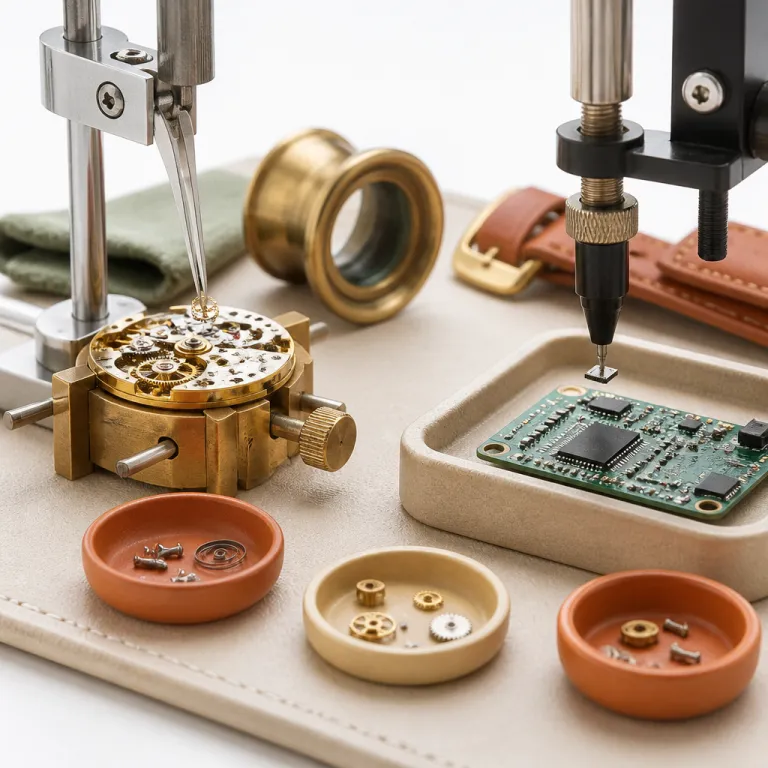
From specs to soul: the luxury tech collector mindset evaluation
Watch collectors judge objects through a lens that goes far beyond specifications and price. Their luxury tech collector mindset evaluation starts with the same instinct that guides them through fine watches and fine art, then extends into how digital devices age, patinate, and hold emotional weight over decades. When serious buyers treat a phone or a pair of headphones like art collectibles rather than disposable items, every decision about materials, finishing, and long term ownership changes.
In this world, luxury is not a logo but a standard of finishing, provenance, and care that mirrors what art collectors expect from an auction house handling rare items. The Huawei Watch Ultimate Design, introduced globally in late 2023 with its Fibonacci inspired case, 18K gold bezel, and 18K gold crown set with 24K gold inlays and 18K gold segments according to Huawei’s launch materials, speaks directly to collectors who already understand how fine art and haute horlogerie share a language of proportion, light, and tactile nuance. The Metawatch Hamlet Design Diamond Watch, a concept-level connected piece reported in specialist design media as being limited to three watches with hundreds of stones, pushes that logic further and turns a connected object into a piece that could sit comfortably beside luxury collectibles in a discreet private collection.
Once you adopt this collector mindset, you stop asking whether a gadget is fast enough this July and start asking whether it deserves a place in your long term collection. You begin to think like the clients of Christie’s or Sotheby’s, who evaluate art collectibles and sports memorabilia not only for current pleasure but for their role within a broader ecosystem of assets. That is the essence of a mature luxury tech assessment, where technology joins alternative collectibles such as rare watches, Pokémon cards, and even architect designed real estate as part of a coherent life of taste.
Five watchmaking criteria that transform how you judge luxury tech
Seasoned collectors use five watchmaking criteria that radically sharpen any luxury tech collector mindset evaluation. They look first at finishing, then at movement architecture, provenance, wearability, and what might be called emotional durability, and these same lenses work beautifully when you assess digital devices and connected watches. Once you apply these criteria to your next purchase, the usual tech review focus on processors and camera counts feels strangely thin.
Finishing is where the conversation starts, because it is where fine art, fine watches, and high end audio quietly converge. The centennial editions from Bang & Olufsen, such as the 95th anniversary Beoplay A9 and Beolab 28 finishes with brushed aluminium, warm natural tones, and numbered plaques, behave like luxury collectibles rather than mere electronics, and they reward the same close inspection that art collectors bring to a canvas. When you run a fingertip along a perfectly chamfered edge or a knurled volume wheel, you are performing a tactile luxury tech assessment that echoes how collectors handle rare items at a white glove preview in major auction houses.
Movement, in watch terms, means the engine inside, and in technology it is the architecture of both hardware and software working together. Vertu phones, historically hand assembled in the UK and individually numbered, showed how movement level thinking could extend to concierge services, multi year software support, and meticulous management of digital privacy policy commitments for demanding clients. The same mindset appears in elite sound systems for connoisseurs of immersive luxury audio, where the best systems treat amplification, drivers, and control interfaces as a single coherent movement rather than a pile of unrelated parts.
Provenance, secondary markets, and the test of time
Provenance is the quiet backbone of any serious luxury tech collector mindset evaluation. In watchmaking and fine art, provenance means a documented chain of ownership, careful art insurance, and a relationship with trusted auction houses that can help clients navigate the collectibles market with confidence. The same logic now applies to digital objects and hybrid devices that blur the line between art collectibles and functional tools.
Look at how the secondary market treats limited edition drones that redefine luxury aerial experiences, or numbered headphones produced in runs of ten pairs. When these items appear at Heritage Auctions or other specialist auction houses, they are catalogued with the same care as sports memorabilia or rare watches, and their sale prices quietly signal which brands understand collectors. A luxury tech valuation therefore includes a mental check of how a piece might perform at a future auction, whether at Christie’s, Sotheby’s, or a focused auction house that specialises in alternative collectibles.
Some digital assets now come with blockchain backed certificates from platforms such as Artory, which emerged in 2016 as a fine art registry, or similar registry providers that borrow practices from the art insurance and museum documentation world. These systems treat digital assets as part of a broader portfolio, where a carefully chosen collection of luxury tech, Pokémon cards, and design furniture might realistically reach high seven or eight figure valuations when combined with blue chip real estate. For serious collectors, the question is not speculation but management of risk, privacy policy obligations, and insurance coverage that recognises luxury collectibles as long term assets rather than gadgets.
Wearability, ergonomics, and the return of physical controls
Wearability is where the watch collector’s eye becomes ruthlessly practical, and it is central to any honest luxury tech collector mindset evaluation. A piece can be visually stunning yet fail if it sits awkwardly on the wrist, digs into the palm, or demands constant micro management of notifications. The best collectors know that an object you avoid wearing or touching is not part of your real collection, it is dead capital.
Luxury tech that passes this test often leans into physical tactility, echoing the curved lugs of classic watches or the reassuring click of a crown. High end devices with CNC machined dials, mechanical switches, and the return of physical controls in premium tech show how industrial design can borrow directly from horology to create objects that invite daily use. When you evaluate such items, you are unconsciously applying the same criteria that watch collectors use when they judge whether a case hugs the wrist or whether a clasp feels secure yet effortless.
Management of a collection also depends on how seamlessly these pieces integrate into daily life without demanding constant attention. A luxury tech collector mindset evaluation therefore includes questions about charging rituals, software updates, and long term service, because these factors shape whether clients treat devices as cherished collectibles or disposable tools. In the end, wearability is not only about comfort but about emotional rhythm, the quiet pleasure of reaching for the same watch, phone, or audio player every morning because it simply feels right in the hand.
From consumption to curation: building a coherent luxury tech collection
Once you think like a watch collector, every purchase becomes part of a narrative rather than an isolated impulse, and that is the real shift in any luxury tech collector mindset evaluation. You start to see your devices as a curated collection of assets, each with a role alongside fine art, sports memorabilia, and even carefully chosen real estate. The goal is not volume but coherence, a set of objects that reflect your taste, your habits, and your appetite for risk.
Serious collectors often work with advisers who help clients structure their holdings across art collectibles, luxury collectibles, and newer categories such as digital assets. These advisers borrow tools from wealth management and art insurance, ensuring that high value items are properly documented, insured, and, when appropriate, prepared for eventual sale through Christie’s, Sotheby’s, Heritage Auctions, or other auction houses with genuine white glove service. In this context, even a small run of Vertu phones or a trio of Metawatch Hamlet Design Diamond Watches becomes part of a broader strategy rather than a whim.
For many buyers, the journey starts with a single object that feels different, perhaps a limited run smartwatch that sits beside mechanical watches rather than replacing them. Over time, a thoughtful luxury tech collector mindset evaluation will balance emotional pulls with rational checks on provenance, liquidity in the collectibles market, and the legal fine print of every privacy policy attached to connected devices. The result is a living collection that might include watches, Pokémon cards, digital artworks, and a handful of impeccably made tech items that you will still want to hold decades from now.
FAQ
How does a collector mindset change which luxury tech I should buy ?
A collector mindset shifts your focus from short term specifications to long term value, provenance, and emotional durability. You start asking whether a piece will still feel relevant and satisfying in ten years, and whether it could sit comfortably beside fine art or watches in a serious collection. This approach naturally filters out disposable gadgets and highlights objects with strong design, reliable support, and credible secondary market potential.
Can luxury tech really behave like traditional collectibles such as watches or art ?
Some luxury tech already behaves very much like traditional collectibles, especially when it is produced in small numbered runs with clear documentation and strong design signatures. Limited edition audio systems, high end connected watches, and artist designed devices can attract the same buyers who frequent major auction houses. The key is scarcity, craftsmanship, and a brand that supports long term service and authentication.
What role do auction houses play in valuing luxury tech pieces ?
Auction houses provide transparent price discovery and independent validation for high end objects, including certain categories of luxury tech. When a device appears at Christie’s, Sotheby’s, or Heritage Auctions with proper cataloguing, it signals that the piece has crossed from consumer electronics into the realm of collectibles. Over time, repeated sales create a track record that serious collectors can use in their own luxury tech collector mindset evaluation.
How should I think about insurance and privacy for connected luxury devices ?
High value connected devices should be treated like other significant assets, with appropriate art insurance style coverage and careful reading of every privacy policy. Insurers increasingly recognise that luxury tech can sit alongside fine art and sports memorabilia in a portfolio, but they require documentation and sometimes independent valuation. On the privacy side, collectors favour brands that minimise data collection and offer clear, stable terms that respect long term ownership.
Is it worth paying extra for limited editions and numbered runs of tech products ?
Paying extra for limited editions makes sense when scarcity is real, design quality is high, and the brand has a track record of supporting its products over many years. In those cases, a limited piece can hold value better and integrate more naturally into a broader collection of luxury collectibles. If the limitation is purely cosmetic or marketing driven, however, a disciplined luxury tech collector mindset evaluation will usually steer you away.