How to read a luxury smartwatch guide when you already own great watches
A serious collector does not replace a favourite mechanical watch with a single smartwatch; they rotate connected watches and traditional pieces to suit context and mood. The point of a thoughtful luxury smartwatch guide is to help you decide when a high-end smartwatch belongs on your wrist instead of a perpetual calendar or a vintage chronograph, and which models respect that balance between technology and heritage. Think of each watch as a specialised instrument for a specific slice of life rather than a universal solution.
Start by mapping your day into clear use cases such as running before work, meetings in the city, and travel with offline maps and precise GPS tracking. During training sessions, the best smartwatches behave like a discreet fitness tracker with robust fitness tracking and health monitoring, while in the boardroom the same smartwatch should read as a restrained luxury watch rather than a gadget. A refined luxury smartwatch guide therefore weighs design, materials, and smart features as heavily as heart rate accuracy, battery life in hours or days, and meaningful fitness and wellness metrics.
Next, decide whether you want a primary connected companion like an Apple Watch or Galaxy Watch, or a secondary piece that complements existing luxury watches from brands such as TAG Heuer or Breitling. A primary smartwatch becomes your default watch for notifications, running metrics, and sleep tracking, so comfort, battery life, and water resistance matter more than exotic complications. A secondary luxury watch with smart features can focus on craftsmanship, using titanium, sapphire crystal, or ceramic to echo your mechanical watches while still offering GPS, fitness tracking, and subtle health insights in the background.
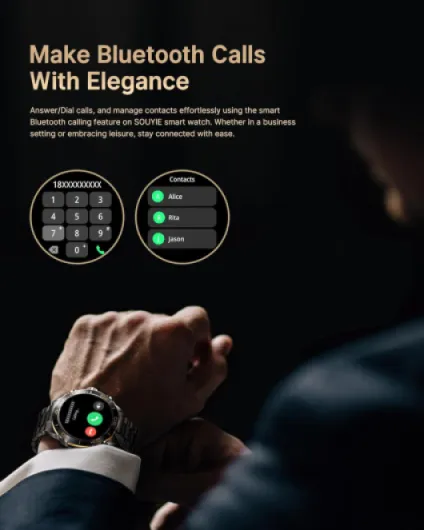
- + 1.43-inch AMOLED HD display for crisp visuals
- + Call support (answer/make calls) compatible with Android and iPhone
- + 400mAh battery for extended usage
- + Comprehensive health tracking: heart rate, blood oxygen (SpO2), blood pressure, sleep monitor, pedometer
- + Includes 2 straps for style or replacement (black)

Swiss craft meets silicon: TAG Heuer Connected, Breitling Exospace and Vertu Grand Watch
When Swiss maisons enter the smartwatches arena, the result is less about raw features and more about how the watch feels as an object. TAG Heuer’s Connected line, especially the latest TAG Heuer Connected Calibre E4 models, treats the smartwatch as a modular luxury watch platform, with ceramic bezels, titanium cases, and calibrated pushers that echo its Carrera and Monaco watches. The Breitling Exospace B55 takes a different path, pairing an analog-style pilot’s chronograph with connected smart features that push notifications and flight-related data to your wrist without sacrificing the look of a professional instrument watch.
In a serious luxury smartwatch guide, TAG Heuer deserves its own chapter because the TAG Heuer Connected Calibre E4 series shows how far traditional brands can go without losing identity. The Connected models run a full smartwatch operating system with integrated GPS, fitness tracking, and optical heart rate monitoring, yet the dials mimic classic racing watches and the cases use grade 2 titanium with DLC coatings for durability and water resistance to around 50 metres. You pay a premium over mainstream smartwatches, but you also get finishing, strap quality, and long-term service infrastructure that sit closer to high-end luxury watches than to disposable gadgets.
At the more radical end, the Vertu Grand Watch is positioned as a haute horlogerie inspired smartwatch with AI-driven health tracking, a Web3 wallet, and materials usually reserved for limited mechanical luxury watches. Public information on this model is still evolving, so treat any early specifications as indicative rather than definitive and cross-check them against official manufacturer communications. If you are weighing a Vertu Grand Watch against a TAG Heuer Connected or a Breitling Exospace, ask whether you value deep smartwatch ecosystems and detailed fitness and health data, or whether the priority is a rare object that extends your existing luxury watch collection, then cross reference that with specialist resources such as this survival timepiece buyer’s guide for perspective on durability and mission-driven features.
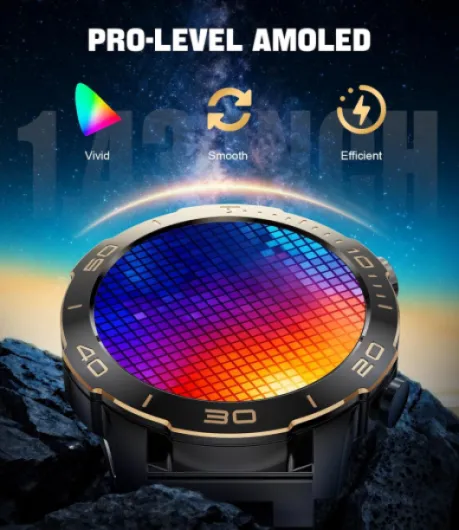
- + Long battery life: Up to 50 days on a single charge
- + Amoled display: Bright, sharp screen
- + Comprehensive health tracking: Heart rate, blood pressure, sleep monitoring
- + 100+ sport modes: Wide activity coverage
- + IP68 waterproof: Water and dust resistant
Apple Watch, Galaxy Watch and Garmin MARQ: when mainstream goes genuinely premium
For many affluent buyers, the first step in any luxury smartwatch guide is deciding whether a top-tier Apple Watch, Galaxy Watch, or Garmin MARQ already delivers enough luxury. The Apple Watch Ultra line, for example, uses a titanium case, sapphire crystal, and a bright flat display that feels closer to a professional instrument than a fashion accessory, while still integrating seamlessly with your iPhone for connected notifications and smart features. Samsung’s Galaxy Watch models lean into a more traditional round watch silhouette, which helps them sit more discreetly alongside mechanical watches in a rotation.
Garmin’s MARQ series is where mainstream fitness brands cross decisively into luxury watches territory, with titanium cases, ceramic bezels, and domed sapphire lenses that rival many Swiss sports watches. These MARQ smartwatches are built for running, aviation, sailing, and expeditions, combining multi-band GPS, offline maps, and advanced fitness tracking with battery life measured in days rather than a single day. Health tracking is equally serious, with continuous heart rate monitoring, sleep tracking, and training readiness metrics that go far beyond what a simple fitness tracker can offer.
If you already own a classic luxury watch, a high-end Apple Watch or Galaxy Watch can become your daily fitness, health, and productivity tool, while the mechanical piece remains your evening and weekend companion. Pairing a titanium Apple Watch Ultra with a tailored strap gives you a connected smartwatch that feels intentional with a suit, not like a plastic gadget, and its water resistance and GPS tracking make it ideal for open-water swimming or trail running. For readers focused on performance training, combining a Garmin MARQ with specialised equipment such as the innovative gear covered in this guide to magnetic weights for elevated fitness routines creates a coherent ecosystem where every watch, tracker, and accessory serves a clear role.
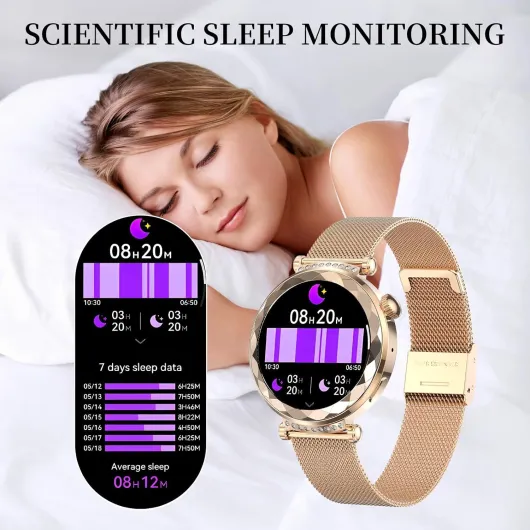
- + 1.19" AMOLED display — bright and vivid
- + Female cycle tracking — tailored health feature for women
- + Heart rate & sleep monitoring — basic health insights
- + Activity tracking — steps, workouts and daily activity
- + Cross-platform compatibility (Android/iOS)
Materials, finishing and what you are really paying for
Price gaps between a 500 euro smartwatch and a 5 000 euro luxury watch with smart features rarely come from software; they come from materials, finishing, and long-term service. A rigorous luxury smartwatch guide therefore starts with the case, crystal, and bracelet, asking whether you are getting titanium instead of steel, sapphire instead of mineral glass, and ceramic instead of simple coatings. These choices affect not only how the watch looks on day one, but how it ages after years of running, travel, and daily life.
Titanium cases on models like the Garmin MARQ or Apple Watch Ultra reduce weight while improving strength, which matters when you wear a smartwatch for 18 hours straight with continuous heart rate tracking and GPS logging. Sapphire crystal dramatically improves scratch resistance, keeping the display legible even when the watch brushes against door frames, gym equipment, or rock faces during trail running, and high-grade ceramics on bezels or cases resist both scratches and UV discolouration. Water resistance ratings also separate serious luxury smartwatches from fashion-led watches, with 10 ATM or more enabling open-water swimming and regular sauna use without fear.
Finishing details such as polished bevels, brushed surfaces, and well-engineered bracelets are where luxury watches still outclass most smartwatches, but the gap is narrowing. TAG Heuer’s Connected Calibre E4 models, for example, use alternating brushed and polished surfaces that echo its mechanical Carrera watches, while the straps integrate seamlessly into the lugs for a cohesive look. When you pay more for a luxury watch with smart features, you are often buying into a service network, spare parts availability, and the reassurance that the watch can be refinished or refurbished years down the line, which matters if it becomes part of your regular rotation rather than a disposable fitness tracker.
Battery life, health tracking and the reality of all day wear
Specification sheets love to quote battery life in abstract hours, but what matters is whether the watch comfortably lasts your longest day. A practical luxury smartwatch guide therefore looks at a full cycle from early-morning running with GPS and heart rate tracking, through a day of connected notifications and calls, to evening gym sessions and overnight sleep tracking. If a smartwatch dies before breakfast the next day, it fails as a true companion, no matter how luxurious the case or strap.
Garmin MARQ models and some dedicated fitness watches can stretch battery life to many days even with continuous health tracking, offline maps, and regular GPS use, which suits travellers and endurance athletes. Apple Watch and Galaxy Watch devices typically require daily charging, but their fast-charge capabilities and deep integration with smartphones make that trade-off acceptable for many users who prioritise smart features and app ecosystems over extreme endurance. TAG Heuer Connected and other luxury smartwatches often sit between these extremes, offering a full day of mixed use with fitness tracking, heart rate monitoring, and connected notifications, provided you manage always-on display settings and GPS usage carefully.
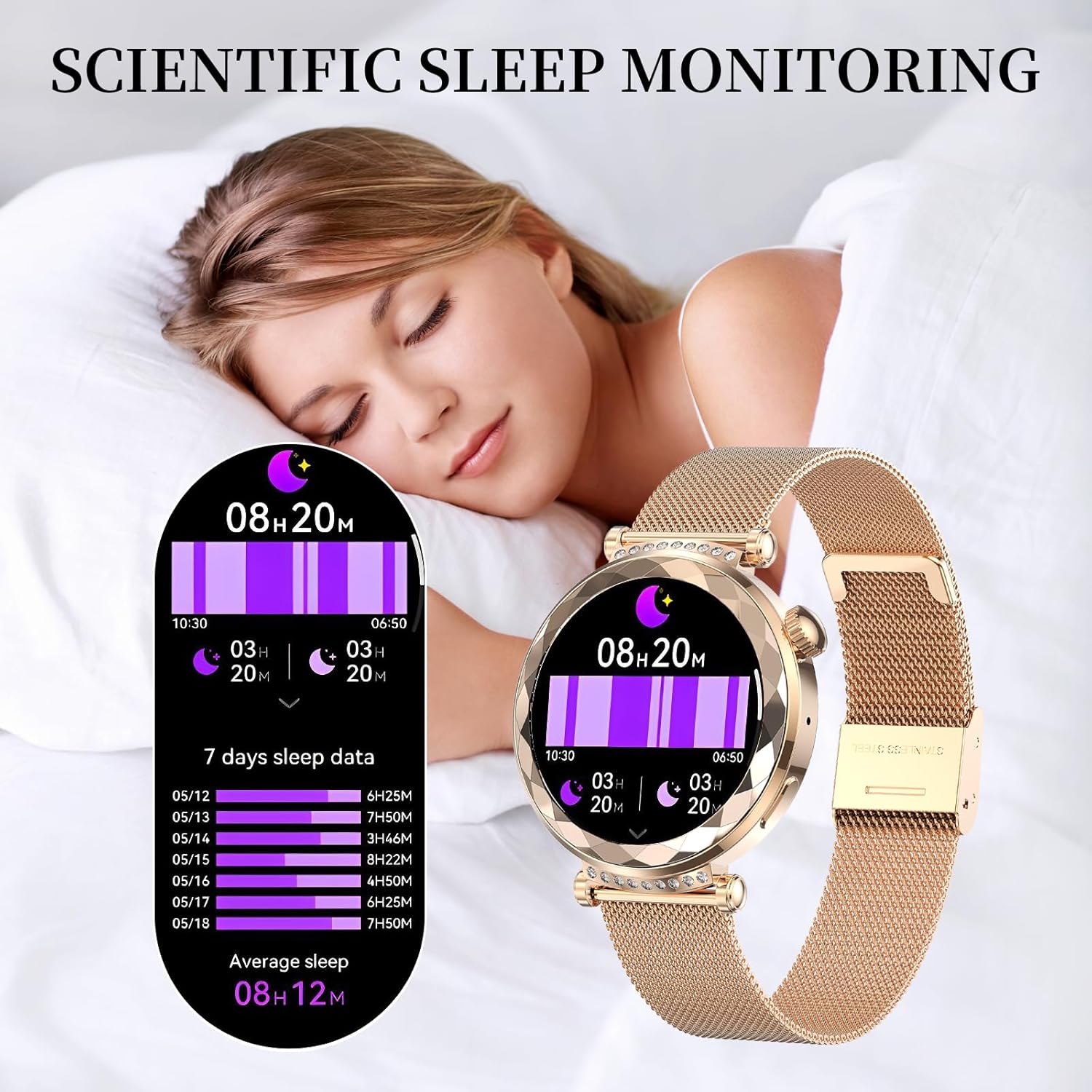
Health tracking quality also varies significantly between watches, and affluent buyers should treat it as seriously as they treat movement quality in mechanical watches. Look for multi-band GPS for accurate running routes, optical and electrical heart rate sensors for reliable readings, and advanced sleep tracking that distinguishes between light, deep, and REM phases. When a luxury watch with smart features offers robust fitness and health metrics, it stops being a novelty and becomes a genuine tool for managing stress, recovery, and long-term health, aligning the emotional pleasure of a beautiful watch with the practical benefits of a high-end fitness tracker.
Styling your connected collection: rotations, straps and limited editions
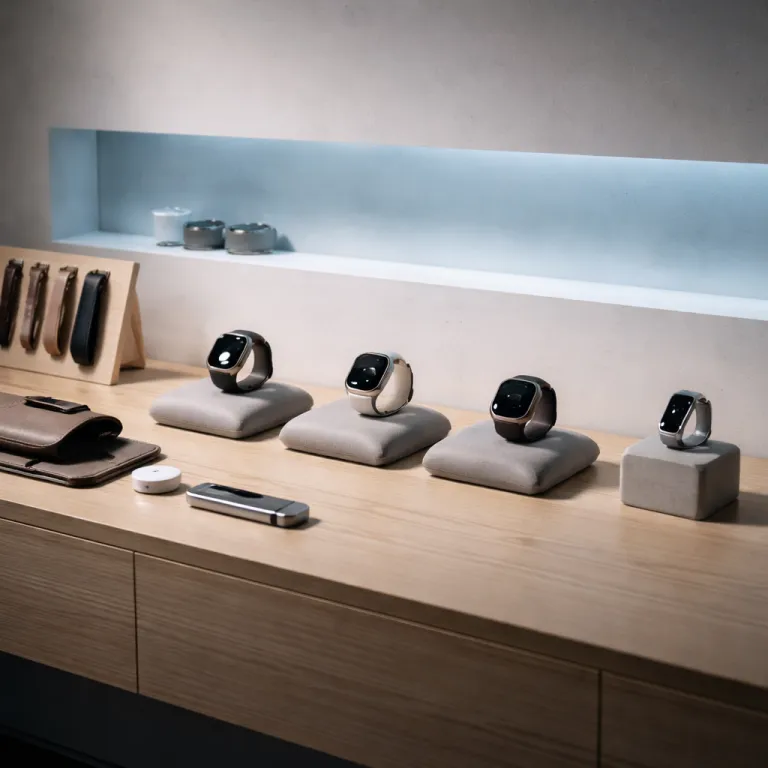
The most satisfying way to use this luxury smartwatch guide is to think in terms of a connected collection rather than a single hero piece. That might mean owning one primary smartwatch such as an Apple Watch or Galaxy Watch for training and travel, one luxury watch with smart features such as a TAG Heuer Connected Calibre E4 or Vertu Grand Watch for evenings, and one or two purely mechanical luxury watches for occasions where digital screens feel out of place. Each watch then earns its place by excelling at a specific slice of life instead of competing for the same role.
Strap strategy is where you can shift a smartwatch from gym-ready fitness tracker to boardroom-appropriate luxury watch in seconds. A fluoroelastomer or textile strap suits running, swimming, and high-intensity fitness tracking, while a leather or high-grade rubber strap with tone-on-tone stitching helps a connected watch sit comfortably under a cuff. Many luxury smartwatches now offer quick-release systems, encouraging you to treat straps as part of your wardrobe, just as you would rotate shoes or ties across the week.
Limited editions and fashion collaborations add another layer for collectors who care about design narratives as much as features. Some TAG Heuer Connected and Galaxy Watch models arrive in small runs with specific colourways, engraved case backs, or curated digital dials that reference motorsport, aviation, or couture, which can justify a premium if the story resonates with your existing luxury watches. For deeper context on how limited edition tech pieces intersect with fashion and art, resources such as this analysis of tech couture and wearable luxury show how connected devices are increasingly designed as collectible objects, not just tools for tracking steps or checking notifications.
Key figures shaping the luxury smartwatch and connected watch market
- According to Counterpoint Research, Apple Watch has held roughly one third of the global smartwatch market share in recent years, although exact quarterly figures fluctuate by region and model mix, which means any luxury smartwatch guide must address how Apple’s ecosystem influences app support, accessory availability, and resale interest.1
- Garmin has reported that its wearable and fitness-related segments generate well over one billion US dollars in annual revenue, underlining how demand for advanced GPS, offline maps, and fitness tracking has pushed the brand to create higher-end lines such as Garmin MARQ with luxury materials.2
- Industry analyses from firms such as Deloitte have noted that Swiss watch exports of mechanical watches remain strong while connected watch shipments from Swiss brands grow from a smaller base, indicating that luxury watches and smartwatches are increasingly complementary rather than directly competing segments.3
- Surveys by health organisations show that regular use of wearables with heart rate and sleep tracking correlates with higher awareness of cardiovascular risk factors, which reinforces the value of integrating serious health tracking into luxury smartwatches instead of treating it as a gimmick.
- Market forecasts from research companies like IDC project that smartwatch shipments will continue to grow faster than traditional wristwatches, especially in the premium segment above 300 euros, where buyers expect both refined design and robust smart features in a single watch.
FAQ: luxury smartwatches, fitness tracking and high end watch collections
Can a luxury smartwatch really replace a traditional luxury watch ?
For most collectors, a luxury smartwatch complements rather than replaces a traditional luxury watch. Smartwatches excel at fitness tracking, GPS navigation, and health tracking, while mechanical luxury watches still lead in emotional value, long-term serviceability, and timeless aesthetics. Many affluent buyers therefore rotate between smartwatches and mechanical watches depending on the day’s activities.
Is Garmin MARQ worth it over a standard Garmin watch for fitness ?
Garmin MARQ models offer the same core GPS, fitness tracking, and health tracking capabilities as high-end standard Garmin watches, but add titanium cases, sapphire lenses, and more refined design. If you wear your fitness tracker all day, including in professional settings, the upgraded materials and finishing can justify the price. Pure performance-focused athletes who care only about data may be satisfied with less expensive Garmin watches.
How does TAG Heuer Connected compare to Apple Watch for daily use ?
TAG Heuer Connected prioritises luxury watch design, materials, and brand heritage, using titanium, ceramic, and detailed finishing that align with mechanical TAG Heuer watches. Apple Watch focuses on deep ecosystem integration, broader app support, and very polished smart features such as notifications, payments, and health tracking. Choose TAG Heuer Connected if you value Swiss watch aesthetics first, and Apple Watch if you prioritise software capabilities and seamless connectivity.
What should I look for in a luxury smartwatch for running and training ?
For serious running and training, prioritise accurate GPS, reliable heart rate sensors, and strong battery life during continuous tracking. Models from Garmin, Apple, and Samsung with dedicated sports profiles, offline maps, and robust water resistance perform well, while luxury smartwatches from Swiss brands add higher-end materials and styling. Ensure the watch is comfortable on the wrist for long sessions and that the companion app presents fitness and health data clearly.
Does sleep tracking on luxury smartwatches provide medically accurate data ?
Sleep tracking on luxury smartwatches and mainstream devices such as Apple Watch or Galaxy Watch offers useful trends rather than clinical-grade diagnostics. These watches estimate sleep stages using motion and heart rate data, which helps you understand patterns in rest and recovery, but they do not replace medical sleep studies. Use sleep tracking as a guide for lifestyle adjustments, not as a sole basis for medical decisions.