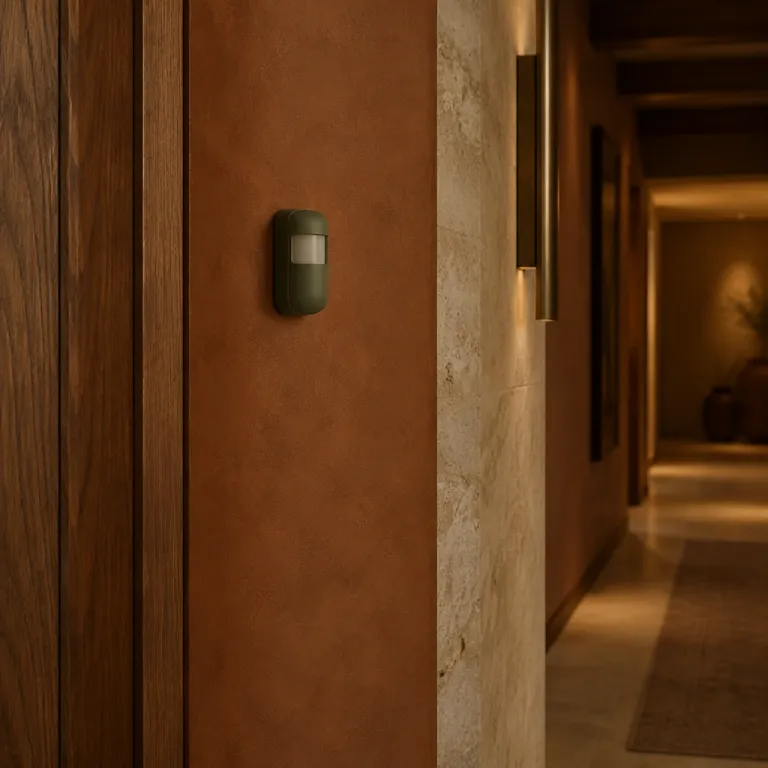
Why a z wave motion detector defines discreet smart security
A Z‑Wave motion detector sits at the intersection of smart elegance and invisible protection. In a luxury residence, this motion product must blend into curated interiors while extending a reliable wireless range that quietly underpins the entire security system. The right motion sensor transforms passive rooms into responsive spaces, where every step, shadow, and contact event can be orchestrated without visual clutter.
Unlike basic sensors, high end Z‑Wave motion detectors use a refined sub‑GHz radio protocol that minimizes interference and preserves battery life for years rather than months. This long range mesh communication allows each smart sensor to relay data through other smart devices, so a single hub can cover a large villa or multi level penthouse without sacrificing signal strength. Because the Z‑Wave motion detector works on a low power mesh, it coexists gracefully with dense Wi‑Fi networks and other wireless technologies already present in sophisticated homes.
For luxury buyers, price is less about the sticker and more about the value of personal security and aesthetic coherence. A premium motion sensor smart enough to ignore pets, adapt to ambient light, and integrate with smart lighting scenes justifies its price by preserving both art collections and privacy. When these sensors’ smart components are tuned correctly, they become an invisible concierge, orchestrating comfort, security, and atmosphere with every subtle motion event they register.
Designing smart home elegance with motion driven automations
In a refined smart home, a Z‑Wave motion detector is not merely a security accessory but a design instrument. When you create automations around motion and contact sensors, you choreograph how light, sound, and temperature respond to your presence. A single motion sensor in a gallery corridor can trigger smart lighting scenes that rise softly as you walk, while a series of sensors smart enough to track movement can dim lights behind you to preserve both energy and mood.
Luxury integrators often pair Z‑Wave motion detectors with window and door contact sensors to build layered security system logic that feels effortless. For example, if a window contact opens after midnight and no authorized motion is detected near the smart hub, the system can raise a silent alarm, flash exterior smart lighting, and send a personal security alert to the owner’s phone. Because the Z‑Wave protocol offers long range and robust wireless performance, these sensors can be placed in remote pool houses, garages, or wine cellars without running new cabling.
Beyond security, motion driven options extend to wellness and comfort in ways that justify a higher price bracket. A motion sensor in the dressing room can cue gentle lighting and background audio, while another smart device in the bathroom can pre warm floors when it detects early morning movement. For readers interested in how finely tuned sensing elevates comfort, the same philosophy is explored in depth through a case study on temperature sensors refining climate control in luxury smart homes, which parallels how Z‑Wave motion detectors refine spatial experiences.
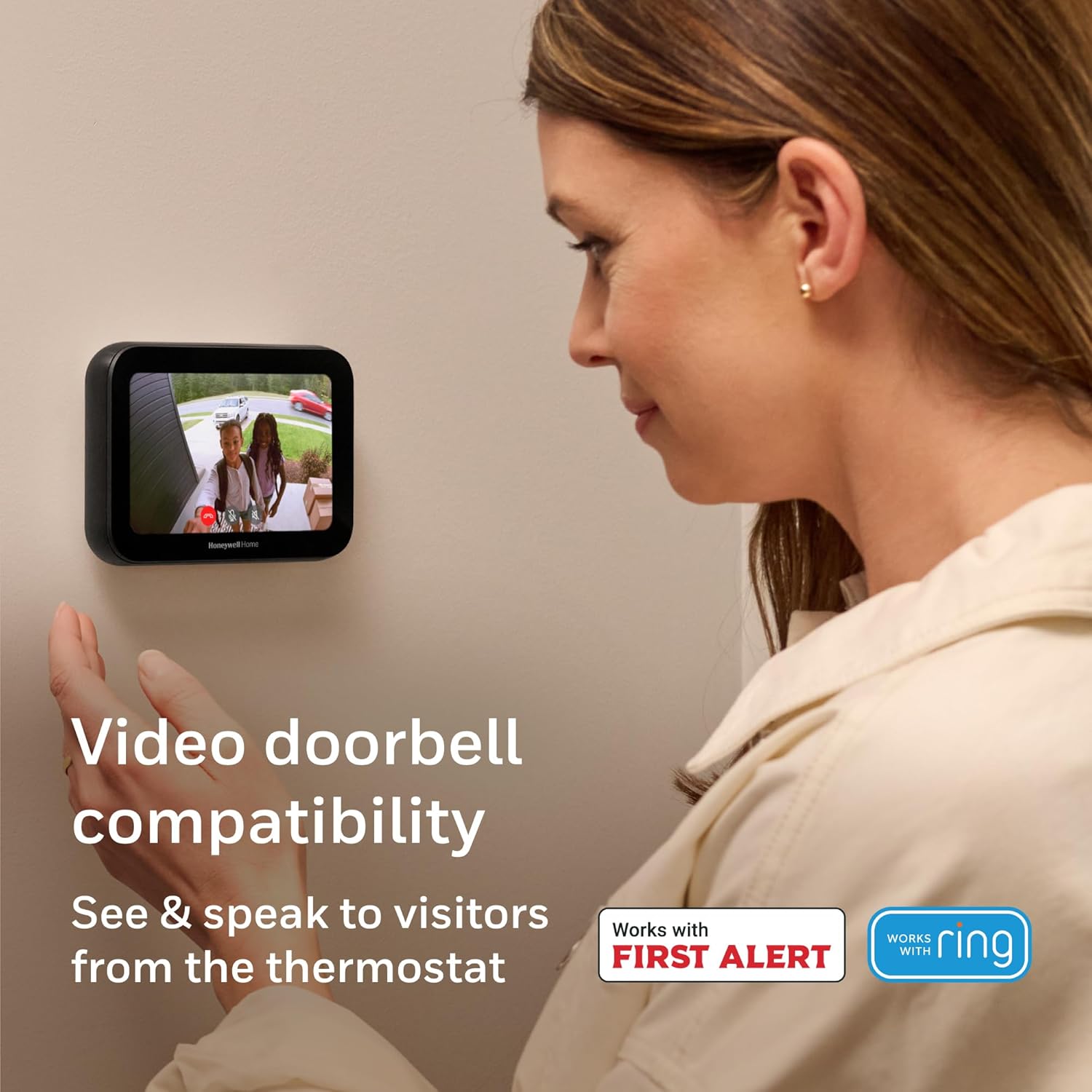
- + Wi-Fi connected for remote control and app access
- + Video doorbell compatible to link entry alerts with the thermostat
- + IAQ control (indoor air quality) to monitor and manage air
- + Customizable touchscreen with an intuitive, modern interface
- + Sleek black design that fits contemporary interiors

Integrating z wave motion detectors with hubs, wifi, and multi protocol ecosystems
The true power of a Z‑Wave motion detector emerges when it is anchored by a capable smart hub. In a luxury environment, that hub often bridges Z‑Wave, Wi‑Fi, and sometimes Thread or Zigbee, allowing motion data to flow seamlessly between different smart devices and platforms. When the hub works as an orchestration brain, each motion sensor becomes a high fidelity input that can trigger complex scenes across lighting, audio, climate, and security.
Because Z‑Wave typically operates around 800–900 MHz rather than the 2.4 or 5 GHz bands used by Wi‑Fi, it avoids congestion and preserves long range reliability even in homes saturated with wireless traffic. This separation is crucial when a security system depends on instant motion alerts, alarm triggers, and contact sensor updates from dozens of endpoints scattered across large properties. Many premium hubs also support S2‑grade encrypted communication for every smart sensor, ensuring that personal security events such as motion detections or window openings cannot be intercepted or spoofed easily.
Acoustic comfort is another layer where integration matters, especially when motion events trigger soundscapes or alarms. A motion sensor placed in a cinema room can signal the smart hub to lower blinds, adjust smart lighting, and fine tune acoustic panels, aligning with the philosophy outlined in this analysis of acoustic control as an understated smart home luxury. When all these systems work together, the Z‑Wave motion detector becomes a subtle conductor, ensuring that every movement through the home results in a precisely tuned sensory response.
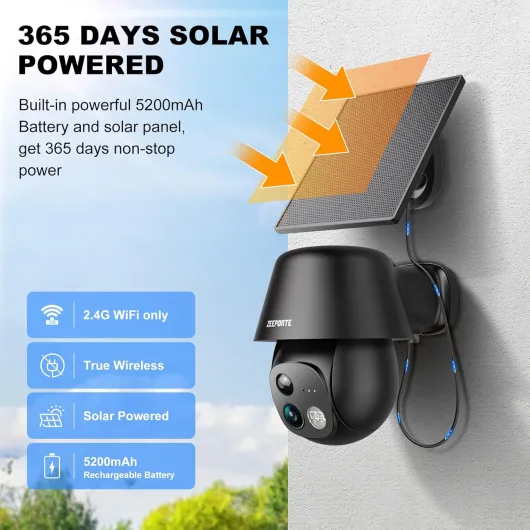
- + Solar-powered with battery backup for extended runtime
- + 2K resolution for sharper video and clearer details
- + 360° pan/tilt coverage reduces blind spots
- + AI motion detection for fewer false alerts
- + Spotlight & siren for active deterrence
From perimeter security to personal security: strategic sensor placement
Strategic placement of each Z‑Wave motion detector determines whether your system feels intrusive or effortlessly protective. In luxury projects, designers often start with perimeter security, using a mix of motion sensors and window contact sensors to create an early warning layer before anyone reaches the main living spaces. Long range mesh communication allows these wireless sensors to guard detached garages, garden pavilions, and service entrances without compromising aesthetics.
Once the perimeter is secured, attention shifts to personal security inside the residence, where subtlety is paramount. Ceiling mounted motion sensor units with wide coverage can monitor circulation spaces such as hallways and staircases, while more focused smart sensor devices protect safes, dressing rooms, and art storage. By tuning sensitivity and detection zones, integrators ensure that the security system works intelligently, avoiding false alarm events from pets or automated curtains while still reacting instantly to suspicious motion patterns.
Luxury clients also expect flexibility, so multiple options for arming modes are essential. A Z‑Wave motion detector near the bedroom might be disabled during the night while window sensors and exterior motion devices remain active, preserving both privacy and safety. For deeper insight into how algorithms interpret your habits and preferences across such systems, the essay on algorithmic taste in luxury tech shows how data from motion and other sensors can shape highly personalized environments.
Smart lighting, ambiance, and the aesthetic role of motion sensors
In high end interiors, a Z‑Wave motion detector must respect the visual language of the space. Discreet casings, customizable finishes, and thoughtful alignment with architectural lines allow each motion sensor to vanish into the background while still delivering precise motion detection. When these devices are integrated with smart lighting, every step through the home can feel like a curated scene change rather than a simple on off event.
For example, a series of sensors smart enough to differentiate between day and night can trigger different lighting temperatures and intensities. During the day, motion near a window might prompt blinds to tilt and lights to remain off, while at night the same sensor logic could bring up low level path lighting to guide residents safely without glare. Because Z‑Wave communication is optimized for reliability, these wireless interactions between smart devices, the smart hub, and the lighting system maintain their timing and subtlety even in complex multi room setups.
Ambiance extends beyond light, and luxury clients often link motion events to audio, scent diffusers, or even digital art. A motion sensor in an entrance hall can cue a favorite playlist, adjust Wi‑Fi connected speakers, and subtly raise the temperature, all while the security system quietly logs the event for personal security records. When specified carefully, the price of these integrated motion products reflects not only their sensor capabilities but also their role as guardians of both atmosphere and safety.
Evaluating performance, price, and longevity in luxury motion detection
Selecting a Z‑Wave motion detector for a luxury project requires a more nuanced evaluation than simply checking compatibility lists. Performance metrics such as detection range, field of view, and response time must be balanced against design constraints, battery life, and integration depth with the chosen smart hub. A premium motion sensor that offers long range coverage, adjustable sensitivity, and robust encryption will often justify a higher price in the context of a multi million euro property.
Longevity is another critical factor, because replacing sensors in a finished marble corridor or behind bespoke paneling is disruptive. High quality Z‑Wave motion sensors are engineered for multi year battery life, stable mesh communication, and firmware support that keeps them aligned with evolving security system standards. When these smart sensor devices are part of a coherent series from a reputable manufacturer, maintenance becomes predictable and the overall wireless network remains resilient.
Finally, consider the total cost of ownership rather than the initial product price alone. A slightly more expensive motion sensor that reduces false alarm incidents, integrates cleanly with existing Wi‑Fi and smart devices, and supports advanced options to create automations will save time and frustration over the life of the system. In a luxury context, the value of reliable personal security, seamless smart lighting control, and aesthetically respectful hardware far outweighs marginal differences in upfront cost.
Key figures on z wave motion detectors in luxury smart homes
- Industry data from the Z‑Wave Alliance indicates that there are now thousands of certified Z‑Wave products on the market, which ensures broad interoperability for motion sensors and hubs across brands.
- Independent testing by UL Solutions and similar laboratories has shown that properly configured motion sensors can significantly reduce false alarm rates in monitored security systems compared with legacy PIR devices.
- Energy management studies from the U.S. Department of Energy report that occupancy based smart lighting control using motion sensors can cut lighting energy use by roughly 30 to 60 percent in residential spaces.
- Market research from Statista and other analysts notes that the global smart home security segment, which includes motion and contact sensors, is growing at an annual rate above 10 percent, driven strongly by premium and luxury installations.
- Field data from professional integrators show that Z‑Wave mesh networks in large homes can maintain reliable communication over effective distances exceeding 150 meters when repeaters and powered nodes are placed strategically.
FAQ about z wave motion detectors in luxury environments
How does a z wave motion detector differ from a WiFi motion sensor ?
A Z‑Wave motion detector uses a low power mesh network where each device can relay signals, while a Wi‑Fi motion sensor connects directly to the router and competes with other high bandwidth traffic. Z‑Wave typically offers better battery life, more predictable long range coverage inside buildings, and stronger interoperability with dedicated smart hubs. Wi‑Fi sensors can be useful for isolated use cases, but they rarely match the reliability and scalability required in large luxury homes.
Can z wave motion detectors integrate with existing luxury lighting systems ?
Most modern lighting control platforms support integration with Z‑Wave either natively or through a compatible smart hub. Once linked, motion events can trigger layered smart lighting scenes, from subtle pathway illumination to full room transformations tied to time of day. Professional integrators usually map each motion sensor to specific circuits and scenes to maintain both aesthetic intent and energy efficiency.
Are z wave motion detectors secure enough for high value properties ?
Current generation Z‑Wave devices support strong encryption and authenticated communication between sensors, hubs, and controllers. When combined with best practices such as secure hub placement, regular firmware updates, and segmented networks, they provide a robust foundation for personal security in high value residences. Many professional monitoring services now treat encrypted Z‑Wave motion and contact sensors as a trusted signal source for alarm verification.
Where should motion sensors be placed in a luxury home ?
Optimal placement focuses on circulation paths, entry points, and high value zones rather than every single room. Hallways, staircases, main entrances, and access routes to safes or galleries are prime locations for motion sensors, while bedrooms and private bathrooms are often covered by door and window contacts instead. A professional designer will balance coverage, privacy, and aesthetics, sometimes using ceiling or recessed mounts to keep hardware visually discreet.
Do pets trigger false alarms with z wave motion detectors ?
Many premium Z‑Wave motion sensors include pet immunity settings that ignore movement below a certain size or height. By adjusting sensitivity and mounting height, integrators can significantly reduce false alarms from cats and small dogs while still detecting human movement reliably. For larger pets, combining motion detection with door contacts and time based rules often yields the best balance between security and convenience.