Summary
Editor's rating
Value for money: good, but depends what you expect
Design: compact, sporty, and pretty clean
Battery life: finally not charging every night
Comfort: easy to forget you’re wearing it
Durability and build: feels solid, not fragile
Performance and tracking: very solid, with a few quirks
What you actually get with the Venu 4 41mm
Pros
- Comfortable, compact 41mm size that works well for all-day and night wear
- Genuinely strong battery life (around a week in real use) with bright AMOLED display
- Accurate and rich fitness, sleep, and health tracking with lots of sports modes
Cons
- Smartwatch features and app ecosystem are basic compared to Apple Watch or Wear OS
- Design leans sporty and may not suit those wanting a more classic or dressy look

Specifications
View full product page →| Brand | Garmin |
Small watch, big feature list
I’ve been wearing the Garmin Venu 4 41mm on my wrist pretty much non-stop for a couple of weeks, day and night. I swapped to it from a regular smartwatch that needed charging almost every day, so I mainly wanted to see if the battery life claims were real and if the health stats were actually useful or just more graphs I’d ignore. I also have fairly small wrists, so size and comfort were a big deal for me.
Out of the box, it feels like a typical Garmin: a bit more “sport” than “fashion”, but not ugly. This bundle came with the watch, a basic charger, a USB adapter and a cleaning cloth. Nothing fancy, just what you need to start. Setup with my phone (Android) took about 10–15 minutes with the Garmin Connect app, updates included. After that it was ready to track everything from steps to sleep.
Over these first weeks, I used it for daily step tracking, a few runs, some strength sessions, and sleep tracking every night. I also kept notifications on, took a few calls from the wrist, and used the built-in flashlight more than I expected. I didn’t baby it at all: showers, dishwashing, walking in the rain, and sleeping with it on.
Overall, it’s a pretty solid all-rounder: not perfect, a few small annoyances, but it gets most of the basics right. The key thing is that it feels like a fitness watch first and a smartwatch second. If you’re expecting a mini smartphone on your wrist, you might find it a bit basic. If you care more about battery life, tracking, and not having a brick on your wrist, it starts to make a lot of sense.
Value for money: good, but depends what you expect
Price-wise, the Venu 4 sits in the mid to upper range for a fitness-focused smartwatch. It’s cheaper than Garmin’s hardcore outdoor models but more expensive than basic bands or entry-level trackers. For what you pay, you get: a bright AMOLED screen, solid GPS and health tracking, very good battery life, waterproof design, and a compact form factor. Plus, Garmin’s software and Garmin Connect app, which are fairly mature at this point and give you a lot of data and options.
Compared to an Apple Watch, you lose the big app ecosystem and deeper smart features, but you gain battery life and a more fitness-first approach. Compared to cheaper fitness bands, you’re paying extra for the nicer screen, better build, more accurate GPS, and the whole Garmin training ecosystem. If you actually use the sports profiles, Garmin Coach, animated workouts, and detailed stats, the price starts to feel justified. If you only care about steps and basic heart rate, then honestly a simpler and cheaper tracker might be enough.
The included bundle extras (wall charger, adapter, cloth) are nice but not a huge value boost. They save you a small purchase but won’t change your life. The real value is in how much you use the watch. If you wear it every day, track your workouts, and pay attention to sleep and Body Battery, then the cost spread over a couple of years feels reasonable. If it ends up in a drawer after a month, it’s obviously not worth it.
For me, given the comfort, battery life, and the fact I actually check the data and adjust my training and sleep a bit, I’d say it’s good value for money, but not a bargain. There are cheaper options, and there are more premium ones. This sits in the middle: you pay a fair chunk, and you get a pretty complete, reliable fitness watch in return.
Design: compact, sporty, and pretty clean
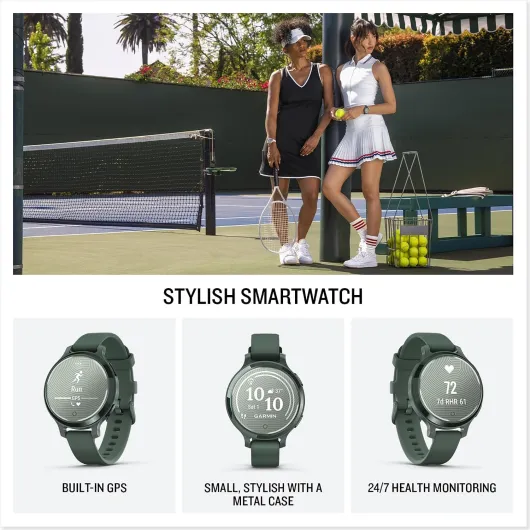
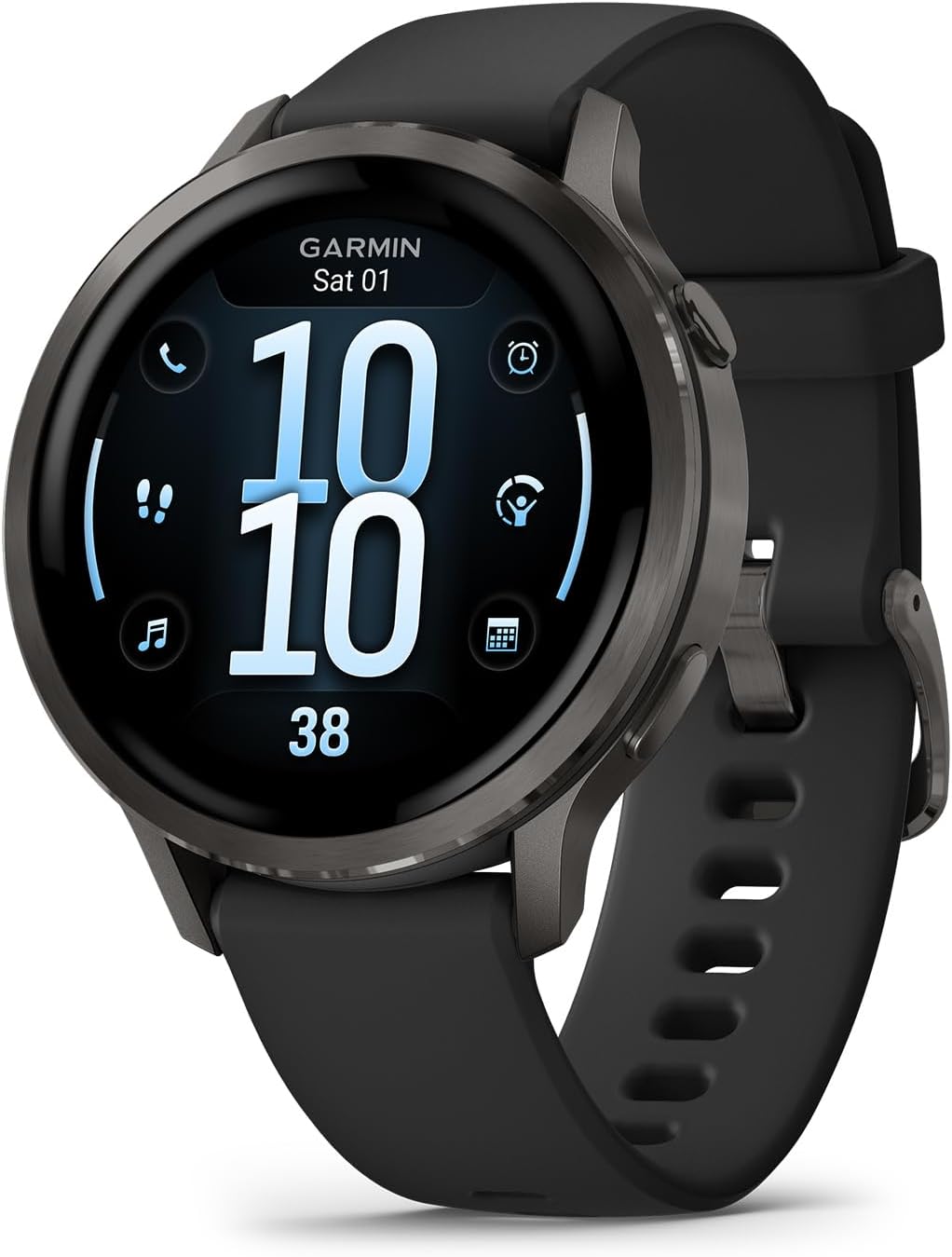
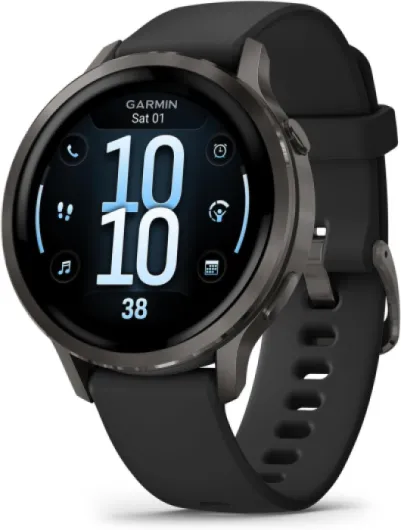
The design is fairly simple and clean. It has a round 41mm case with a slate-colored stainless steel bezel and a black silicone band. On the wrist, it looks more like a small sports watch than a fashion accessory, but it’s not ugly or bulky. For office use, it blends in fine, especially if you pick a more neutral watch face. It’s not screaming “gym bro” all the time. I wore it with jeans and a shirt and it didn’t feel out of place.
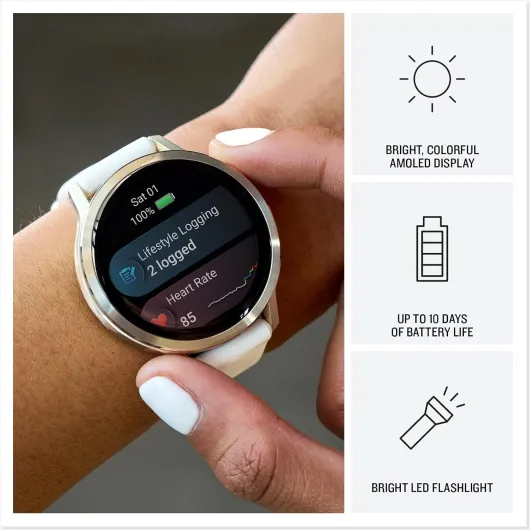
The 1.2-inch AMOLED screen is the main visual upgrade over older Garmin models. Colors are bright, blacks are deep, and the resolution (390 x 390) is sharp enough that text and stats are easy to read. Outdoors in sunlight, it holds up well; I didn’t have to squint or shade the screen during runs. Indoors, you can actually lower the brightness a bit and it still looks fine. The bezels are visible, but not ridiculous. If you’re used to Apple Watch-level thin bezels, you’ll notice them, but in daily use it didn’t bother me.
You get two physical buttons on the right side: one for starting activities and going back, and one for shortcuts. The rest is touch-based. The combination works well: you can still control things with sweaty fingers, and the touchscreen is responsive enough. Swiping through widgets is smooth, and I didn’t run into lag. The built-in LED flashlight is tucked into the case and doesn’t ruin the look; you wouldn’t really notice it unless you turn it on.
If you want something flashy or super dressy, this probably isn’t it. But if you like a simple, slightly sporty watch that doesn’t look like a toy, the design is decent. My only mild complaint is that it still looks more “fitness watch” than “watch-watch”. A metal or leather band would probably help, but out of the box it’s clearly focused on workouts and comfort first.
Battery life: finally not charging every night
Battery life is one of the main reasons to pick this watch, and here it actually delivers. Garmin claims up to 10 days in smartwatch mode, and in real life I got close to that. With always-on display off, notifications on, sleep tracking every night, and about 30–45 minutes of GPS activity on most days, I was averaging around 7–9 days per charge. That’s not marketing fantasy; I literally went a full week without thinking about the charger, which is a big change from watches that die every 1–2 days.
When I pushed it harder with longer GPS workouts and more screen-on time, battery life dropped, but still stayed above 5 days. Using the flashlight a lot and cranking the brightness up will also eat into it, but not in a catastrophic way. You can see a clear drop after long GPS sessions, which is normal, but it never felt like I had to micro-manage the battery. The watch gives you a percentage and an estimate of remaining days, which was fairly accurate.
Charging is via Garmin’s proprietary cable. It’s not USB-C on the watch itself (which would have been nice), but the included adapter and wall charger mean you’re covered out of the box. From low battery to full, it took roughly an hour and a bit in my tests, which is acceptable. A quick 15–20 minute top-up easily gave me a couple of days if I was in a rush. You do have to remember the cable when traveling, but that’s standard with most watches.
Compared to an Apple Watch or a Wear OS watch, this is just less annoying. You charge it maybe once a week instead of constantly planning your day around a charger. If you travel, camp, or just hate nightly charging, this is one of the main reasons to pick the Venu 4. It’s not infinite, but it’s finally at the point where battery life doesn’t feel like a daily chore.
Comfort: easy to forget you’re wearing it
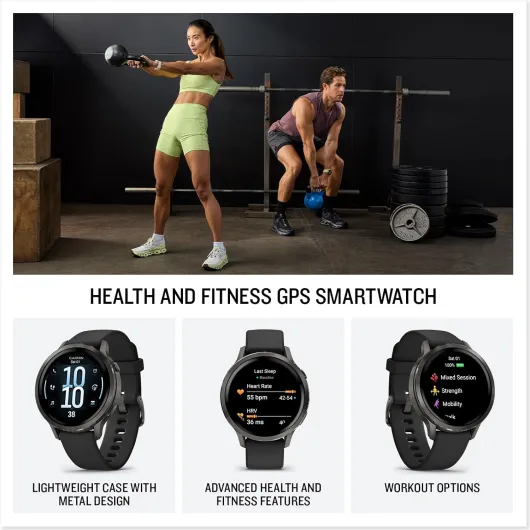
Comfort is one of the strong points here. The 41mm size is ideal if you have small or medium wrists or just don’t like big bricks on your arm. The watch sits flat and doesn’t dig into the skin. I wore it all day, at the desk, on walks, and while sleeping, and it never got to the point where I wanted to rip it off. It’s light enough that you mostly forget it’s there, which is important if you want reliable sleep and 24/7 tracking.
The silicone band is soft and flexible. It’s nothing fancy, but it doesn’t cause irritation or rubbing, even when sweaty. I used it during runs and strength workouts, and it stayed in place without needing to be super tight. The buckle is basic but secure. It’s easy to adjust, and there are enough holes to fit thin wrists. I didn’t get any weird pinching or hot spots under the band, which I’ve had with stiffer straps on other watches.
Sleeping with it on was fine. The sensor bump on the back isn’t huge, and the overall thickness (about 12 mm) is reasonable. Side sleepers might notice it a bit if your wrist ends up under your head, but I personally got used to it after the first night. It didn’t leave big marks on my skin in the morning, just the usual slight imprint from the band. Showering with it also wasn’t an issue, and soap and water didn’t cause any slipping or discomfort.
The only people I’d warn are those who like very large displays or have big wrists; the 41mm might feel a bit small and toy-like to them. For everyone else, especially if you’re coming from a heavy metal or large GPS watch, this feels like a relief. In daily life, the comfort is honestly one of the reasons I kept wearing it instead of tossing it on the desk after workouts.
Durability and build: feels solid, not fragile
In terms of durability, it feels pretty solid for a small watch. The stainless steel bezel gives it a bit of protection and makes it feel less plasticky than some cheaper trackers. I’ve knocked it into door frames, gym equipment, and kitchen counters a few times, and so far there are no big scratches or chips on the bezel. The screen hasn’t picked up any major marks either, though I’m sure a hard hit could still damage it like any other smartwatch.
The case itself is lightweight but doesn’t feel flimsy. The buttons still click well and haven’t loosened. The silicone strap has held up fine against sweat, water, and daily flexing. No cracks, no weird discoloration. It’s also easy to swap bands if it ever breaks or if you just want a different look. The watch is waterproof enough for showering and swimming, and I’ve worn it under running water and in the rain without any issues or fogging.
The built-in flashlight is actually more useful than I expected and doesn’t seem to be a weak point in the build. I used it to find stuff in a dark room, light the way to the bathroom at night, and as a quick safety light outside. It hasn’t loosened or shown any signs of failing. The safety strobe mode is a nice touch if you run or walk in the dark, making you more visible without having to carry an extra light.
Long-term, I can’t say what it will look like after a few years, but based on a few weeks of normal abuse, it gives the impression of a watch you don’t have to baby. It’s not a tank like some of Garmin’s outdoor models, but for everyday fitness and city life, it feels tough enough. If you’re rough on your gear, you might want a screen protector just in case, but out of the box it doesn’t feel like something that will fall apart quickly.
Performance and tracking: very solid, with a few quirks
On the tracking side, it does the job well. GPS lock is fairly quick; when I started an outdoor run, it usually got a signal within 10–20 seconds. Distance tracking compared pretty closely to my phone’s GPS and to known route distances. I wasn’t seeing crazy jumps or zigzags on the map. Pace looked consistent, and the watch didn’t freak out under trees or in light urban areas. For typical running and walking, it’s more than accurate enough for a casual to intermediate user.
Heart rate tracking was also decent. Resting heart rate matched what I’ve seen on other devices. During workouts, it tracked rises and drops in a way that made sense. For steady runs and strength training, the curves looked believable. As usual with wrist sensors, short intense intervals can lag a bit, but that’s normal. If you’re doing serious interval training, you’d still probably want a chest strap, but for most people this is fine. The Body Battery feature (energy score) was surprisingly useful; on days when it showed a low score, I did feel more tired. It’s not magic, but it gives a decent idea of recovery.
Sleep tracking is one of the features I ended up checking every morning. It breaks down light, deep, and REM sleep, plus shows how restless you were. It’s not a medical device, but it matched my perception pretty well: bad nights looked bad in the stats. The watch also tracks stress and respiration, which is interesting but easy to ignore if you’re not into that level of detail. The Garmin Connect app is packed with graphs and data, almost too much sometimes, but if you like numbers, you’ll be happy.
Overall performance is smooth. Menus don’t lag, touch inputs register well, and syncing with the phone is usually quick. Sometimes notifications take a second to show up, but nothing dramatic. The only real "meh" part is smart features: you can get notifications, read texts, and even answer calls, but it’s not as deep as an Apple Watch or high-end Android watch in terms of apps. For me that’s fine because I mainly wanted tracking and battery life, but if you want lots of third-party apps, this might feel limited.
What you actually get with the Venu 4 41mm
The Venu 4 41mm is basically Garmin’s “normal person” fitness watch: round case, 1.2-inch AMOLED screen, stainless steel bezel, silicone band, and a bunch of health and GPS features crammed into a compact body. It’s not as hardcore as a Fenix or Forerunner, but it still has built-in GPS, heart rate, sleep tracking, stress, and the usual step and calorie stuff. Garmin advertises up to 10 days of battery life in smartwatch mode, which is the claim I was most curious about. The screen can hit up to 2,000 nits, so in theory it should stay readable in bright sun.
On the activity side, you get more than 80 sports apps: running, walking, cycling, strength, HIIT, yoga, Pilates, and a bunch more I’ll probably never touch. There’s Garmin Coach for training plans and animated workouts that show you what to do on the watch screen. It connects to your phone with Bluetooth, supports notifications, and you can answer calls if your phone is nearby. It also has Bluetooth, GPS, and NFC (for Garmin Pay, depending on your region/bank). So functionally, it covers the basics of a modern smartwatch, just in Garmin’s more fitness-focused style.
The bundle itself is pretty straightforward: the watch, the charging cable, a USB wall charger, a USB-A to USB-C adapter, and a microfiber cloth. The extra bits are nice but nothing life-changing. The main thing is the watch. It’s rated as waterproof, so you can shower and swim with it. The size is 41 x 41 x 12 mm, and the weight around 40-ish grams on the wrist (listed at 204 g in the data, but in reality it feels much lighter, closer to typical Garmin small watches). On my wrist it feels light enough to forget it’s there most of the time.
If I had to sum it up, I’d say: this is a compact fitness watch that tries to do “a bit of everything” without going overboard. It tracks your health, runs your workouts, shows your notifications, and doesn’t need to live on a charger. If you’re already in the Garmin ecosystem or want something more serious than a basic step counter, it fits that spot pretty well.
Pros
- Comfortable, compact 41mm size that works well for all-day and night wear
- Genuinely strong battery life (around a week in real use) with bright AMOLED display
- Accurate and rich fitness, sleep, and health tracking with lots of sports modes
Cons
- Smartwatch features and app ecosystem are basic compared to Apple Watch or Wear OS
- Design leans sporty and may not suit those wanting a more classic or dressy look
Conclusion
Editor's rating
After wearing the Garmin Venu 4 41mm daily, my take is simple: it’s a very solid fitness-focused smartwatch that finally hits a sweet spot between size, battery life, and features. The watch is comfortable enough to wear 24/7, the AMOLED display is easy to read indoors and outdoors, and the battery life is genuinely good. I wasn’t hunting for a charger every night, and that alone makes it more practical than a lot of other smartwatches. GPS and heart rate tracking are accurate enough for most people, and the sleep and Body Battery features are actually useful once you get into the habit of checking them.
It’s not perfect. If you want deep smart features, tons of third-party apps, or a super stylish fashion piece, this probably isn’t the right pick. Smart functions are decent but not on the same level as an Apple Watch, and the look is still clearly more fitness watch than classic watch. Also, if you only want step counting and basic notifications, you can save money with simpler trackers. But if you’re after a compact watch that you can wear all day, track a wide range of activities, and charge roughly once a week, this hits that target pretty well.
I’d recommend it to people who exercise regularly (running, gym, yoga, etc.), care about sleep and recovery, and don’t want a huge watch. It’s especially good if you’re tired of daily charging. I’d say skip it if you’re mainly into apps and smartwatch tricks, or if you want a big screen and more flashy design. For a practical, health-focused everyday watch, though, it gets the job done and feels reliable.