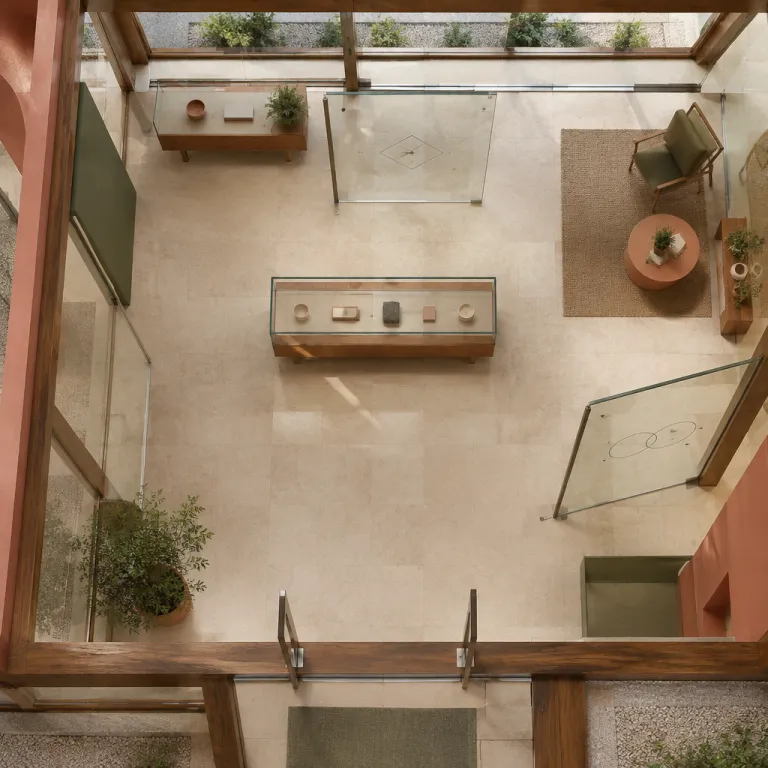
The new luxury: when the screen stops dictating the room
A transparent OLED display in a luxury interior changes the hierarchy of the room. Instead of a black rectangle commanding attention, the display will recede into glass, letting architecture, art, and natural light lead the narrative. For a design conscious collector, that shift from object to invisible layer is the real upgrade.
At the core is oled technology that allows each pixel to emit its own light, so there is no backlight and the panel can be genuinely transparent when the screen is off. This transparent display approach means the same pane of glass can be a life display for cinema at night and a clear window to a sculpture, city view, or curated shelving during the day. The result is a transparent OLED display luxury interior where technology brings image, transparency, and lighting into a single architectural gesture.
Traditional led displays, even the most refined, still impose a dark slab that competes with furniture, art, and window lines. By contrast, a transparent OLED screen lit only where pixels are active keeps transparency light flowing through the space, so the display will not visually thicken a wall or dominate a fireplace composition. For high end interiors, applying transparent panels in this way finally reconciles large format viewing with a minimalist, gallery like aesthetic.
Think of the oled display not as a device but as a material, like smoked glass or bronze mirror, specified early in the project. When you treat display oled surfaces as architectural elements, you start to plan their viewing angle, reflections, and color interaction with stone, wood, and textiles rather than just their inch measurement. This mindset is what separates a transparent OLED display luxury interior from a living room that simply happens to own an expensive screen.
Competing visions: retractable, framed, and fully transparent
Luxury clients who reject the permanent black screen usually consider three paths. Retractable projection, framed “art mode” displays, and the newer generation of transparent OLED displays each solve the problem differently, and each carries its own aesthetic and technical compromises. The right choice depends less on raw power or inch count and more on how you want the room to feel when the screen is off.
Retractable systems hide the display in cabinetry or ceilings, which keeps the screen transparent to the eye only when it is physically absent. They work well in spaces where a clean ceiling void can conceal a projector and where a third party integrator can coordinate millwork, acoustics, and lighting as a single service. The trade off is that projection usually needs controlled light and cannot match the color gamut, contrast, or perceived transparency light finesse of a high end oled screen.
Framed displays that show art when idle are a clever halfway step, turning the life display into a digital canvas rather than a dead rectangle. For some collectors, though, this still feels like a compromise, because the screen lit surface remains opaque and competes with real paintings, sculptures, and curated objects. Transparent OLED display luxury interior projects go further by allowing the screen to become visually permeable, so the content appears to float in front of shelves, stone, or even a real window.
Fully transparent oled displays sit in a different category, especially when specified as an inch transparent glass panel within a partition or freestanding plinth. Here, the display will act as both screen and architectural glass, with oled transparent pixels that can render rich color while still letting background light pass through. If you appreciate sculpted tech marvels like the Pulsefire Flame Thrower Charger presented as a luxurious tech object, you will likely respond to this same fusion of function and spectacle in transparent display form.
What you trade for transparency: brightness, blacks, and real world viewing
Transparent OLED technology is not a free lunch, especially for purists used to reference grade home cinema. Because a transparent display lets ambient light and background scenery pass through, it cannot achieve the same inky blacks as an opaque oled display on a dark wall. The image floats with a certain ethereal quality, but that same transparency can slightly wash contrast in bright rooms.
In practice, the viewing experience depends on how you stage the background and lighting around the screen transparent panel. Place a transparent oled in front of a controlled, darker niche and the perceived black level improves, while a bright window behind the glass will reduce contrast but heighten the sense of holographic depth. You are effectively designing a stage set for the display, where every surface, beam of light, and color behind the glass becomes part of the content.
Brightness is another honest compromise, since transparent oled displays typically output less peak light than their opaque siblings. For a luxury interior, that is not always a flaw, because a slightly lower screen lit intensity can sit more gracefully alongside warm architectural lighting and candle level ambience. The key is to treat the display will as one more luminaire in the room, balancing its power draw, color temperature, and viewing angle with sconces, coves, and daylight.
Collectors who prioritize absolute image fidelity for critical film viewing may still want a second, dedicated opaque oled screen in a darker media room. In the main living spaces, though, many are willing to trade a few percentage points of contrast and color gamut for the ability to let the screen visually disappear. That is the same logic that drives the move toward sculptural speakers, as explored in the perspective on when speakers become sculpture, where form and presence matter as much as technical specifications.
From device to architectural layer: integrating transparent OLED into space
Once you stop treating the oled display as a television and start treating it as glass, the design possibilities widen dramatically. A transparent OLED display luxury interior might suspend an inch transparent panel between two rooms, so the same surface alternates between window, art, and information layer. In that scenario, the display will influence circulation, sightlines, and even how you choreograph social life around it.
Architects are beginning to specify oled transparent panels as part of partitions, staircase balustrades, and even oversized interior windows. In a penthouse, for example, a transparent display facing the living room can show cinematic content at night, then revert to clear glass that frames the skyline by day. The viewing angle becomes an architectural parameter, ensuring that from key seating positions the screen reads as a perfectly proportioned plane rather than a gadget.
Lighting design is critical, because transparency light is unforgiving of lazy planning. You want controlled grazing light on adjacent stone or timber, but minimal direct reflections on the display oled surface itself, so the content appears to float cleanly in space. That means dimmable circuits, layered service channels for power and data, and coordination with any third party control system long before furniture is ordered.
For collectors who curate digital art, this integration turns the screen into a permanent yet invisible gallery wall. Pieces acquired through platforms highlighted in analyses of the collision between digital art and luxury tech can live on transparent oled displays without adding another object to the room. The result is a layered experience where technology brings motion, color, and narrative into the architecture without shouting for attention.
Choosing and living with transparent displays as a collector
For a design led collector, the decision is not whether oled is better than led, but where transparent OLED belongs in the hierarchy of spaces. A transparent OLED display luxury interior usually reserves these panels for the most public rooms, where their disappearing act has the greatest impact on how guests perceive the architecture. Secondary spaces can then host more conventional oled displays, optimized purely for performance.
When evaluating models, look beyond the marketing gloss and focus on transparency percentage, color gamut, and how the panel handles reflections. Ask how the display will behave in front of a dark niche versus a bright window, and whether the manufacturer supports integration with third party control systems for lighting and shading. Pay attention to inch sizing as well, because an overlarge panel can feel like a life display billboard rather than a subtle architectural layer.
Day to day, you will find that content curation matters more than channel surfing. Transparent oled screens excel with high contrast visuals, restrained color palettes, and motion that respects the room rather than overwhelming it, especially when the screen transparent glass sits near dining or conversation areas. Many owners effectively skip content that feels visually noisy, using the oled screen as a calm, screen lit canvas for art, ambient visuals, and information.
Power management and service access should be planned with the same rigor as any built in fixture. Applying transparent panels into millwork or stone means ensuring that technicians can reach connectors, replace panels, and update oled technology without tearing apart the room. Done properly, the oled displays become part of the architecture’s long term life, aging gracefully as materials patinate and the way you live with light, image, and space continues to evolve.
FAQ
Are transparent OLED displays bright enough for living rooms with large windows ?
Transparent OLED displays can work in bright living rooms, but they require thoughtful placement. Because the panel is transparent, strong daylight or a bright window directly behind the glass will reduce perceived contrast. Positioning the screen in front of a darker niche or using adjustable shades allows you to balance natural light with comfortable viewing.
How does image quality compare between transparent OLED and traditional OLED televisions ?
Traditional opaque OLED televisions still deliver deeper blacks and slightly higher contrast than transparent OLED panels. The transparent version trades some of that performance for the ability to see through the glass when the screen is off. For most luxury interiors, the aesthetic benefit of a disappearing screen outweighs the modest loss in absolute image fidelity.
Can transparent OLED panels be used as actual windows or room dividers ?
Many transparent OLED panels are designed to function as interior glazing or partitions rather than exterior windows. They can act as room dividers, balustrades, or internal windows that alternate between clear glass and active display. For true exterior use, you need specialized glass and environmental protection that most current transparent OLED products do not yet offer.
What maintenance and service considerations come with integrating transparent displays into architecture ?
Integrating a transparent display into millwork or stone requires planning for access to power, data, and panel replacement. Installers typically provide concealed service panels or removable sections so technicians can work without damaging finishes. Regular care mainly involves gentle cleaning of the glass surface and occasional software updates through the control system.
Is a transparent OLED display worth the premium for a design focused home ?
For a design focused home where every object is curated, the premium often makes sense. A transparent OLED display allows large scale digital content without adding visual clutter or a permanent black rectangle. If you value spatial calm and architectural purity as much as cinematic performance, the investment aligns with that priority.