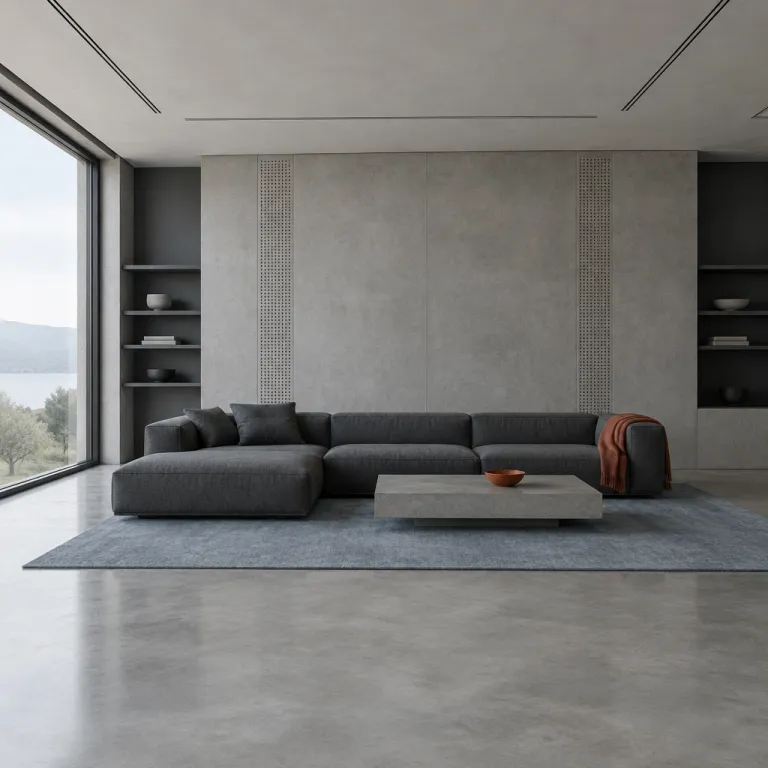
The new quiet power of invisible architectural audio
Luxury homes are shifting from object centric audio shrines to calm, gallery like spaces where technology recedes. In this new landscape, invisible architectural audio luxury home design treats every room surface as a potential instrument, turning the wall and ceiling into a continuous sound field rather than a backdrop for hardware. The result is a different kind of luxury living, where you feel the sound before you ever see a speaker.
Architects interior specialists now brief acoustic consultants as early as structural engineers, because architectural audio has become part of the building’s skeleton rather than an afterthought. When invisible speakers are designed into the wall ceiling junctions, the integration can follow the same lines as shadow gaps, coves, and recessed lighting, so the audio systems read as pure architectural intent instead of added equipment. This level of smart integration is what separates high performance luxury homes from even well appointed smart home projects that still rely on visible boxes.
The technology has matured fast, and the best invisible audio solutions no longer feel like compromises for design purists. In wall and in ceiling speakers from Sonance, Bowers & Wilkins, and KEF now use rigid composite baffles, decoupled mounting frames, and carefully tuned back boxes to control resonance and deliver high performance sound quality that rivals many freestanding speakers. When these architectural speakers are paired with dedicated subwoofers and room calibration, the overall audio performance can exceed what most living rooms achieve with traditional towers parked awkwardly beside a sofa.
Invisible architectural audio luxury home design depends on understanding how sound behaves inside real rooms, not just on spec sheets. Boundary effects from the wall and ceiling can reinforce bass and smear stereo imaging if the speaker is simply buried without modeling, so serious projects rely on simulation tools and on site measurements. Treated correctly, those same boundaries become allies, allowing smaller speakers invisible behind plaster to project a wide, even sound field that feels anchored to the room rather than to a visible object.
For the design conscious collector, the appeal is obvious, because the living room can finally breathe. Instead of a cluster of black rectangles, you get clean planes of stone, timber, or limewash, while the audio systems hide in cavities, niches, and architectural reveals that were designed for them from day one. The home technology story becomes one of quiet confidence, where luxury is expressed through restraint and precision rather than through sheer visual presence.
Multi room audio has also evolved under this philosophy, with distributed audio video matrices feeding dozens of architectural speakers across living rooms, kitchens, and terraces without a single grille in sight. A smart home controller ties these systems together, so one gesture can shift the sound from an intimate listening room to a party mode that washes the entire home in synchronized music. Invisible audio in this context is less about secrecy and more about creating a continuous, coherent sound experience that respects every interior design decision.
Vibration based panels push the idea further by turning walls and even glass into speakers invisible to the eye. These transducers couple to the surface and excite it like a drum skin, so the sound seems to emanate from the architecture itself rather than from a defined point source. Used sparingly and tuned carefully, they can add a layer of immersion that conventional ceiling speakers alone rarely achieve.
The post speaker living room is not anti object, it is anti clutter. You can still own a sculptural Devialet Phantom or a Bang & Olufsen Beolab for focused listening, while relying on invisible audio solutions for everyday life, entertaining, and background sound. The key is to treat visible and invisible systems as complementary layers in one coherent home automation and home technology strategy, not as competing tribes.
When speakers become sculpture versus when they should vanish
Statement speakers are not going anywhere, because some objects earn their right to occupy space. A pair of Bowers & Wilkins 801 D4 towers in a dedicated listening room can feel like modernist sculptures, with their curved cabinets and diamond tweeters announcing that this is a sanctuary for sound. In that context, invisible architectural audio luxury home design would be the wrong move, because the whole room is designed around the speaker as protagonist.
In a main living room, the calculus changes, since the same high gloss monoliths can fight with art, furniture, and sightlines. Architects interior teams often describe visible speakers as “visual noise” that competes with the architectural rhythm of openings, columns, and built in joinery, especially in open plan luxury homes. Here, architectural speakers recessed into the wall or ceiling allow the design narrative to stay coherent, while still delivering high performance audio for films, music, and social gatherings.
Brands like Bang & Olufsen and Devialet understand that some clients want their speaker to be a conversation piece. A portable object such as the Beolit 20, reviewed as a refined Bang & Olufsen Bluetooth speaker for design led spaces, works beautifully as a movable accent in a secondary room. Yet even these design forward pieces tend to migrate over time to studies, terraces, or bedrooms, while the primary living rooms evolve toward cleaner, more architectural audio solutions.
The trade off between in wall installation and freestanding speakers is not just aesthetic. Freestanding designs have the advantage of optimized enclosures, controlled porting, and the ability to adjust placement for better stereo imaging and smoother bass response. In contrast, speakers invisible behind plaster rely on the wall cavity and surrounding structure, so careful modeling, damping, and sometimes active equalization are essential to reach comparable sound quality.
Dolby Atmos has tilted the equation in favor of ceiling speakers for cinema oriented luxury living rooms. Height channels demand precise placement above the listening position, and purpose designed ceiling speakers with angled baffles can create convincing overhead effects without hanging visible hardware. When these ceiling speakers are part of a broader invisible audio systems plan, the result is a room where the sound field wraps around you while the ceiling remains visually pristine.
Cost is another axis where philosophy matters more than raw numbers. A pair of high end floorstanding speakers from a prestige brand can easily match or exceed the budget for a full multi room architectural audio installation with invisible speakers, amplifiers, and control hardware. The difference is that the statement speaker system concentrates value in a few visible objects, while the invisible audio approach distributes value across the entire home, turning every room into a potential listening space.
For clients who collect design objects, the answer is rarely binary. Many luxury homes now pair a visible hero speaker in a study or media room with a network of speakers invisible in circulation spaces, living rooms, and bedrooms, all tied together by smart home automation. This layered approach respects the desire for tactile, sculptural technology while embracing the elegance of invisible architectural audio luxury home design where it serves the architecture best.
What matters is intentionality, because a random mix of visible and invisible systems can feel chaotic. When the integration is planned from the earliest sketches, the home technology story reads as a single composition, with each speaker, visible or hidden, playing a defined role in the overall performance. Luxury in this context is not about owning more systems, but about orchestrating them with the same care you bring to art, furniture, and light.
Engineering the post speaker living room from the blueprint up
The most successful invisible architectural audio projects start long before drywall goes up. Acoustic consultants sit with architects interior teams to map where people will actually sit, talk, and listen, then align speaker positions with structural bays, lighting grids, and HVAC runs. This early choreography ensures that every room can host high performance audio without last minute compromises or visible hardware.
Room acoustics are the quiet hero here, because even the best architectural speakers cannot overcome a reflective glass box on their own. Thoughtful use of rugs, upholstered furniture, perforated panels, and even bookcases can tame reflections and support better sound quality from speakers invisible in the walls and ceilings. Detailed guidance on how amplification and space interact in high end audio is explored in depth in this analysis of room acoustics for the dedicated listener, which many luxury home designers now treat as essential reading.
From a technology standpoint, invisible audio systems rely on a backbone of amplifiers, DSP processors, and audio video matrices usually hidden in a central rack. Each room becomes a zone in a multi room ecosystem, with architectural speakers and ceiling speakers wired back to this hub for precise control and tuning. Smart home platforms then provide the interface, allowing residents to call up playlists, adjust levels, or route sound between living rooms and terraces with a few taps.
Integration with broader home automation is where invisible architectural audio luxury home design really earns its keep. Scenes can tie sound to lighting, shading, and climate, so a single command can lower blinds, warm the color temperature, and bring up a curated playlist at a comfortable level. In this model, audio is not a separate system but one layer in a holistic home technology experience that supports daily rituals and entertaining.
Engineering details matter, because the wall and ceiling are not benign environments for a speaker. Proper back boxes isolate the driver from insulation and structure borne vibration, while decoupled mounting frames prevent rattles and preserve clarity at high volumes. When these elements are neglected, even expensive invisible speakers can underperform, leading to muddy sound and disappointed clients who assume the technology itself is at fault.
Dolby Atmos and other immersive formats add another layer of complexity, since they require precise timing and level matching between floor level and height channels. Ceiling speakers must be positioned relative to the main seating, not just symmetrically in the room, and their dispersion patterns must be chosen to avoid hot spots or dead zones. Done correctly, the listener experiences a seamless dome of sound that seems to emanate from the architecture rather than from any identifiable speaker.
For architects, the shift to invisible audio solutions also changes how they think about structure. Beams, joists, and service runs are now coordinated with speaker locations, and sometimes the best audio performance dictates subtle changes to ceiling heights or wall thicknesses. This is where luxury homes differentiate themselves, because they are designed from the outset as instruments, not just as containers for furniture and gadgets.
Clients who care about both design and performance should insist on mockups and listening tests, even with architectural speakers. A temporary wall or ceiling panel in a site office can host a pair of speakers invisible behind plaster, allowing the team to tune DSP profiles and confirm that the sound quality meets expectations. That small investment of time and budget often prevents costly revisions later and reinforces the idea that invisible architectural audio luxury home design is as much about engineering discipline as it is about visual minimalism.
Invisible infrastructure, visible art and the future of luxury listening
Luxury audio is quietly splitting into two philosophies that can coexist gracefully. On one side, invisible audio treats the home as an instrument, embedding architectural speakers, ceiling speakers, and vibration panels into walls and ceilings so that sound becomes part of the spatial experience. On the other, visible statement speakers remain objects of desire, collected like limited edition chairs or watches and placed where their sculptural presence enhances the room.
For many design led clients, the most satisfying path is a hybrid one. Everyday life, entertaining, and casual listening lean on invisible speakers and multi room audio systems that keep surfaces clean and sightlines uninterrupted, especially in primary living rooms and circulation spaces. Focused listening, late night sessions, or vinyl rituals happen around a visible speaker system, often in a den or media room where the technology is allowed to show itself proudly.
The broader trend toward invisible technology extends beyond audio into screens, climate, and lighting. Motorized projection screens vanish into ceiling slots, HVAC diffusers hide in shadow gaps, and tunable white lighting integrates into coves so that the architectural design remains dominant. In this context, invisible architectural audio luxury home design is simply one expression of a larger movement that treats technology as infrastructure rather than decoration.
Wearable and portable devices are part of this ecosystem too, even if they are not literally invisible. A pair of high performance wireless headphones such as the Sennheiser Momentum line, reviewed in depth as a reference for luxury portable listening with serious engineering, extends the home listening experience into travel and work. The same client who demands invisible speakers in the living room often expects this level of refinement from every audio touchpoint, from the car to the office.
As these systems become more capable, the role of the integrator shifts from installer to curator. They are no longer just wiring speakers and amplifiers, but advising on how invisible audio, visible objects, and personal devices should work together to support a particular lifestyle and aesthetic. The best projects feel less like a collection of gadgets and more like a coherent composition where every sound source, from architectural speakers to headphones, plays a defined role.
There is also a sustainability angle that sophisticated clients increasingly consider. Invisible audio systems, once installed, tend to remain in place for the life of the home, with electronics upgraded in a central rack rather than through constant replacement of visible hardware. That approach reduces visual churn and electronic waste, aligning luxury living with a quieter, more enduring relationship to technology.
Ultimately, the post speaker living room is not about erasing character, but about choosing where you want your attention to rest. Some rooms will always benefit from a visible speaker that announces its presence, while others feel more luxurious when the sound seems to come from nowhere at all. The most successful invisible architectural audio luxury home design projects are those where every decision about visibility, performance, and integration is made with the same care you bring to art, materials, and light.
Key figures shaping invisible luxury audio
- According to a report from the Custom Electronic Design & Installation Association, more than 70 % of new luxury homes in North America now include some form of built in audio systems, indicating that architectural audio has moved from niche to baseline expectation.
- Market research from Futuresource Consulting shows that in wall and in ceiling speakers account for roughly one third of residential loudspeaker revenue in the premium segment, reflecting strong demand for speakers invisible to the eye in design driven projects.
- Dolby has reported that over 30 % of new premium home cinema installations specify Dolby Atmos layouts with dedicated ceiling speakers, underscoring how immersive formats are accelerating the shift toward ceiling based architectural speakers.
- Data from the Consumer Technology Association indicates that smart home penetration in the United States has surpassed 40 % of households, and multi room audio is consistently ranked among the top three desired smart home features for high income buyers.
- Industry surveys of architects and interior designers show that more than 60 % consider visible speakers to be a “design compromise” in primary living rooms, which explains the rapid adoption of invisible audio solutions in high end residential projects.