
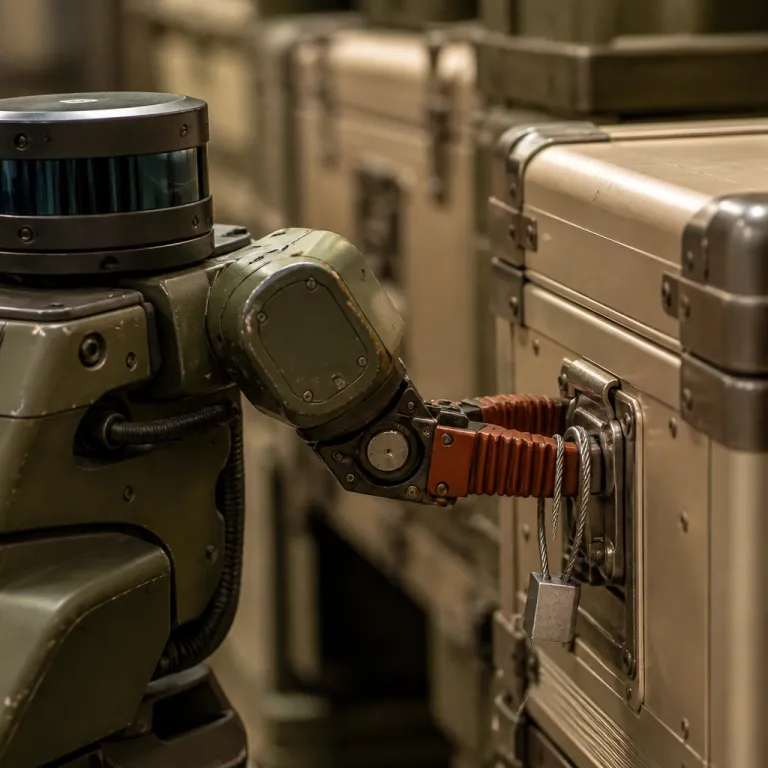
Luxury robotics meets manufacturing facility security AI weapon software
Luxury tech collectors are now eyeing advanced security platforms for weapon manufacturing facilities as the next frontier of elite robotics. Behind every limited edition hypercar or haute horology movement lies a production site where autonomous security systems quietly protect designs, raw materials, and national security interests. For connoisseurs of cutting edge gadgets, understanding how this software fuses artificial intelligence, weapons systems oversight, and high end monitoring is becoming part of the new luxury literacy.
At the core, these platforms orchestrate layered protection across manufacturing facilities, from perimeter detection to interior video analytics and access control at critical access points. The same artificial intelligence that powers autonomous systems in consumer robotics is now tuned to identify threats in real time, classify weapons, and distinguish legitimate production activity from anomalies in sensitive manufacturing environments. This convergence of intelligence, software, and physical systems is reshaping how the U.S. Department of Defense, NATO-aligned contractors, private military suppliers, and luxury industrial brands protect their most valuable assets.
For luxury tech enthusiasts, the appeal lies in the human machine interface and the sheer capabilities of these autonomous weapons oversight tools. High resolution video feeds, 3D lidar maps of storage areas, and dashboards that show live production flows across multiple manufacturing plants feel like a control room from a prestige science fiction film. Yet every system, from the smallest sensor to the most advanced foundation models, is engineered for real world military applications and must satisfy strict United Nations guidance on autonomous weapons and weapons systems governance, such as the recommendations discussed within the UN Group of Governmental Experts on Lethal Autonomous Weapons Systems.
From boutique robotics to AI secured production lines
High end robotics in luxury manufacturing plants started with precision arms assembling tourbillon movements and carbon fiber monocoques, long before dedicated AI security software for weapon production entered the conversation. As these robots gained autonomous capabilities and artificial intelligence enhanced vision, the same infrastructure that optimized production also became a powerful tool for security teams. Cameras used for quality control now support video monitoring of access points, while robotic systems track raw materials moving through storage areas and restricted zones.
In ultra premium automotive ateliers, for example, the line between production system and security system is increasingly thin. The same autonomous systems that position body panels within millimeter tolerances can halt a line if unauthorized human presence is detected near sensitive weapons systems prototypes or dual use components destined for military applications. This fusion of manufacturing and security is mirrored in luxury residential tech, where refined entertainment audio and immersive cinema rooms rely on similarly integrated monitoring and control, as explored in this guide to refined entertainment audio for immersive luxury living.
For collectors commissioning bespoke drones, armored SUVs, or yacht based defense platforms, the provenance of every component now includes how it was protected in manufacturing environments. Clients increasingly ask whether their supplier uses advanced artificial intelligence for perimeter detection, whether nuisance alarms are filtered by modern foundation models, and how security software logs every access to digital design vaults. In this world, manufacturing facility security AI weapon software becomes part of the product story, just like craftsmanship, materials, and design heritage.
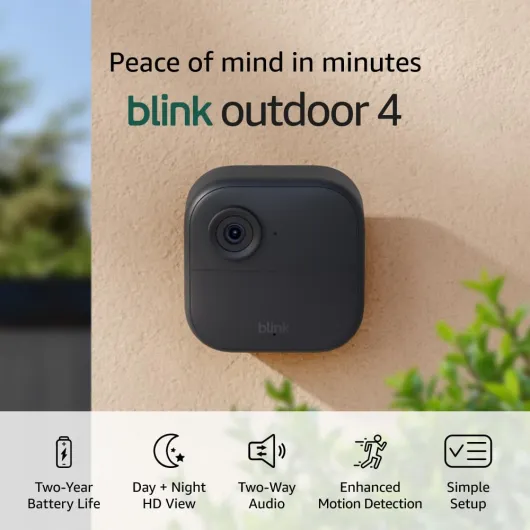
- + Wireless design for flexible installation
- + 2-year battery life reduces maintenance
- + 1080p HD day and infrared night live view
- + Two-way talk for real-time communication
- + Sync Module Core included for simplified setup

Perimeter, access, and video: the new luxury control room
The most sophisticated manufacturing facility security AI weapon software treats a site like a living organism, mapping every perimeter, corridor, and access point with obsessive detail. Around high value manufacturing facilities, layered systems combine radar, thermal imaging, and optical video to create overlapping fields of detection that leave no blind spots. For luxury tech aficionados, the resulting control rooms resemble private observatories, where operators command a constellation of autonomous systems from a single pane of glass.
Inside these facilities, access control is no longer limited to badges and PIN codes. Biometric readers, gait analysis, and artificial intelligence based behavior models verify that the right human is in the right storage areas, handling the right weapons or raw materials at the right time. When integrated with pan tilt zoom cameras and advanced controllers, as detailed in analyses of refined pan tilt zoom controllers, security teams can track a subject across multiple zones with cinematic smoothness.
Luxury oriented defense contractors now commission bespoke user interfaces that match the aesthetic of high end home automation dashboards. Touch panels show real time production metrics, security states, and weapons systems status in a single unified system, with color coded alerts that distinguish genuine threats from nuisance alarms. For clients used to curated experiences, the elegance of this control environment matters almost as much as the underlying intelligence and the resilience of the software architecture.
Autonomous weapons oversight and ethical AI in secure manufacturing
As autonomous weapons and semi autonomous weapons systems move from concept to deployment, manufacturing facility security AI weapon software must do more than guard doors and fences. These platforms increasingly supervise test cells, integration bays, and calibration rigs where lethal capabilities are validated, ensuring that every step follows strict military and national security protocols. The software tracks which human operators authorize which tests, which autonomous systems are armed, and how control states change during each phase of production.
Ethical oversight is no longer optional, especially as the United Nations and the UN Secretary-General call for clear governance of autonomous weapons. Security teams rely on auditable logs, explainable artificial intelligence models, and strict separation between monitoring functions and any direct weapons control, to align with Defense Department policies and international expectations. Luxury tech investors who back dual use robotics startups now scrutinize whether their foundation models can be constrained to avoid unintended military applications beyond agreed parameters.
For high end gadget enthusiasts, this raises a subtle but important question about the lineage of their favorite autonomous drones, robotic companions, or AI enhanced vehicles. Many of these products share components, software libraries, or manufacturing environments with platforms designed for military or national security use. Understanding how manufacturing facility security AI weapon software enforces ethical boundaries, manages access to sensitive code, and prevents misuse of intelligence capabilities becomes part of responsible luxury ownership.
Luxury grade monitoring: from automotive ateliers to secure weapon plants
Some of the most advanced manufacturing facility security AI weapon software quietly protects the same industrial campuses that build halo cars, limited run motorcycles, and bespoke armored limousines. In these hybrid manufacturing plants, production lines for civilian models may sit only a few walls away from secure cells assembling Defense Department prototypes or integrating weapons systems into special vehicles. The security architecture must therefore differentiate between public facing tours and deeply classified work, often within the same facility footprint.
High resolution video monitoring, thermal detection, and acoustic analytics work together to create a multi modal picture of activity in real time. Artificial intelligence models trained on years of manufacturing environments data learn the normal rhythms of production, from the movement of raw materials to the sound profile of test benches, and flag anomalies before they escalate. When paired with advanced automotive dealership monitoring concepts, such as those explored in this analysis of automotive dealership video monitoring as a new standard of luxury smart security, the result is a seamless continuum from showroom to secure workshop.
Clients commissioning bespoke vehicles with integrated defense capabilities often receive curated briefings on how their projects move through these secure manufacturing facilities. They learn which storage areas hold sensitive weapons components, how access points are controlled, and how autonomous systems patrol the perimeter during off hours. For many, the sophistication of this security system becomes a selling point, reinforcing the perception that their investment sits at the intersection of luxury, intelligence, and uncompromising protection.

- + Comprehensive 14-piece kit suitable for home or small business
- + Wireless design allows flexible sensor placement
- + Expandable system so you can add more sensors later
- + Easy setup with simple plug-and-play installation
- + Mobile App Control for remote monitoring and real-time alerts
Foundation models, nuisance alarms, and the future of secure luxury robotics
The next wave of manufacturing facility security AI weapon software is defined by foundation models that understand context across video, audio, and sensor streams. Instead of simple motion detection, these systems interpret intent, distinguishing a technician carrying tools from a human attempting to remove weapons or sensitive raw materials from restricted storage areas. This shift dramatically reduces nuisance alarms, allowing security teams to focus on genuine threats in complex manufacturing environments.
As states refine their national security strategies, they increasingly expect defense contractors and high end robotics manufacturers to deploy such advanced intelligence. The Defense Department wants assurance that autonomous systems used for perimeter patrol, interior monitoring, or weapons systems oversight cannot be trivially subverted or repurposed without proper control. At the same time, the United Nations and the UN Secretary-General emphasize that any artificial intelligence used around autonomous weapons must remain under meaningful human supervision, with clear accountability for every system decision.
For luxury tech enthusiasts, this evolution hints at what will soon be possible in private estates, superyachts, and high rise penthouses. The same software that orchestrates security in weapons manufacturing plants will eventually manage access, monitoring, and control in ultra high end residential spaces, blending defense grade intelligence with refined user experiences. Those who understand the current state of manufacturing facility security AI weapon software will be best positioned to evaluate which future gadgets truly offer elite protection and which merely borrow the language of military applications without the underlying rigor.
Key figures shaping AI security in weapon manufacturing
- According to the Stockholm International Peace Research Institute (SIPRI), global military expenditure surpassed 2 trillion US dollars in 2021, driving sustained investment in weapons systems, secure manufacturing facilities, and advanced security software for production sites (SIPRI, “Trends in World Military Expenditure, 2021,” pp. 1–3).
- Research from the Center for Security and Emerging Technology (CSET) reports that a majority of major defense contractors now integrate artificial intelligence into at least one stage of their manufacturing or security systems, from video analytics to access control (CSET, “AI and the Defense Industrial Base,” 2021, pp. 7–9).
- A study by the RAND Corporation found that AI enhanced monitoring can reduce nuisance alarms in complex facilities by up to 80 percent, significantly improving security team efficiency and response times (RAND Corporation, “The Role of Artificial Intelligence in Security and Defense Systems,” 2020, p. 24).
- Data from the United States Government Accountability Office (GAO) indicates that a growing share of Defense Department programs now require auditable AI decision logs, reinforcing the role of explainable foundation models in autonomous systems oversight (U.S. GAO, “Artificial Intelligence: Status of Developing and Acquiring Capabilities for Weapon Systems,” 2022, pp. 18–20).
- Industry surveys by McKinsey show that advanced robotics and AI driven production control can increase throughput in high complexity manufacturing plants by 20 to 30 percent, while simultaneously tightening perimeter and access security (McKinsey & Company, “The Future of Automation in Advanced Industries,” 2020, Exhibit 4).
FAQ about AI security in luxury oriented weapon manufacturing
How does AI security software differ between civilian luxury factories and weapon manufacturing plants ?
Civilian luxury factories focus on protecting intellectual property, high value inventory, and production continuity, while weapon manufacturing plants add strict national security and military compliance requirements. The underlying artificial intelligence, video analytics, and access control systems may be similar, but weapon facilities enforce tighter segregation of storage areas, more detailed logging of human actions, and closer alignment with Defense Department and United Nations guidelines. In practice, this means more granular permissions, stronger oversight of autonomous systems, and deeper integration between security teams and production management.
Can autonomous systems fully replace human guards in secure manufacturing environments ?
Autonomous systems can handle routine perimeter patrols, real time monitoring, and anomaly detection with impressive capabilities, but they do not replace human judgment in sensitive weapon manufacturing contexts. Most national security frameworks and military applications explicitly require meaningful human control over critical decisions, especially around weapons systems handling and autonomous weapons testing. The most effective facilities therefore combine AI driven software with well trained human security teams who interpret alerts, make nuanced decisions, and remain accountable.
Why are foundation models important for manufacturing facility security AI weapon software ?
Foundation models provide a shared intelligence layer that can understand patterns across video, audio, and sensor data, rather than treating each stream in isolation. In weapon manufacturing plants, this allows the system to distinguish normal production activity from subtle threats, reducing nuisance alarms and improving response quality. These models also support explainability, helping security teams and regulators understand why a system flagged a particular event, which is crucial for Defense Department audits and United Nations aligned oversight.
How do luxury tech buyers benefit from advances in weapon facility security ?
Many high end robotics, vehicles, and connected gadgets share components, software, or manufacturing environments with platforms built for military or national security use. As manufacturing facility security AI weapon software becomes more sophisticated, it strengthens the integrity, traceability, and protection of these shared supply chains. Luxury buyers ultimately gain products with better safeguarded intellectual property, more reliable production quality, and security architectures that can later be adapted to protect their homes, yachts, and private collections.
Are there international rules governing AI use around autonomous weapons in factories ?
While there is no single binding global treaty, the United Nations and the UN Secretary-General have issued strong guidance on responsible use of artificial intelligence in relation to autonomous weapons. Many states translate this guidance into national regulations and Defense Department procurement rules that affect how AI is deployed in manufacturing facilities and test ranges. As a result, leading manufacturers design their security systems to maintain human control, ensure auditability, and prevent unintended escalation of military applications.