Summary
Editor's rating
Value for money: who should actually pay this much
Design: compact, clean, and actually nice to look at
Build quality and long-term feel
Sound performance: strong for music, decent for TV
What you actually get with the LSX II
Everyday use: streaming, TV, and the app reality
Pros
- Very clean, detailed sound with good imaging for the size
- All‑in‑one system with HDMI ARC, USB‑C, Wi‑Fi, and major streaming services
- Compact, living‑room‑friendly design that still feels solid and well built
Cons
- Bass impact is limited without a subwoofer, especially for movies
- App and initial setup are clunky for a product in this price range
- Requires two power outlets and can lead to some cable management hassle

Specifications
View full product page →| Brand | KEF |
Small speakers, serious setup
I’ve been using the KEF LSX II (Cotton White) for a few weeks as my main speakers in the living room, plugged into the TV and also for music streaming. I came from a basic soundbar + cheap Bluetooth speaker combo, so this was a clear step up in both price and expectations. I didn’t get them for free, so I’m definitely looking at them with a “did this hole in my wallet make sense?” mindset.
First contact: unboxing, plugging in, trying to get them on Wi‑Fi and HDMI ARC. It wasn’t totally smooth. The KEF app is usable but a bit clunky, and I had to reset things once before everything behaved. Nothing catastrophic, but not exactly plug‑and‑play either. Once past that, though, I barely touched the app again except for tweaking the room EQ.
My use is split around 60% music (Spotify, Qobuz, AirPlay from an iPhone and MacBook) and 40% TV/films via HDMI ARC from a modern TV. No subwoofer, small‑to‑medium room, speakers on a TV unit about 2.2 m apart. Volume usually between 30 and 60, with some sessions louder just to see what they can really do. So this is more “normal person living room” use than “treated audiophile cave”.
If you want a short spoiler: I liked them a lot for music and they’re decent for TV, but they’re not cheap and they’re not perfect. The sound is very clean and detailed, and the size is super practical, but you do have to accept a few compromises, mainly on bass impact for movies, the app experience, and the fact you need two power sockets. If that already sounds annoying, you might want to look elsewhere; if not, read on.
Value for money: who should actually pay this much
Price is where things get more subjective. The LSX II is not cheap, especially when you remember that for the same money you could get a decent amp plus a pair of passive bookshelf speakers, or a pair of cheaper powered speakers from brands like Edifier, Audioengine, or even some studio monitors. So you really have to ask what you’re paying for here: sound quality for the size, design, and the all‑in‑one convenience.
In terms of pure sound per dollar, you can definitely find speakers that hit harder on bass or get similar detail for less, especially if you’re willing to deal with separate components and fewer streaming features. Where the LSX II makes more sense is if you want a clean, compact setup with real stereo imaging, proper connectivity (HDMI ARC, USB‑C, Wi‑Fi, multiroom options), and a look that fits in a living room without screaming “studio gear”. In that context, they start to feel more reasonable, especially if you catch them on discount.
If your priority is movies and impact, I’d say the value drops unless you budget for a subwoofer on top. In that case, you’re entering a price range where a decent AVR + passive speakers + sub is also an option, which will give you more flexibility and better upgrade paths. On the other hand, if your priority is music listening and you want something that sounds clearly better than a random Bluetooth speaker or soundbar, without turning your living room into a cable nest, then the LSX II starts to justify itself.
So value is kind of middle of the road: not a bargain, not a rip‑off. If you’re the kind of person who pays for hi‑res or lossless streaming and actually sits down to listen, you’ll probably feel the money in your ears. If you just want background music and louder TV sound, there are cheaper solutions that will get the job done and you won’t miss what the LSX II brings.
Design: compact, clean, and actually nice to look at
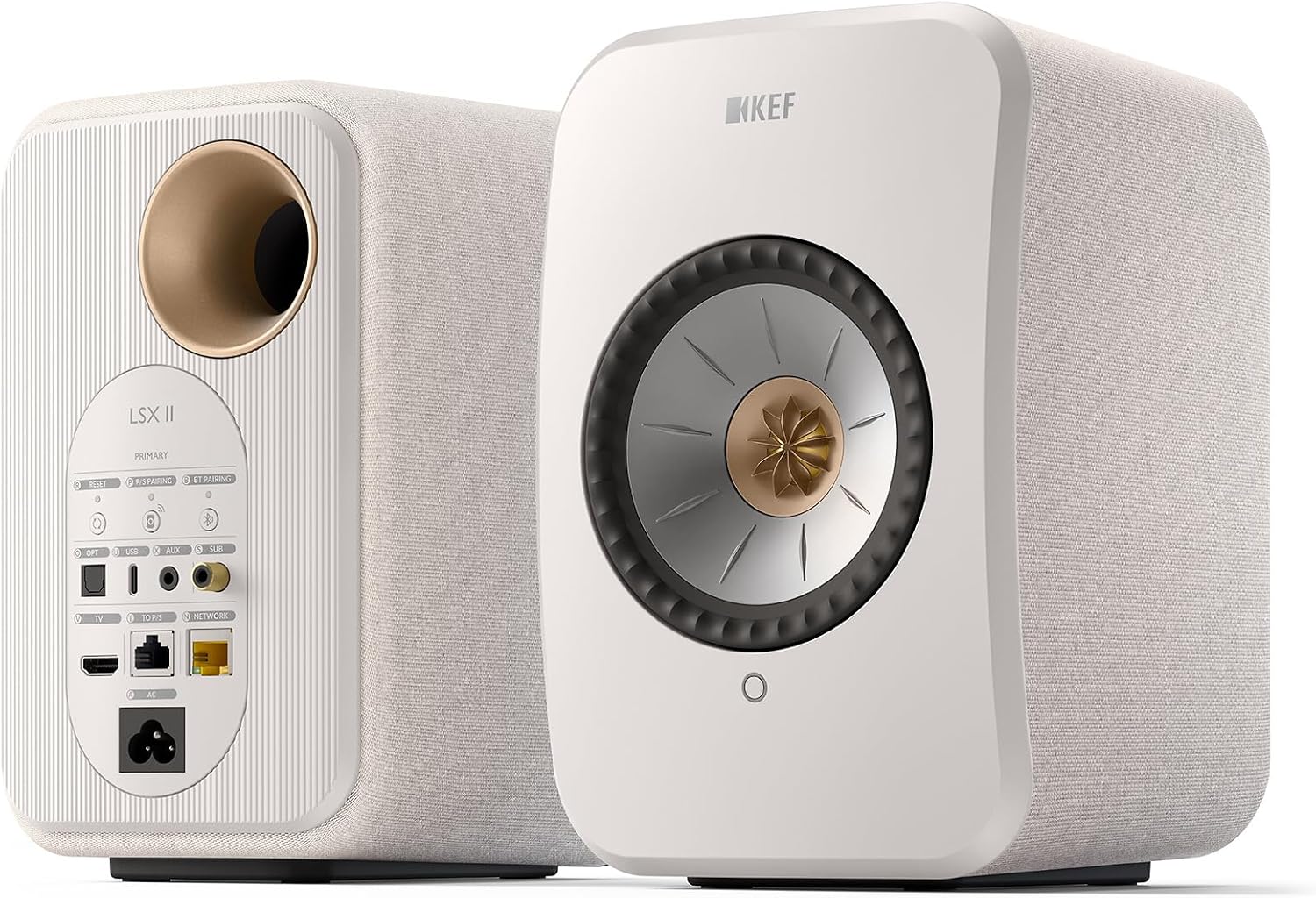
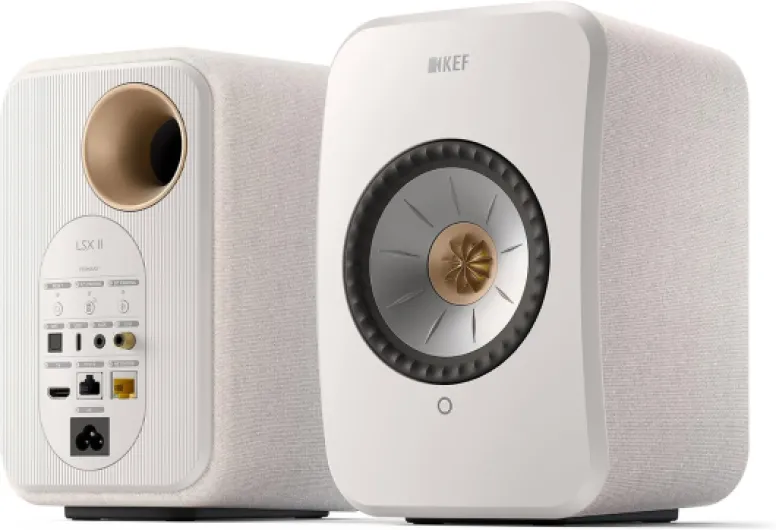
Physically, the LSX II sits in a sweet spot: bigger than a typical Bluetooth speaker, but much smaller than classic bookshelf speakers with a separate amp. Each unit is about the size of a thick hardback book (roughly 24 cm tall), so they fit fine on a TV unit, a desk, or a shelf. I used them on a low TV cabinet and also tried them briefly on a desk. In both cases they didn’t feel bulky or out of place.
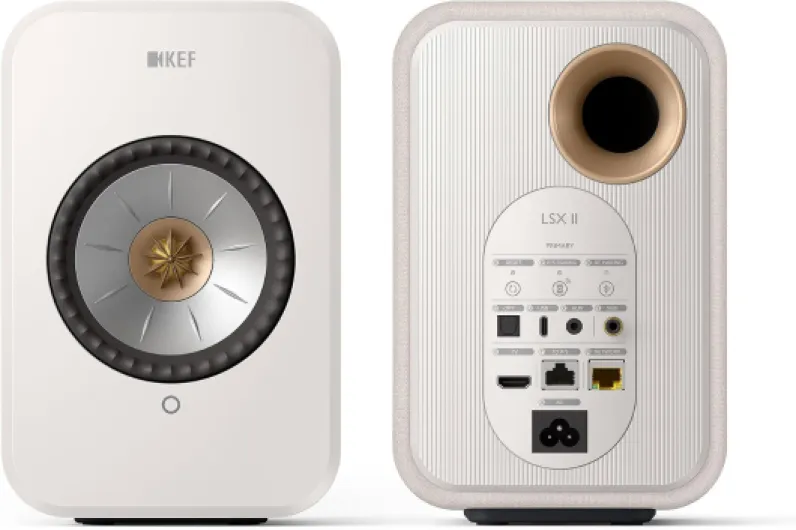
The Cotton White finish is basically a matte white body with a fabric wrap around the sides and a white Uni-Q driver in the middle. The look is minimalist and doesn’t scream “audiophile gear”. I actually liked that: they blend into a modern living room without looking like pro studio monitors. Friends noticed them, but more in a “those look nice” way than “what are those weird tech boxes”. If you hate flashy designs, this is pretty safe.
On the back of the main speaker, all the ports are clearly laid out and labeled: HDMI ARC, USB‑C, optical, analog in, sub out, Ethernet, and power. There are also a few touch buttons on top for basic control. I barely used the touch controls, to be honest; I mostly controlled volume through the TV remote (ARC) or my phone (AirPlay). The included remote is light and feels a bit basic for this price, but it works and the layout is logical enough.
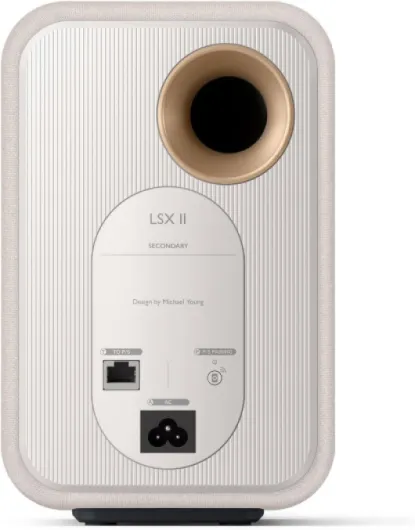
One small annoyance: because each speaker has its own power cable, you need two outlets nearby, or at least a power strip that you can hide. If your setup is in the middle of a room or you’re on stands, cable management becomes a bit of a puzzle. The LSX II LT version solves some of that with USB‑C between speakers, but here you’re stuck with two power cords and optionally an Ethernet cable between them. Not a dealbreaker, just something to know before you start drilling holes or buying stands.
Build quality and long-term feel
Build quality feels solid. The cabinets don’t creak, the fabric wrap is tight, and nothing looks cheap in person. They have a bit of weight for their size (a bit over 7 kg total), which usually means there’s real hardware inside and not just empty plastic. I moved them around a few times between a desk and the TV cabinet, and they never felt fragile or like I had to baby them.
The finish on the Cotton White version seems fairly resistant to fingerprints and dust. The matte surfaces don’t scream every time you touch them, and the fabric didn’t snag or pill in the time I had them. Obviously I didn’t drop them or smash them into a wall, but they give off the impression that they’ll handle normal home use (kids, a bit of dust, occasional cleaning) without drama. I wiped them gently with a microfiber cloth a couple of times and there was no sign of marks or discoloration.
On the electronics side, they get slightly warm after a long listening session, but nothing alarming. No weird noises, no hum, no coil whine. The only thing that makes me cautious long term is that this is an all‑in‑one active system: if the amp or the streaming board dies in a few years, you can’t just swap a receiver like with passive speakers. You’re relying on KEF’s long‑term support and repair options. That’s the trade‑off with all powered, networked speakers, not just these.
Given KEF’s reputation and the way these are built, I’d expect them to last several years easily if you don’t abuse them. But if you’re the type who likes to keep speakers for 10–15 years and upgrade electronics separately, this kind of product is a bit of a gamble. For my use (living room, normal volume, not constantly moving them), I’m not worried. I’d just keep the firmware reasonably up to date and avoid blocking the rear vents so they can breathe.
Sound performance: strong for music, decent for TV
Let’s talk sound, because that’s the whole point. Once I got them positioned properly (roughly ear height, slightly toed in toward the listening spot, around 20–30 cm from the back wall) and went through the KEF app to set room parameters, the LSX II started to make sense. Out of the box, before tweaking, they sounded a bit flat and the bass felt shy. After about 30 minutes of placement tweaks and EQ adjustments, it was like using a different pair of speakers.
For music, they’re very clean and detailed. Vocals are clear, guitars and pianos sound natural, and the high frequencies are crisp without being harsh, at least to my ears. I listened to a mix of rock, jazz, electronic, and some acoustic stuff. What stood out is how easy it is to pick out different instruments in the mix. On tracks I know by heart, I noticed small details I’d never really paid attention to before. It’s not some mystical thing; it’s just that the speakers don’t smear everything together like cheaper sets often do.
Bass is where people will argue. In a small room, with the speakers reasonably close to the wall and with the app set to give them a bit of low‑end help, I found the bass tight and controlled, but not huge. For music, I actually liked it that way: no boomy mess, just a solid low end that doesn’t drown the rest. If you expect your furniture to vibrate during explosions or EDM drops, though, you’ll probably want to add a subwoofer. For films, I sometimes felt the lack of that extra punch in action scenes, especially compared to a cheap 2.1 soundbar that cheats with a big boomy sub.
In terms of volume, they get plenty loud for normal use. I pushed them to around 70–80 on the dial in a medium room and they still held together pretty well, without obvious distortion. That said, they sound best in the “normal” listening range, not when you try to throw a party. Stereo imaging is very solid if you sit more or less in front: voices and instruments lock in the middle between the speakers, and there’s a good sense of space. Off‑axis, like when you’re cooking in the next room, they still sound fine but the magic fades a bit. So as usual: they reward you if you actually sit down and listen.
What you actually get with the LSX II
The LSX II is basically a compact, powered stereo system with Wi‑Fi, Bluetooth, HDMI ARC, and USB‑C built in. No separate amp, no receiver, just two relatively small speakers that you plug directly into power. One is the “main” (with all the connections on the back), the other is the secondary. You can run them wirelessly between each other or link them with the included Ethernet cable if you want the best stability and highest resolution.
On the connectivity side, it’s pretty loaded: HDMI ARC for TV, USB‑C for laptop/desktop, optical, 3.5 mm analog, Wi‑Fi, and Bluetooth. For streaming, it supports Spotify Connect, Tidal, Qobuz, Deezer, Amazon Music, AirPlay 2, Chromecast, and it shows up nicely in Roon if you’re into that. In practice, I mostly used AirPlay 2 from my iPhone and MacBook, plus HDMI ARC from the TV. Both worked reliably after the first setup hiccups.
Power‑wise, it goes up to around 200 W total on paper, but what matters more is that it can fill a small or medium room easily at sane volumes. This is not meant to shake the walls in a big open‑plan living space, especially without a sub. For that, KEF clearly expects you to add a subwoofer using the dedicated sub out on the back. On its own, think “serious nearfield/desktop or small lounge” more than “home cinema monster”.
In daily life, the big plus is that this is a complete system. You don’t have to deal with picking an amp, a DAC, and passive speakers. One remote, one app (even if it’s not the best), two power cables, and you’re done. The downside is you’re locked into KEF’s ecosystem: if the app annoys you or if something internal fails in a few years, you can’t just swap a separate amp. So it’s simple, but not very modular. Depends what type of user you are.
Everyday use: streaming, TV, and the app reality
On a daily basis, the LSX II did what I needed, but there are a few practical points worth knowing. Streaming via AirPlay 2 was the most reliable and easiest option for me. From iPhone or MacBook, I just picked them as the output and it worked. There’s a tiny delay (like with any network speaker), so it’s not ideal for real‑time use like playing guitar along with YouTube on a laptop, but for normal music listening it’s fine. Spotify Connect and Tidal Connect also worked as expected: you start the stream from the app, then the speakers take over.
For TV, HDMI ARC is the big selling point. Once I enabled CEC and ARC properly on the TV, the speakers turned on and off with the TV, and the TV remote controlled the volume. Lip‑sync was okay; I didn’t notice obvious delay watching Netflix, YouTube, or games on a console. The sound is way clearer than the built‑in TV speakers or a basic soundbar, especially for voices. The downside is, again, bass impact on movies: it’s clean but not huge. If you mainly watch dialogue‑heavy content and the occasional film, you’ll be happy. If you live on Marvel movies and want your walls to shake, it’s not that.
The app is the weakest part of the experience. It’s better than on the first LSX from what others say, but it still feels a bit slow and not very intuitive in some menus. The room EQ options are actually quite good: you can tell it how far the speakers are from walls, how “bright” the room is, and adjust basic tone. But getting to those menus and understanding what’s what is not exactly friendly for non‑techy users. I had one firmware update hang mid‑way and had to reset and connect the speakers with a cable to finish it, which is annoying on a product in this price range.
Once everything was updated and configured, though, the system was stable. No random dropouts, no weird pops, no desync between speakers. So the effectiveness is there: as a daily driver for music and TV, it just works once you’ve suffered through the initial setup. If you hate apps and tweaking settings, you might swear a bit the first evening, but after that, you’ll mostly control them through your TV and your phone’s usual music apps and forget the KEF app exists.
Pros
- Very clean, detailed sound with good imaging for the size
- All‑in‑one system with HDMI ARC, USB‑C, Wi‑Fi, and major streaming services
- Compact, living‑room‑friendly design that still feels solid and well built
Cons
- Bass impact is limited without a subwoofer, especially for movies
- App and initial setup are clunky for a product in this price range
- Requires two power outlets and can lead to some cable management hassle
Conclusion
Editor's rating
The KEF LSX II is a compact, serious stereo setup that fits nicely into normal living spaces and finally makes “proper” sound doable without an amp and a jungle of cables. Sound is clean, detailed, and very satisfying for music in a small to medium room once you take the time to set them up correctly in the app and position them halfway decently. For TV, the clarity on voices is a big upgrade over built‑in speakers or cheap soundbars, even if the low‑end impact on films stays limited without a sub.
They’re not perfect. The app is a bit clunky, setup can be annoying at first, and the price is not exactly casual. Bass is controlled but not huge, so anyone chasing big cinematic impact will probably want to pair them with a subwoofer or look at a different type of system. You also have to live with two power cables and the usual “smart speaker” question mark about long‑term electronics and software support.
Who are they for? People who actually care about stereo sound and music quality, want something that looks decent in a living room, and like the idea of an all‑in‑one wireless system with HDMI ARC and proper streaming built in. Who should skip them? If you mainly want movie explosions, party volume, or maximum value per watt, your money is probably better spent on a traditional amp + passive speakers or a cheaper 2.1 setup. If you’re okay paying a premium for clean design, compact size, and solid sound quality, the LSX II is a pretty solid choice, especially if you find it on sale.