Summary
Editor's rating
Value: strong sound, strong price
Design: looks odd, works well
Materials and build: feels solid, a bit more eco but still very plastic
Durability and reliability: feels like it’ll last, but it’s not a grab-and-go
Sound performance: finally a single speaker that actually fills the room
What the Sonos Era 300 actually is in everyday use
Day-to-day effectiveness: does it actually make listening easier?
Pros
- Room-filling, immersive sound with strong performance for both stereo and Dolby Atmos music
- Wi‑Fi, Bluetooth and AirPlay 2 make it flexible for different devices and guests
- Solid build with practical physical controls and long-term Sonos ecosystem support
Cons
- High price for a single speaker, especially if you add a second unit or Sub
- Sonos app feels clunky and line‑in/Ethernet require extra paid adapters
- No Google Assistant support and not portable despite some “waterproof” mentions

Specifications
View full product page →| Brand | Sonos |
A big, weird-looking speaker that actually sounds big
I’ve been using the Sonos Era 300 in my living room for a few weeks now, mostly for Spotify, Apple Music and some TV via an Arc. Before this, I had a bunch of smaller Bluetooth speakers and a couple of older Sonos Ones, so I wasn’t exactly new to Sonos, but I was curious if spatial audio was just marketing or if it actually changed anything day to day. Short version: it does change things, but only if your content and room are right, and you pay a premium for it.
Out of the box, setup was quick. Plug it in, open the Sonos app, wait a few minutes, done. No weird pairing drama. The app itself is still a bit clunky and slow sometimes (grouping rooms, changing volume on multiple speakers, etc.), but once the Era 300 is set up, it just works in the background. I mostly use AirPlay 2 from my iPhone and the Sonos app only when I want to group with my soundbar.
First time I played a Dolby Atmos playlist, I did notice the difference compared to my Sonos One: the sound spreads around the room better and you don’t get that obvious “the sound is coming from that box over there” feeling. With normal stereo tracks, it’s still very good, just not as dramatic. So if you’re not planning to use Atmos or spatial playlists, a cheaper Sonos might already be enough for you.
Price-wise, it hurts. Paying this much for a single speaker is a bit harsh, and you really feel that if you start thinking about buying a second one plus a Sub. But if you already like the Sonos ecosystem and care a lot about sound, the Era 300 is one of the few speakers that can actually fill a room without needing two or three units spread around. It’s not perfect, but it’s clearly built for people who prioritise sound over everything else.
Value: strong sound, strong price
Let’s talk money, because that’s where things get a bit more complicated. The Era 300 sits in the high price bracket for a single speaker. For the price of one of these, you could get multiple smaller speakers from other brands, or even two cheaper Sonos units. So you really have to ask yourself if you care enough about spatial audio, room‑filling sound and the Sonos ecosystem to justify it.
For me, the sound quality vs size ratio is where it defends itself. If you’re the kind of person who actually sits and listens to music, not just background noise, you hear where the money went. Compared to many Bose or generic Bluetooth speakers I’ve used, the Era 300 has cleaner separation, stronger bass without mud, and better coverage around the room. If you already have an Arc or Beam Gen 2 and want proper rears, it also makes sense as part of a bigger setup.
Where the value drops a bit is when you factor in extras and limitations: no Google Assistant, adapters sold separately for line‑in and Ethernet, and an app that feels half a step behind the hardware. At this price, I’d expect fewer small annoyances. Also, if you mostly play standard stereo Spotify at low or medium volume, cheaper Sonos speakers like the Era 100 or even a Sonos One (if you find one) will easily cover your needs for less cash.
So I’d say the Era 300 has good value for a specific type of user: someone who already likes Sonos, wants a serious jump in sound, and is willing to pay for spatial audio and future‑proof hardware. For casual background listening or tight budgets, it’s overkill. For people building a proper Sonos-based home cinema or who really care about how their music sounds, the cost starts to make more sense.
Design: looks odd, works well
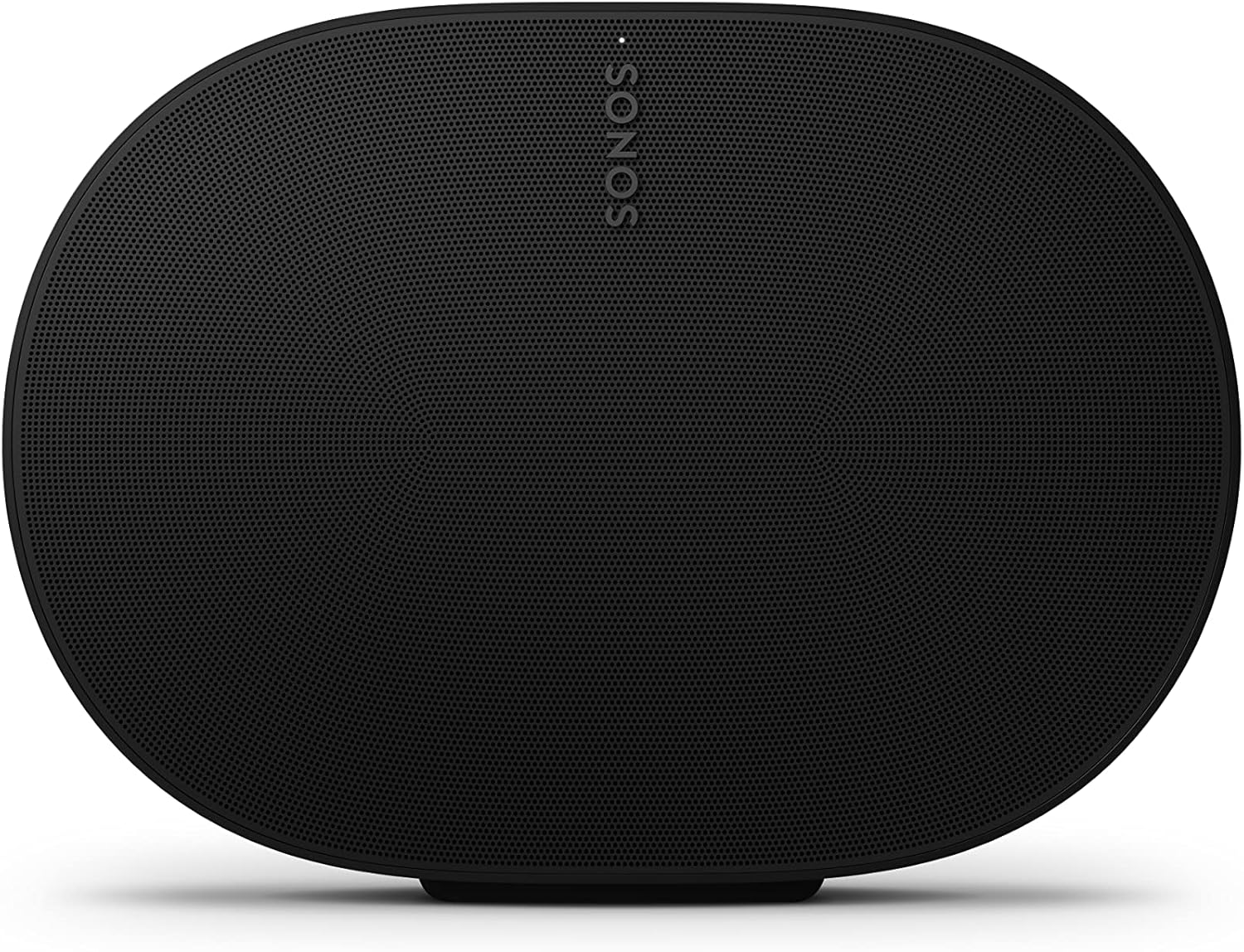
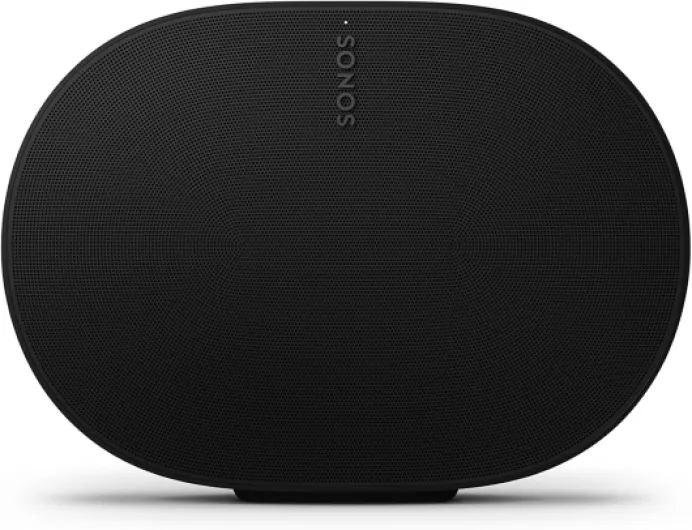
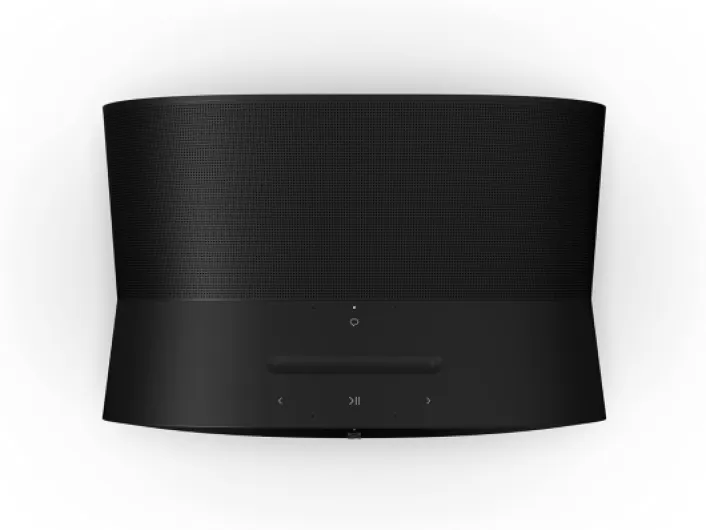
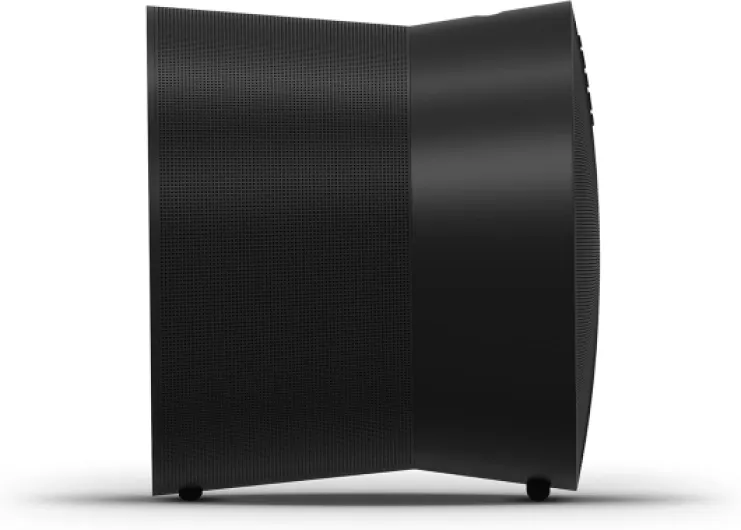
Design-wise, the Era 300 is… different. It has this hourglass / squashed pill shape that, in photos, looks a bit like a prototype that escaped the lab. In person, I actually ended up liking it more than I expected. It doesn’t scream “tech” from across the room, and in black it kind of disappears on a TV unit. If you’re into super minimal cubes, this won’t be your favourite, but it makes sense once you realise the shape is there to help throw sound in multiple directions.
The top controls are simple and, honestly, more practical than the older Sonos touch controls. You get a dedicated volume slider you can slide your finger along, plus play/pause and track skip buttons. I find myself using these more than the app when I’m near the speaker because it’s just faster. There’s also a Bluetooth button and a USB‑C port on the back for line-in or Ethernet adapters (sold separately, which is a bit stingy at this price).
One thing to know: this is not a small speaker. It weighs about 4.5 kg and is pretty chunky, so it’s not something you move around the house casually like a Sonos Move or a small Bluetooth speaker. Once it’s down, it sort of stays there. If you live in a tiny flat or want something discreet on a narrow shelf, check the dimensions properly before buying because it does take up space.
Overall, the design is functional first, pretty second. It’s not going to decorate your living room by itself, but it doesn’t look cheap either. I’d call it “practical modern”: it blends in, the buttons are easy to hit without looking, and you can tell it’s built to push sound in all directions. Whether you like the shape visually is really personal; for me it went from “what the hell is that” to “yeah, that’s fine” after a few days.
Materials and build: feels solid, a bit more eco but still very plastic
The Era 300 is basically a big block of recycled plastic, but it doesn’t feel flimsy. The outer shell has a matte finish that hides fingerprints reasonably well and doesn’t feel hollow when you tap it. It’s the kind of build where you’re not scared to wipe it down quickly or accidentally bump it with something; it doesn’t give that fragile vibe at all.
Sonos pushes the “responsible by design” angle: recycled plastics, energy‑saving bits, and fully paper-based packaging. I can’t verify the exact percentage of recycled material, but the packaging was indeed all cardboard and paper, no foam blocks or useless plastic bags, which is nice. It still feels like a premium product when you unbox it, just without the usual pile of plastic you throw in the bin right away.
There’s also attention to detail in the physical controls and ports. The volume slider has a decent “feel” to it, and the buttons don’t wobble. The mic kill switch on the back is a physical toggle, not just a touch button, which I prefer. The power cable is thick and locks in firmly, so you’re not worrying about it popping out if you move the unit a bit to clean underneath.
If I had to nitpick, for the price I would have liked maybe a slightly more premium material somewhere (metal grille, or something that doesn’t feel so fully plastic). But in practice, the plastic choice makes sense: it keeps the weight manageable, and it’s easier to clean and less sensitive to scratches than a glossy finish. It’s not a “wow” object from a materials point of view, but it’s sturdy and sensible, and that’s what matters day to day.
Durability and reliability: feels like it’ll last, but it’s not a grab-and-go
After a few weeks, I obviously can’t comment on multi‑year durability, but I can talk about how it feels and behaves in normal use. The weight (4.5 kg) and solid casing give the impression that it’s built to sit in one place for years. There are no creaks, no loose parts, and it doesn’t heat up in any worrying way, even after long sessions at higher volumes.
One thing I appreciate is that Sonos tends to support products with software updates for a long time. That’s important for a smart speaker, because once the software stops being updated, the hardware becomes a fancy brick. The Era line is new, so it should stay in the “supported” category for quite a while. If you already own older Sonos gear, the only annoyance is the whole S1/S2 ecosystem split, which can be messy if you’re mixing very old and new devices.
Despite the spec sheet saying “waterproof” in some places, I would not treat this as a bathroom or outdoor speaker. There’s no battery, it’s not marketed like the Sonos Move or Roam, and it’s clearly meant for indoor tabletop use. I kept it well away from kitchens and windows. For durability, think of it as a hi‑fi component, not a rugged portable.
In terms of reliability, I had zero random reboots or glitches. It connected to Wi‑Fi once and stayed there, even after router restarts. Firmware updates install automatically in the background; you just notice a quick pause sometimes. Overall, I’m confident this will last physically, and as long as Sonos keeps the software side alive, it should stay usable for many years. If anything fails, it’ll probably be on the software/app side before the box itself gives up.
Sound performance: finally a single speaker that actually fills the room
This is where the Era 300 justifies its price the most. For music, it’s very powerful and handles high volume without falling apart. I pushed it pretty hard during a house gathering, and there was no obvious distortion, no rattling, and the bass stayed controlled. Compared to a Sonos One or a basic Bluetooth speaker, it’s not even close: you get much more width and a feeling that the sound wraps around you instead of just firing forward.
The bass is strong but not ridiculous. It goes deep enough for most people, especially in a medium-sized room, and you don’t need a Sub unless you’re a real bass addict or setting up a full cinema system. The mids (vocals, guitars, etc.) stay clear even when you crank it up, and the highs are crisp without being sharp or tiring. I did a lot of A/B with an older Sonos Five at a friend’s place, and the Era 300 feels more open and less boxy, especially off-axis.
Where it really stands out is with Dolby Atmos / spatial audio tracks. On Apple Music or Amazon Music HD with proper Atmos mixes, you do feel sounds coming from the sides and above to some extent, even though it’s just one box. It’s not the same as a full ceiling speaker setup, obviously, but it does give more depth and direction than standard stereo. For live albums and some electronic stuff, it’s pretty fun and actually makes you want to hunt for more Atmos content.
For movies, paired with an Arc as rears, the effect is strong: rear effects and height channels feel more precise and you get a better “bubble” of sound around the sofa. But at that point, you’re into silly money territory. Still, as a standalone unit, I’d say the performance is strong enough for most living rooms, and if you’re coming from Bose or small Bluetooth speakers, you’ll clearly hear the step up. The only caveat: if you only ever play compressed Spotify stereo at low volume, you’re not really using what this thing can do.
What the Sonos Era 300 actually is in everyday use
On paper, the Sonos Era 300 is a Wi‑Fi and Bluetooth smart speaker with Dolby Atmos and six drivers inside. In real life, it’s basically a chunky bookshelf speaker that you park on a console or sideboard and forget about. It plugs into the wall (no battery), connects over Wi‑Fi for all the Sonos stuff, and you can also throw music at it via Bluetooth if friends come over and don’t want to install apps or log into your Wi‑Fi.
The speaker pushes 280 W of power and has drivers pointing forward, sideways and upwards. You don’t really see the drivers, but you do feel that the sound isn’t just blasting straight in your face. I noticed it most when walking around the room: the sound doesn’t collapse when you’re off to the side like it does with a lot of single speakers. For podcasts and radio, it’s probably overkill, but for music it’s pretty nice.
It works with Alexa and Sonos Voice, but not Google Assistant. That’s a bit annoying if your whole smart home is on Google. I personally just use Alexa for timers and basic stuff, and it hears me fine even with music at medium volume. If you care about privacy, there’s a physical mic switch on the back that actually cuts power to the mics, which is more reassuring than just a software toggle.
In terms of use cases, I see three main ones: solo speaker in a living room, stereo pair in a bigger space, or rear surrounds with a Sonos Arc or Beam (Gen 2). I tested it as a standalone music speaker and briefly as rears with an Arc. As a single speaker, it’s already strong. As rears in Atmos, it really adds height and side effects for movies, but that turns into a very expensive setup very quickly. So it’s flexible, but your wallet pays for that flexibility.
Day-to-day effectiveness: does it actually make listening easier?
In daily use, what matters to me is: do I actually use it more than my old setup, and is it hassle-free? Here, the Era 300 does pretty well. I ended up using it as my main speaker for everything: background music while working, louder sessions in the evening, and even some TV when I didn’t feel like firing up the whole surround system. It wakes up quickly, connects reliably, and I didn’t have dropouts on Wi‑Fi in a normal flat.
The Trueplay tuning (the auto room calibration) is worth doing. On my iPhone, it took a couple of minutes walking around the room, and after that the sound was less boomy in the corners and more balanced overall. It’s not magic, but it helps, especially if your room is a bit echoey or you have the speaker near a wall. Once it’s done, you forget about it, which is exactly what I want from this kind of feature.
The combination of Wi‑Fi + Bluetooth + AirPlay 2 is also very handy. Normally I use Wi‑Fi / AirPlay for myself, but when friends come over, they just hold the Bluetooth button, pair, and that’s it. No one had issues connecting. The only slight annoyance is that line‑in and Ethernet both need extra adapters you have to buy separately, which feels cheap from Sonos on a device this expensive.
The weak point is still the Sonos app. It’s usable, and you get used to it, but it’s slower and less intuitive than it should be. Grouping rooms, changing volume across multiple speakers, or browsing streaming services in the app is not as smooth as, say, Spotify Connect or the Bose app. Personally, I mostly bypass it by using AirPlay or the native apps, but if you plan to live inside the Sonos app, be prepared for a bit of frustration. Overall, though, as a daily speaker, the Era 300 is effective: it’s easy to live with once you find your way around the software quirks.
Pros
- Room-filling, immersive sound with strong performance for both stereo and Dolby Atmos music
- Wi‑Fi, Bluetooth and AirPlay 2 make it flexible for different devices and guests
- Solid build with practical physical controls and long-term Sonos ecosystem support
Cons
- High price for a single speaker, especially if you add a second unit or Sub
- Sonos app feels clunky and line‑in/Ethernet require extra paid adapters
- No Google Assistant support and not portable despite some “waterproof” mentions
Conclusion
Editor's rating
The Sonos Era 300 is a big, pricey speaker that actually backs up most of the claims around sound. The multi‑directional design and six drivers give you a wide, room‑filling soundstage that feels noticeably bigger than a standard single speaker. With Dolby Atmos and spatial audio tracks, you do get a real sense of height and space, and even with normal stereo music it delivers clean bass, clear vocals and enough volume to handle a living room without breaking a sweat.
On the flip side, you pay a lot for it, and the weak link is still the software. The Sonos app is usable but clunky, line‑in and Ethernet need extra adapters, and there’s no Google Assistant support. It’s also not portable or battery-powered, so this is a “plant it and leave it” device, not something you carry from room to room. If you mostly listen casually at low volume or don’t care about Atmos, a cheaper Sonos model will already do the job.
I’d recommend the Era 300 to people who really care about sound quality, already like or plan to use the Sonos ecosystem, and maybe want to build towards a full home cinema with an Arc or Beam Gen 2. If you’re on a budget, tied to Google Assistant, or just want something simple for background music, I’d skip it and look at more affordable speakers. For the right user, though, it’s a pretty solid long‑term speaker that can handle both everyday listening and more serious sessions without feeling limited.