Summary
Editor's rating
Is the Myzone Max worth the money?
Smaller, lighter, and less annoying on the chest
36 hours is fine, but the sealed battery is a downside
How it actually feels during real workouts
Built to handle sweat and regular gym abuse
Heart rate accuracy and real-world tracking
What you actually get with the Max & MZ-3
Pros
- Very consistent and responsive heart rate tracking, especially during intervals
- Max version is smaller, lighter, and more comfortable than the older MZ-3
- Strong app ecosystem with MEPs, challenges, and gym screen integration for extra motivation
Cons
- Non-replaceable battery limits long-term lifespan
- Price is higher than basic chest straps if you don’t care about the Myzone app and community

Specifications
View full product page →| Brand | MYZONE |
Two weeks strapped to my chest
I’ve been using the MYZONE Max alongside an older MZ-3 for a bit over two weeks, mostly in the gym and on a couple of outdoor runs. I’m not a pro athlete, just someone who trains 4–5 times a week and got tired of wrist-based heart rate readings jumping all over the place. I wanted something that gives me a clear idea of how hard I’m actually working, not what my smartwatch “guesses”. So I wore the Max for most sessions and occasionally swapped back to the MZ-3 to compare.
Right away, the thing that stood out is how much more consistent a chest strap is compared to an optical watch. On the rower and during intervals on the treadmill, my watch would lag or randomly drop 20 bpm for a few seconds. The Max just tracked smoothly. That alone made my intervals easier to manage, because I could see exactly when I was hitting the right zone instead of going by feel and hoping the watch caught up.
I also played with the Myzone app quite a bit: live tiles in the gym, MEPs, and syncing to Strava. I’m not usually a “fitness app community” person, but I’ll admit the points system and seeing my effort score after each workout did push me to stay in the higher zones a little longer. It’s a simple concept, but it works: you do more effort, you get more points, and it’s pretty clear when you coast.
Bottom line from this first stretch: it’s a solid tool if you care about training by effort instead of just time or distance. It’s not perfect, and there are a few annoying bits like the non-replaceable battery and a slightly clunky app in places, but in terms of doing what a heart rate monitor is supposed to do — track your heart reliably — both the Max and the MZ-3 get the job done well enough that I actually keep using them.
Is the Myzone Max worth the money?
In terms of value, the Max sits in the same general price zone as other branded chest straps from Polar, Garmin, etc. You’re not paying bargain prices, but you’re also not at crazy premium levels. What you’re mainly paying for here is a combination of decent hardware and the Myzone ecosystem: MEPs, community challenges, live tiles in Myzone-equipped gyms, and the app’s focus on effort over raw pace or distance.
If you’re someone who trains in a Myzone partner gym where your tile shows up on screens, the value is pretty strong. Seeing your effort next to other people in the class does push you. It’s a bit of friendly pressure that makes the workouts more engaging. The app is free and fairly complete: you get workout logs, effort breakdown, points, and integrations with apps like Strava and Apple Health. So you’re not paying a subscription on top of the hardware, which is nice.
Compared to basic chest straps that just send heart rate to your watch and don’t have their own ecosystem, the Max costs more but gives you more structure and motivation tools. If you don’t care about MEPs, leaderboards, or gym screens, and you only want heart rate data fed into your Garmin or phone, then a cheaper strap from another brand will probably do the job just as well, maybe even with a replaceable battery. In that scenario, the extra you pay for Myzone is less justified.
For me personally, the Max felt like good value because I actually used the app and the points system. It nudged me to push harder on days when I might have coasted. But I wouldn’t call it a bargain. It’s a solid, mid-to-upper tier product: you get reliable performance and some nice motivation features, but you also accept the sealed battery and the fact that you’re a bit locked into the Myzone way of doing things. If that trade-off sounds fine to you, the price feels reasonable. If not, you might want to look at simpler, cheaper straps.
Smaller, lighter, and less annoying on the chest
The big design selling point of the Myzone Max is that it’s almost 50% smaller and 25% lighter than the old MZ-3. In practice, that’s actually noticeable. The Max has a curved, low-profile body that hugs the chest better, whereas the MZ-3 feels more like a flat pod snapped onto the band. When I was doing burpees or push-ups, the MZ-3 had a mild tendency to shift or feel a bit blocky, while the Max mostly just disappeared once I tightened the strap right.
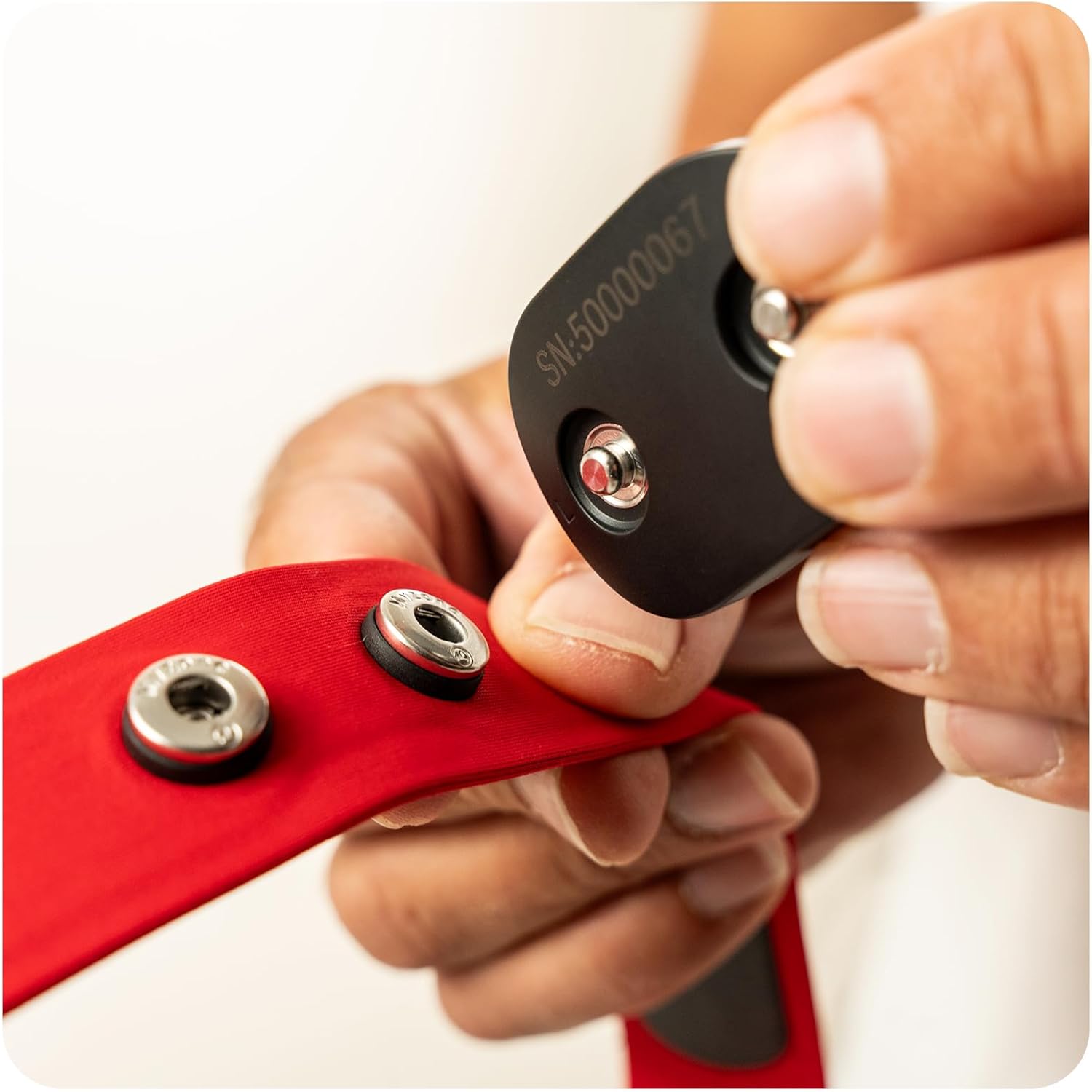
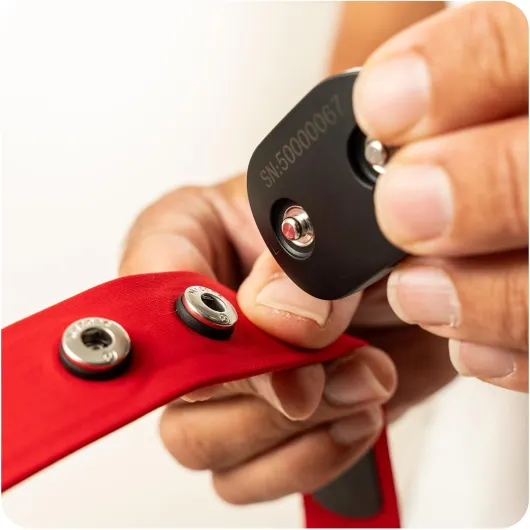
The sensor unit itself is plastic, nothing fancy, but it doesn’t feel cheap. The snap connectors to the strap are firm and give a clear click, which matters because you don’t want the thing popping off mid-workout. The front LED is small and not too bright, just enough to show it’s on and connected. There’s no screen, no buttons, nothing else — you just clip it on and it wakes up when it senses your heart rate. That simplicity is good; there’s less to break or fiddle with.
What I liked about the design is how discreet it is under a shirt. The Max especially sits flat enough that you can wear it under a tight training top or even under a casual t-shirt without it printing through much. For people who don’t want to look like they’re wired up with gadgets, that helps. The MZ-3 is still fine, but you do feel a bit more bulk when you bend or twist, especially if the strap is a bit loose.
On the downside, the design choice of a non-replaceable battery is annoying. They say 36 hours of use, which is fine per charge, but long term you know this thing is sealed and when the battery starts to fade over the years, you’re basically buying a new unit. I get that it helps with water resistance and simplicity, but from a design and sustainability point of view, it’s not ideal. Still, day to day, the Max’s shape and size are a clear step up from the MZ-3 and from bulkier chest straps I’ve used in the past.
36 hours is fine, but the sealed battery is a downside
The official spec says about 36 hours of battery life, and that lines up with what I saw. Over two weeks, I did around 10–12 workouts of 45–60 minutes each and only had to charge the Max once. It doesn’t drain when it’s just sitting around; it wakes up when it detects your heart rate via the strap. So if you’re training 3–5 times a week, you’re realistically charging it every couple of weeks, which is completely manageable.
Charging itself is simple: you clip it into the included charger and plug it into USB. It’s not a fancy dock, just a practical clip. It goes from nearly empty to full in roughly a couple of hours. There’s a light indicator so you know when it’s done. I never had it die mid-session, even when I knew it was getting low. So for day-to-day use, the battery life is solid and not something you constantly think about.
The part I don’t like is the non-replaceable battery. It means that once the battery health drops over the years — which it will, like any lithium battery — you can’t just swap a coin cell and keep using it. You’re basically on a clock from the moment you buy it. For the price point and considering this is a pretty simple device, I would have preferred a replaceable battery system like some other chest straps offer. It’s more practical and less wasteful.
If you’re just thinking short to medium term (2–3 years of regular use), the battery situation is fine. You charge it every couple of weeks, it just works, and the 36-hour capacity plus onboard memory means you can safely leave your phone at home and not worry. But if you’re the type who wants to buy gear once and keep it for ages, the sealed battery is something to keep in mind before jumping in.
How it actually feels during real workouts
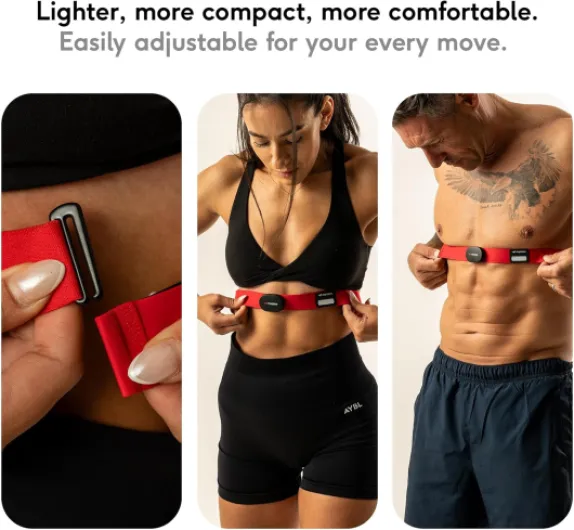
Comfort is where the Max really pulls ahead of the older MZ-3 for me. The strap itself is standard elastic with sensor pads on the inside, similar to other chest straps I’ve tried from Polar and Garmin. You wet the electrodes a bit, clip the sensor on, tighten it so it’s snug but not crushing you, and that’s it. Once I dialed in the right length, the Max basically disappeared after a couple of minutes of warm-up. I did a 60-minute strength and conditioning class, including a lot of jumping and floor work, and I barely noticed it outside of a slight pressure under the chest.
Compared to the MZ-3, the Max’s curved body makes a difference when you’re bending forward or doing movements like mountain climbers, planks, or burpees. With the MZ-3, I occasionally felt the edges press into my chest, especially when I was sweaty and the strap shifted a bit. It wasn’t painful, just mildly annoying. The Max sits more flush, so there’s less of that digging-in feeling. Also, because it’s lighter, it’s less likely to slide down if you didn’t tighten it perfectly.
One thing to be honest about: if you’ve never worn a chest strap before, it will feel weird at first. You’re basically putting a band around your chest just under the pecs, and the first few workouts you’re quite aware of it. After 3–4 sessions, I stopped thinking about it, but if you hate any kind of pressure on your torso, no chest strap is going to feel great. In that case, a wrist-based sensor might suit you better, even if it’s less accurate.
In terms of irritation, I had no skin issues with either the Max or the MZ-3, even on long, sweaty sessions. The strap dries quickly and doesn’t stay soaked. I’d still recommend rinsing it and letting it air dry after workouts, otherwise you’ll end up with salt build-up and it’ll feel stiff. Overall, for a chest strap, comfort is pretty solid. It’s not like wearing nothing, but it’s absolutely fine for regular training, and the Max is one of the less intrusive straps I’ve used so far.
Built to handle sweat and regular gym abuse
Durability-wise, both the Max and the MZ-3 feel like they’re made to handle normal gym life: sweat, being thrown into a bag, and getting stretched on and off several times a week. The sensor unit is plastic, but the casing feels tight with no creaks or flex when you twist it a bit in your hands. The strap clips on firmly and doesn’t feel like it will loosen over time easily, at least not in the short run.
The strap itself is standard elastic with embedded electrodes. After a couple of weeks of sweat-heavy workouts, mine still looks and feels fine. No fraying, no loosening yet. I rinse it under water after most sessions and let it air dry, which I strongly recommend if you want it to last. If you just toss it in your bag wet every time, any strap from any brand is going to degrade faster and start to smell. Myzone straps are replaceable, so if it does wear out, you don’t lose the sensor, but that’s an extra cost down the line.
The Max is listed as water-resistant, and I had no issues with heavy sweat or wiping it with a damp cloth. I didn’t swim with it, but for normal gym use, cycling, running in the rain, or high-sweat classes, it’s clearly built to cope. I never saw any condensation under the casing or weird behavior that would suggest water getting in. Connections to cardio machines and phones stayed stable even when I was drenched.
The only long-term durability question mark is again that sealed battery. The electronics and casing will probably outlast the battery. So while the physical build seems solid and the strap is easily replaceable, you’re limited by how long the internal battery stays healthy. For now, after a short testing window, I’d say durability is good, but just understand this is not a 10-year device. It’s more like a few solid years of use if you treat it decently.
Heart rate accuracy and real-world tracking
This is where these devices actually matter: heart rate performance. Myzone claims around 99.4% accuracy, and while I can’t verify that exact number, I can say the Max (and the MZ-3) behaved like proper chest straps should. I tested the Max alongside my Garmin watch (optical) and a cardio machine’s built-in HR sensors. On steady-state runs and cycling, the Max gave a smooth curve with no random drops, while my watch occasionally bounced around or lagged behind when I changed pace quickly.
Where the Max really showed its value was during intervals and mixed workouts. In a HIIT class with sprints, burpees, and rowing, the heart rate reacted quickly when I pushed and dropped as I recovered. No weird flat lines, no sudden 30 bpm drops that you sometimes get with wrist sensors when sweat or movement messes with the reading. I also did a couple of outdoor runs with just the Max and my phone in a waist belt, and the live reading in the app stayed stable the whole time.
The MZ-3 performed similarly in terms of raw heart rate, which is expected since they’re both chest straps. The difference is more about connectivity and comfort. The Max connected faster to my phone and to the gym screens, and I had fewer moments where I had to re-pair or toggle Bluetooth. The internal memory on the Max is also handy: I did one session completely phone-free, and when I opened the app later, the workout synced in and showed all the data and MEPs without me having to do anything.
In practice, if your main goal is to train by zones (e.g., staying in yellow or red for a certain time), the Max does the job well. You get clear feedback on when you’re slacking and when you’re actually working. It’s not magic, it just gives you honest data. Compared to relying only on feel or a basic smartwatch, I found my pacing during interval sessions got more consistent because I could see exactly when I’d hit my target intensity instead of guessing.
What you actually get with the Max & MZ-3
The Myzone ecosystem is basically built around two chest straps here: the older MZ-3 and the newer Max. Both do the same core job: track your heart rate, send it to the Myzone app or gym screens, and turn your effort into MEPs (Myzone Effort Points). The main pitch of the Max is that it’s almost 50% smaller and 25% lighter than the MZ-3, with a curved shape that sits better on the chest. On paper, they both offer around 36 hours of battery life and work over Bluetooth and ANT+ so you can hook them to phones, cardio machines, and apps like Strava, Zwift, Apple Health, etc.
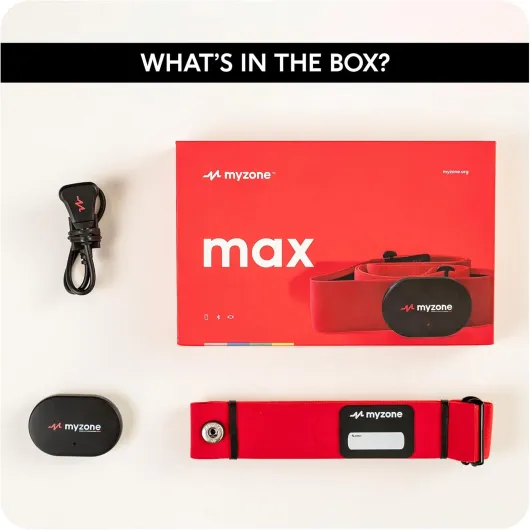
In the box, it’s pretty basic: you get the sensor, the elastic chest strap, and the charger. No fancy case, no extra bands. Setup is straightforward: you download the Myzone app, create an account, pair the device, and you’re done. The app walks you through it quickly enough, although there are quite a few screens and options, so the first time you might tap around a bit to find what you need. Once paired, both the Max and MZ-3 show up automatically when you start a workout in the app.
The real difference between the two is more about feel and usability than features. The Max has built-in memory for about 36 hours of training, so you can leave your phone in the locker or at home, do your workout, and it will sync later. The MZ-3 also has internal memory, but the Max just handles it more smoothly and connects a bit faster in my experience. If you’re training in a Myzone-equipped gym, both will show your tile on the big screen, which is surprisingly motivating when your tile is blue and everyone else is in yellow or red.
Overall, the presentation is pretty no-nonsense: it’s a chest strap with an app, not a fancy smartwatch. If you’re expecting a lot of accessories or a super polished unboxing, you’ll be disappointed. But if you just want something to clip on and go train, the package is simple and focused. From my point of view, that’s fine — I’d rather they put the effort into the hardware and accuracy than the packaging.
Pros
- Very consistent and responsive heart rate tracking, especially during intervals
- Max version is smaller, lighter, and more comfortable than the older MZ-3
- Strong app ecosystem with MEPs, challenges, and gym screen integration for extra motivation
Cons
- Non-replaceable battery limits long-term lifespan
- Price is higher than basic chest straps if you don’t care about the Myzone app and community
Conclusion
Editor's rating
Overall, the Myzone Max (and the older MZ-3) are solid heart rate monitors that do the basic job very well: they give you accurate, stable heart rate data during real workouts without a lot of fuss. The Max improves on the MZ-3 by being smaller, lighter, and more comfortable, with quick connections and practical onboard memory so you can leave your phone in the locker. For interval training, group classes, or anyone who wants to train by zones instead of just time or distance, it’s genuinely useful. The MEPs system and live tiles in Myzone gyms are also good for motivation if you like a bit of competition and structure.
It’s not perfect though. The non-replaceable battery is the main downside for me, because it limits the long-term lifespan of the device. And if you don’t care about the Myzone ecosystem — the app, challenges, and gym integration — then cheaper chest straps can give you similar heart rate accuracy for less money and with batteries you can swap yourself. So I’d say this is best for people who either train in a Myzone-equipped gym, or who know they’ll use the app and points system to keep themselves accountable. If you just want raw heart rate data with minimum fuss and maximum longevity, there are more basic options that might suit you better.