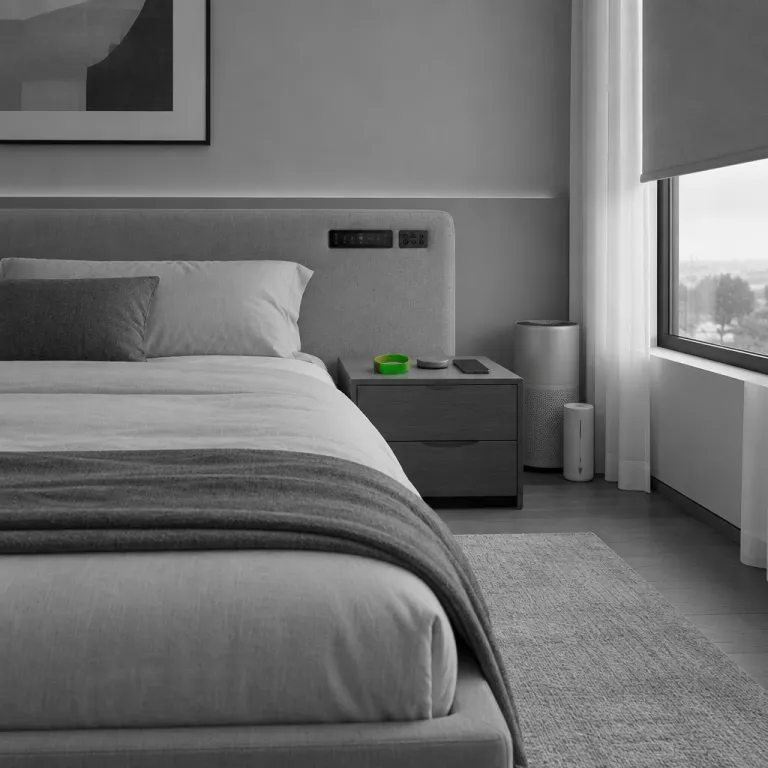
From wrist trackers to invisible luxury sleep technology bedroom ecosystems
For affluent technophiles, the real frontier of luxury now lies in the luxury sleep technology bedroom rather than in the living room media wall. The market for sleep technology was valued at about 18,7 billion USD and is projected to reach roughly 67,4 billion USD, with a compound annual growth rate near 13,7 %, which signals a decisive shift from entertainment to restorative comfort in the home. That growth is driven by systems that track sleep stages, regulate temperature and air, and quietly orchestrate lighting so you fall asleep and stay asleep without ever feeling surrounded by gadgets.
The most interesting move is the migration of data from the wrist to the bed and the wider bedroom environment. Instead of a glowing screen reminding you to sleep deeper, biometric mattress systems, textile sensors, and a discreet mattress cover now read your heart rate variability, breathing, and body temperature while you lie asleep faster in a perfectly tuned bed. The luxury play is clear here, because the best products cover sleep with almost invisible technology, letting you wake to better sleep metrics without sacrificing the calm visual language of a gallery level suite.
High end brands now treat the bedroom as a holistic sleep health studio, not a dumping ground for random smart devices. A well curated luxury sleep technology bedroom will integrate smart lighting, adaptive air purifiers, and acoustic zoning systems so each side of the bed can stay in its own microclimate and sound bubble. When this ecosystem is well set, you move through your sleep stages with less interruption, enjoy deeper night rest, and experience quality sleep that feels like a private wellness retreat rather than a quantified self experiment.
Biometric mattresses and textiles that listen while you sleep
The core of an advanced luxury sleep technology bedroom is the mattress, because that is where your body spends the longest continuous stretch of time each night. Premium biometric mattress systems now embed pressure sensors, thermoelectric modules, and piezoelectric films that map how you fall asleep, how long you stay asleep, and when your sleep stages drift into deep sleep or REM. Instead of a visible gadget, the technology disappears into the mattress cover, which quietly tracks sleep quality and adjusts temperature on each side of the bed in real time.
For couples, dual zone beds are transformative, since one person can stay warm while the other prefers cooler air and a firmer feel. The best systems let you set a precise temperature curve across the night, starting slightly cooler to help you fall asleep easier, then warming subtly toward morning to support a gentler wake without harsh alarm clocks. When the mattress detects snoring patterns or micro movements, it can tilt the side bed a few degrees or change air flow under the cover sleep layer, helping you sleep deeper without the drama of a separate device strapped to your face.
Smart textiles extend this logic beyond the mattress itself, wrapping the entire bed in a responsive shell. High thread count natural fibers blended with conductive yarns can track sleep health indicators such as breathing rhythm and still feel like classic hotel linen against the skin. When paired with a robust smart hub, such as a dedicated smart series hub tested in products like the L2 Link Plus smart series hub, these systems coordinate data from the mattress, the mattress cover, and the wider bedroom so your luxury sleep technology bedroom behaves like a single, coherent instrument.
Light, air, and sound as the new materials of bedroom design
Once the bed and mattress are intelligent, the rest of the luxury sleep technology bedroom must rise to the same standard. Smart lighting has moved far beyond simple dimmers, with circadian aware systems that shift color temperature and intensity across the evening to cue your body toward sleep, then gently wake you with a simulated dawn that makes getting out of bed feel less abrupt. In a refined space, these smart lighting systems hide in coves, behind headboards, and within architectural details, preserving the bedroom’s calm while still guiding your sleep stages toward more restorative deep sleep.
Air quality is the second major pillar, and it is where many luxury projects still under invest. High end air purifiers with HEPA and activated carbon filtration can quietly scrub particulates, allergens, and urban pollution, which directly affects sleep quality and long term sleep health for city dwellers. When these air systems integrate with the same control panel that manages lighting and temperature, such as a sophisticated smart control panel like the one reviewed in the NSPanel Pro smart control panel test, you gain a single, elegant interface rather than a clutter of apps on your phone.
Sound completes the triad, because even the best mattress cannot compensate for a noisy corridor or street. Architectural acoustic treatments, from upholstered wall panels to dense curtains, can be paired with adaptive sound masking systems that raise a soft, neutral noise floor only when the environment spikes, helping you stay asleep during unpredictable disturbances. The most successful luxury sleep technology bedroom projects treat lighting, air, and sound as equal design materials, balancing comfort and technology so the room feels like a sanctuary first and a smart system second.
When data helps you sleep deeper, not obsess more
As sleep technology matures, the risk is not a lack of data but an excess of it. Modern trackers embedded in the bed, the mattress cover, or even the side bed frame can now monitor heart rate variability, breathing, oxygenation, and detailed sleep stages without any wearable device, which is a clear win for comfort. The danger comes when every night’s sleep quality score becomes another KPI to optimize, turning the luxury sleep technology bedroom into a performance dashboard rather than a place to rest.
The most thoughtful systems therefore prioritize gentle coaching over constant alerts, using trends rather than nightly verdicts. Instead of pushing you to wake and check your phone at three in the morning, they surface insights in the morning about how quickly you managed to fall asleep, how long you stayed asleep, and which environmental changes correlated with better sleep. A well designed interface might show that slightly cooler temperature and darker lighting in the first half of the night consistently lead to deeper sleep, while late screen use or alcohol correlate with more fragmented sleep stages and lower overall sleep health.
For high performing professionals, the goal is perfect sleep as a lived experience, not a theoretical number. That means choosing systems that let you set and forget key parameters, then quietly adjust in the background so you simply feel more rested when you wake. When evaluating products, prioritize those that keep screens out of the bedroom, minimize notifications, and translate complex data into a few clear, human centric recommendations that make it easier to fall asleep and easier to stay asleep without inviting anxiety into the bed.
How to curate a future proof, repairable, and private sleep sanctuary
Building a truly advanced luxury sleep technology bedroom is less about buying every smart gadget and more about curating a coherent, durable ecosystem. Start by mapping the essentials, which usually means a biometric mattress, a responsive mattress cover, circadian smart lighting, silent air purifiers, and a central control system that can set scenes for evening wind down, deep sleep, and gentle wake. From there, you can add more specialized systems, such as a bed frame that detects snoring and subtly adjusts your side of the bed, or alarm clocks that wake you with light and temperature shifts instead of a jarring sound.
Longevity and repairability should sit high on your checklist, because a bed is a decade scale object while most consumer technology cycles are far shorter. Look for modular systems where the sensing layer can be replaced without discarding the entire mattress, and where the smart lighting drivers or air systems can be serviced without tearing apart the bedroom. Data privacy is equally critical, since sleep health metrics are sensitive health information, so favor brands that process as much data as possible locally in the bedroom hub and offer transparent, granular controls over what leaves your home.
As you starting to shop, treat the process more like commissioning a tailored suit than grabbing gadgets off a shelf. Visit a specialized shop or showroom where you can lie on the bed, feel how the temperature shifts across the night simulation, and see how the lighting scenes transition from reading mode to deep sleep mode. For a broader perspective on how these bedroom systems intersect with the rest of the smart home, design conscious buyers can look at curated analyses of flagship launches, such as those covered in this design conscious flagship season guide, to ensure their sleep sanctuary integrates gracefully with the rest of their home technology.
FAQ
How much technology should I actually put in my bedroom ?
A luxury sleep technology bedroom works best when the technology is present but visually quiet. Focus on a smart mattress, circadian smart lighting, and discreet air purifiers, then add only the systems that clearly improve your comfort. If a device brings more notifications, cables, or light than genuine comfort, it probably does not belong near your bed.
Can smart mattresses really improve my sleep quality ?
Biometric mattresses and advanced mattress covers can track sleep stages, temperature, and movement, then adjust firmness or warmth to help you fall asleep faster and stay asleep longer. Over time, these adjustments can support deeper sleep and more consistent sleep health, especially when combined with good habits. The key is to use the insights to refine your environment, not to obsess over every single night’s score.
Are connected sleep systems safe for my health and privacy ?
Most high end sleep systems use low power sensors and wireless protocols that are considered safe for home use, and they prioritize comfort by embedding the technology into the bed and textiles. For privacy, choose brands that offer clear data policies, local processing where possible, and options to limit or anonymize cloud storage. Treat your sleep data like other sensitive health information and review settings regularly.
What should I prioritize if I am starting from a traditional bedroom ?
If you are upgrading a conventional bedroom, start with the basics that most directly affect sleep quality. A supportive mattress with a breathable mattress cover, blackout capable smart lighting, and quiet air purifiers will usually deliver the biggest gains in comfort and deep sleep. Once those are in place, you can add more advanced systems such as snoring detection or adaptive alarm clocks if they address specific needs.
How do I avoid feeling overwhelmed by sleep data and metrics ?
Choose systems that summarize information into a few clear indicators, such as overall sleep quality, time to fall asleep, and time spent in deep sleep. Check the data once a day at most, ideally in the morning, and look for trends over weeks rather than reacting to single nights. If the data ever makes you more anxious about sleep, dial back the tracking features and let the environment quietly support you instead.