Why Zigbee hubs define the modern luxury smart home
In a refined residence, Zigbee hubs act as invisible conductors for every smart detail. A single Zigbee coordinator can orchestrate hundreds of Zigbee devices, turning lighting, climate, and shading into a seamless sensory experience. When you treat hubs as part of the interior architecture rather than simple gadgets, the entire smart home feels coherent and calm.
The Zigbee protocol was designed for low power and high reliability, which makes each Zigbee smart sensor or switch ideal for discreet installation behind marble walls or bespoke woodwork. Luxury projects often mix smart devices from several brands, so a robust gateway hub that speaks Zigbee, Wi‑Fi, and sometimes Matter becomes essential for long term flexibility. In this context, a Zigbee hub solution is less about basic remote control and more about curating a resilient digital backbone for the property.
Clients who invest in high end automation rarely focus on unit price first, yet they still expect a rational relationship between performance and regular price. A premium smart hub that manages Zigbee devices, Matter accessories, and legacy systems can reduce the number of visible boxes and cables, which preserves the purity of the interior design. When you compare Aqara, Homey, and other hubs, the most elegant choice is usually the one that quietly handles complexity while giving the owner effortless control.
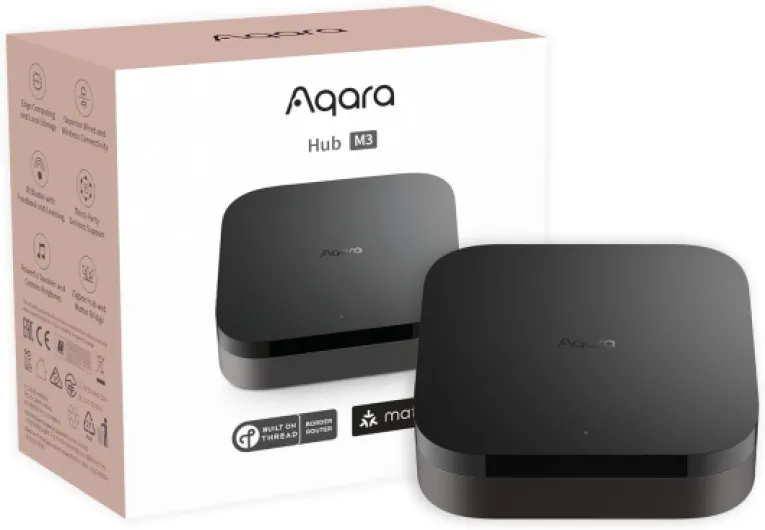
- + Supports multiple protocols: Zigbee, Bluetooth, Wi-Fi
- + Functions as a Matter Controller
- + Acts as a Thread Border Router
- + Integrates with Alexa, Apple HomeKit, SmartThings, Home Assistant, IFTTT
- + Supports Power over Ethernet (PoE)

Choosing the best smart hub architecture for a refined residence
Designing a luxury system starts with deciding whether a single smart hub or several distributed Zigbee hubs will serve the property better. In a compact penthouse, one powerful hub smart unit can manage all Zigbee devices, Matter accessories, and IP cameras without strain. Large villas or multi level townhouses often benefit from multiple hubs that share the load and ensure stable control in every wing.
Brands such as Aqara, Tuya Smart, and Homey Pro approach the Zigbee gateway concept differently, which matters when you plan a long term ecosystem. An Aqara hub focuses strongly on sensors, security, and tight integration with Apple Home, while a Tuya Zigbee gateway emphasizes white label flexibility and a vast catalogue of compatible smart devices. Homey and Homey Pro aim to be the universal gateway hub, combining Zigbee, Z‑Wave, Wi‑Fi, infrared, and sometimes Matter into one polished interface for demanding owners.
Luxury buyers often ask whether they should buy from Amazon or through a specialist integrator when selecting a Zigbee hub or smart gateway. Online platforms can offer an attractive price and fast delivery, but a professional installer will usually compare Aqara hub models, Tuya Zigbee gateways, and other hubs based on the specific materials, floor plan, and automation scenes of the residence. For complex projects that include an advanced smart control panel such as the NSPanel Pro, it is wise to work with a partner who understands how the panel, the hub, and the Zigbee gateway will share responsibilities for automation, as explained in this detailed NSPanel Pro smart control panel review.
Discreet control, remote elegance, and voice assistants in harmony
True luxury means that control is always available yet rarely visible, and Zigbee hubs excel at this balance. A well placed smart hub can centralize remote control for lighting, blinds, and climate while letting designers hide switches, cables, and routers from sight. When the Zigbee network is tuned correctly, even a large glass facade that opens window panels automatically can respond in perfect synchrony to a single scene command.
Voice assistants have become part of this discreet choreography, with Alexa, Google Assistant, and Siri acting as natural extensions of the gateway hub. Many Zigbee hubs now integrate directly with Alexa and Google ecosystems, allowing owners to say a single phrase and trigger dozens of Zigbee devices, Matter accessories, and IP scenes at once. For clients who prefer a more tactile experience, a wall mounted tablet or a dedicated smart gateway panel can provide visual feedback without cluttering the space.
Security focused estates often pair their Zigbee smart infrastructure with advanced perimeter systems and long range cameras, which demand a reliable smart hub backbone. When a property uses a superzoom PTZ camera to track movement across a large garden, the same hub smart system can coordinate lighting, shutters, and alarms in response, as shown in this analysis of long range PTZ mastery for refined estates. In such scenarios, the best Zigbee hubs are those that maintain low latency and high reliability while juggling security, comfort, and aesthetics.
Comparing Aqara, Tuya, Homey Pro, and other premium Zigbee hubs
From an analyst perspective, the most interesting competition in Zigbee hubs happens between Aqara, Tuya Smart, and Homey Pro. Each Zigbee hub family targets a different type of luxury buyer, which becomes clear when you compare Aqara with Tuya Zigbee gateways and the more expansive Homey ecosystem. Aqara hub models usually offer a very attractive regular price for their capabilities, while Homey Pro positions itself as a flagship smart hub solution with a higher unit price but broader protocol coverage.
Tuya smart platforms, often sold through Amazon and various brands, focus on scale and flexibility rather than a single hero hub. A Tuya Zigbee gateway can be integrated into many white label smart devices, which allows designers to match the aesthetic of switches and sensors to the interior style. When you buy into this ecosystem, you gain access to a vast catalogue of compatible Zigbee devices and Wi‑Fi products, but you rely heavily on the Tuya cloud for advanced control.
Homey and Homey Pro, by contrast, emphasize local processing and a polished interface that appeals to owners who want a central brain for every Zigbee, Z‑Wave, and IP device on the property. This approach suits large estates where a single gateway hub must coordinate lighting, audio, climate, and even specialized systems such as pool management or wine cellar monitoring. For ultra secure facilities, pairing such a hub with elite AI security software can reshape how access control and surveillance interact with the smart home, as explored in this piece on elite AI security software for critical facilities.
Designing scenes, automation, and window choreography with Zigbee devices
Once the right Zigbee hubs are in place, the real artistry lies in scene design. A luxury residence might use a Zigbee gateway to orchestrate a morning routine where blinds open window panels gradually, lights warm from 2700 K to 3000 K, and music fades in at a gentle volume. Each smart hub involved in this choreography must handle timing precisely so that the experience feels organic rather than mechanical.
Smart devices such as presence sensors, contact sensors, and temperature probes become the eyes and ears of the system, feeding data back to the Zigbee network. When a terrace door opens window leaves during a summer evening, the gateway hub can automatically reduce cooling output and adjust exterior lighting to frame the view. This type of automation relies on the low latency and mesh resilience of Zigbee smart networks, which is why many integrators still prefer Zigbee devices over Wi‑Fi only alternatives for critical comfort functions.
For clients who travel frequently, remote control is just as important as local elegance, and a well configured smart gateway makes this effortless. Owners can check whether any window or gate remains open, adjust climate setpoints, or trigger presence simulation scenes from anywhere in the world. In these scenarios, the best Zigbee hubs balance cloud convenience with local fallback, ensuring that essential scenes still run even if the internet link fails.
Pricing, value, and where to buy premium Zigbee hubs
While luxury buyers rarely chase the lowest price, they do expect clarity about value when selecting Zigbee hubs. A compact Aqara hub or Tuya Zigbee gateway might start at a modest unit price, while a fully featured Homey Pro or similar smart hub can cost several times more. The key is to relate regular price to the number of supported devices, the breadth of protocols, and the quality of long term software support.
Retail platforms such as Amazon make it easy to buy a Zigbee hub quickly, compare Aqara and Tuya smart options, and read user feedback about compatible smart devices. For complex estates, however, a specialist integrator will often specify multiple hubs, sometimes mixing an Aqara hub for sensors, a Homey Pro for advanced logic, and a dedicated security gateway for access control. This layered approach ensures that each smart hub component focuses on what it does best while still presenting a unified interface to the owner.
When evaluating Zigbee hubs, pay attention to how well they integrate with Alexa, Google Assistant, and other voice platforms, because this affects daily comfort. A Zigbee solution that works smoothly with Alexa and Google voice control, supports Matter for future proofing, and offers robust local automation will usually justify a higher price in a luxury context. Over the lifespan of a high end property, the reliability and elegance of the control experience matter far more than saving a small amount on the initial buy.
Key statistics and adoption trends for Zigbee hubs in luxury homes
- The Connectivity Standards Alliance has reported cumulative shipments in the billions for Zigbee chipsets, showing that Zigbee hubs and Zigbee devices rest on a mature, widely adopted standard rather than a niche protocol.
- Industry research firms note that professional smart home installations account for a substantial share of global smart home revenue, which highlights how often luxury projects rely on integrators to specify the right smart hub and gateway hub combinations.
- Analyst studies consistently find that households using a central smart hub are more likely to add new smart devices over time, confirming that a well chosen Zigbee hub encourages ongoing investment in automation rather than a one off purchase.
- Market analyses from organizations such as Statista indicate that voice assistants like Alexa and Google Assistant are present in a large proportion of connected homes in several major markets, which reinforces the importance of choosing Zigbee hubs that are fully compatible with Alexa and Google ecosystems.
- Surveys among professional installers suggest that mesh protocols such as Zigbee and Thread are preferred over Wi‑Fi only solutions for lighting and sensor networks in large properties, mainly because they offer better reliability and lower power consumption for dense deployments.
FAQ about Zigbee hubs in luxury smart homes
Are Zigbee hubs still relevant now that Matter is available?
Zigbee hubs remain highly relevant because many existing smart devices use Zigbee and will continue to do so for years. Matter improves interoperability at the application layer, but it does not replace the installed base of Zigbee devices already embedded in luxury projects. Many modern hubs act as both a Zigbee gateway and a Matter bridge, giving you the best of both worlds.
How many Zigbee devices can a single hub manage reliably?
The exact number depends on the model, but many Zigbee hubs comfortably handle dozens of direct connections and hundreds of devices when routers such as powered switches or plugs extend the mesh. For example, a Homey Pro installation can typically manage well over a hundred Zigbee nodes across multiple rooms, while an Aqara hub is often used for several dozen sensors and switches in a single apartment. For large estates, integrators often deploy several hubs or split the property into zones to maintain optimal performance, which also improves resilience because one hub failure does not affect the entire residence.
Is it better to buy a Zigbee hub from Amazon or through an integrator?
Buying from Amazon can be convenient for smaller projects or for testing a specific smart hub at home. For a high value property with complex requirements, a professional integrator will usually provide better long term results by selecting compatible hubs, planning the Zigbee network, and ensuring that voice assistants and security systems work together. The extra service cost is often small compared with the overall project budget.
Can Zigbee hubs work without an internet connection?
Many Zigbee hubs support local automation, meaning that scenes and device control continue to function even if the internet link fails. Cloud services are typically required only for remote access, voice assistants, or firmware updates. For critical functions such as security and climate, it is wise to choose a hub that prioritizes local processing.
How do I compare Aqara, Tuya, and Homey Pro for a luxury project?
Aqara hubs offer strong value and deep sensor integration, which suits apartments and smaller homes that prioritize security and comfort. Tuya smart platforms provide enormous device variety and flexible branding, making them attractive when you want many compatible smart devices in matching finishes. Homey Pro targets power users and large estates that need one central brain to coordinate multiple protocols, complex scenes, and advanced integrations.