
Why the Zooz 800 Series Z‑Wave Long Range Q Sensor matters in a luxury home
The Zooz 800 Series Z‑Wave Long Range Q Sensor targets owners who expect silent precision from every sensor in their residence. In a high end apartment or villa, this discreet device extends the effective range of your Z‑Wave network while preserving the clean architectural lines that define luxury spaces. Its compact body and refined finish allow the sensor to disappear visually, yet its long range performance quietly reinforces the reliability of every smart scene you trigger.
Unlike generic motion sensors, this Zooz product is engineered as a range sensor that supports Z‑Wave Long Range and standard Z‑Wave, which means it can bridge distant rooms, garages, or garden pavilions several tens of metres away in real deployments. When powered continuously, the device acts as a secure node that relays Z‑Wave signals with low power consumption, so your smart lighting, climate control, and alarm panels respond instantly even when the hub is located on another floor. In practice, this extended long range capability is what separates a basic connected home from a truly resilient smart estate.
Luxury buyers often purchase through Amazon or specialist boutiques, and the Zooz 800 Series Z‑Wave Long Range Q Sensor is usually sold as a standalone product with accessories sold separately. You will typically find the sensor sold with clear information about whether sensor batteries are included, whether a micro USB or included micro USB cable is part of the package, and whether free shipping is available to your region. Before you order, read at least a few detailed reviews product pages to confirm how the device works with your preferred hub and whether the hub supports Z‑Wave Long Range in your specific configuration.
Design, mounting and power: integrating the sensor into refined interiors
For a luxury focused owner, the physical presence of any sensor must respect the interior design narrative. The Zooz 800 Series Z‑Wave Long Range Q Sensor uses a minimalist housing and a low profile mounting bracket, so it can sit above a marble doorway or on a leather panel without drawing attention. When installed at the recommended height of around 2 to 2.5 metres (approximately 6.5 to 8 feet), the motion detection cone covers key circulation paths while keeping the device almost invisible to guests.
The mounting bracket is usually sold separately from some third party accessories, but the core product includes everything needed for standard wall or ceiling placement. Many retailers specify whether batteries included are part of the package, and whether a micro USB or USB cable is provided for optional external power, which matters when you want uninterrupted monitoring in a second home. In a penthouse where maintenance teams rotate, having sensor batteries that last many months under typical motion patterns reduces service visits and preserves the sense of effort free automation that luxury clients expect.
This sensor can operate either on battery power or via a stable USB power feed, and both modes work seamlessly with compatible hubs. When powered by a discreet micro USB lead hidden in a recess, the device functions as a permanent repeater node that strengthens the Z‑Wave mesh and supports other Zooz Wave devices around it. For owners who already use elevated lighting control such as a smart switch for homes without a neutral wire, this long range sensor becomes the invisible backbone that keeps every scene responsive from the wine cellar to the rooftop terrace.
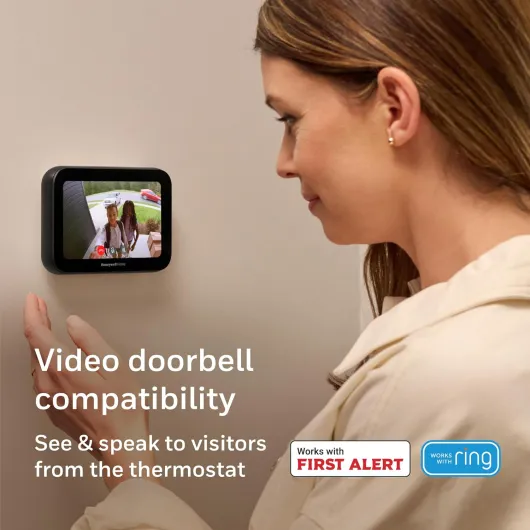
- + Wi-Fi connected for remote control and app access
- + Video doorbell compatible to link entry alerts with the thermostat
- + IAQ control (indoor air quality) to monitor and manage air
- + Customizable touchscreen with an intuitive, modern interface
- + Sleek black design that fits contemporary interiors

Smart performance: motion, temperature and monitoring for large properties
Beyond simple motion detection, the Zooz 800 Series Z‑Wave Long Range Q Sensor can participate in sophisticated monitoring strategies for large residences. When paired with a capable hub that supports advanced automation, the sensor reports motion and temperature, and some configurations can also expose temperature humidity data, allowing you to orchestrate climate, lighting and security with a single compact device. In a multi wing property, deploying several of these sensors creates a mesh of awareness that extends far beyond the nominal range of a single hub.
Each device works as a Z‑Wave repeater when powered continuously, which means the Z‑Wave signal travels further and more reliably through stone walls, metal structures and long corridors. Owners who already use a dedicated Z‑Wave repeater to extend coverage will appreciate how this sensor adds both range and functionality, especially when combined with strategies described in this guide to elevating smart home elegance with Z‑Wave repeaters. In practice, a carefully planned grid of Zooz Wave devices ensures that every smart routine works instantly, whether you are in the spa, the cinema room or the detached guest house.
For security centric owners, integrating these sensors with alarm panels that support Z‑Wave brings professional grade monitoring into the residential sphere. The hub supports multiple triggers, so one motion event can dim pathway lights, adjust HVAC power and send a discreet alert to your phone at the same time. When you read reviews product pages, pay attention to how other users describe motion performance in large rooms measured in dozens of square metres, and how the long range behaviour holds up when the hub is several rooms or many feet away.
Hub compatibility, works with ecosystems and the reality of luxury automation
Any investment in a Zooz 800 Series Z‑Wave Long Range Q Sensor must start with a clear view of hub compatibility. The sensor works with Z‑Wave certified hubs, but not every hub supports the latest Z‑Wave Long Range features or extended range profiles, which can limit the effective reach in very large homes. Before you buy, verify whether your preferred hub works with Z‑Wave Long Range and whether it can expose all sensor values, including motion and temperature, to your automation engine.
Some legacy platforms such as older Wink or similar ecosystems may only support classic Z‑Wave, which means the device still works but without the extended long range benefits. In contrast, modern hubs that support Z‑Wave Plus and Z‑Wave Long Range can treat the sensor as both a range sensor and a repeater, significantly improving coverage in properties where distances are measured in tens of metres or many feet. When you read that a device works with Z‑Wave or works with a specific controller, always confirm the exact Z‑Wave version and firmware, because luxury installations rarely tolerate inconsistent behaviour.
Many owners purchase through Amazon or curated luxury tech retailers, where the product page will often highlight whether free shipping is available and whether accessories are sold separately. Look for clear statements about hub supports lists, USB power options, and whether a USB cable or included micro USB lead is part of the box, especially if you plan to avoid relying solely on sensor batteries. In a serious smart home project, your integrator will usually test each device on a staging hub before anything is sold or installed, ensuring that every sensor works flawlessly with your chosen scenes and voice assistants.
Installation strategy: from corridor coverage to perimeter elegance
Placing a Zooz 800 Series Z‑Wave Long Range Q Sensor is less about basic coverage and more about curating experiences. In a luxury hallway lined with art, a single sensor positioned at the right height in feet can trigger a wave of soft lighting that follows your movement, while keeping fixtures off when the space is empty. The same range sensor can sit discreetly in a corner of a double height living room, ensuring that motion detection remains reliable even when guests move between seating zones and the bar.
For exterior or semi exterior spaces such as covered terraces, garages or pool houses, the long range capability of the sensor becomes essential. When the hub is located deep inside the main building, the Z‑Wave Long Range signal from the sensor helps maintain a stable link, especially if the device is powered via a hidden micro USB or USB cable rather than relying solely on batteries included. In such scenarios, the sensor works as both a functional detector and a repeater, extending the Z‑Wave mesh to areas that would otherwise sit at the edge of your network range.
Installers often use the supplied mounting bracket for standard placements, while custom brackets sold separately can align the sensor with architectural features such as beams or cornices. The goal is to keep the device visually silent while ensuring that motion, temperature and temperature humidity readings remain accurate for your monitoring routines. When you commission your integrator, ask them to document exact distances in metres and feet between each device and the hub, so you can correlate any future reviews product feedback with your own layout and adjust sensor positions if your lifestyle changes.
Luxury use cases: scenes, energy finesse and ecosystem layering
Once the Zooz 800 Series Z‑Wave Long Range Q Sensor is in place, it becomes the trigger for some of the most refined scenes in a luxury property. A late night arrival can prompt the sensor to signal the hub, which then brings up pathway lights at a low percentage, adjusts HVAC power in occupied zones and activates subtle monitoring in secondary spaces. Because the device works as part of a resilient Z‑Wave mesh, these actions feel instantaneous rather than mechanical, reinforcing the perception of an intelligent residence.
Energy conscious owners use the sensor’s motion and temperature data to fine tune consumption without sacrificing comfort. When no motion is detected for a defined duration, the hub supports rules that lower heating or cooling set points, dim decorative lighting and reduce standby power to selected outlets, all while keeping security monitoring active. In larger estates, deploying multiple sensors at strategic points in metres and feet allows the Z‑Wave network to respond to real occupancy patterns rather than fixed schedules, which often results in measurable energy savings over a full season.
Luxury enthusiasts who enjoy layering ecosystems often pair this sensor with other high end devices, from designer switches to AI enhanced wearables such as the Fury AI smart glasses. In such setups, the Zooz Wave infrastructure quietly handles the heavy lifting of reliable range and Z‑Wave signal propagation, while visible gadgets provide the theatrical interface. Whether the product is sold via Amazon with free shipping or through a boutique integrator, the underlying principle remains the same; a well planned grid of long range sensors is what makes every glamorous interaction feel effortless and precise.
Key figures and market signals for Z‑Wave long range luxury deployments
- According to the Z‑Wave Alliance, there are more than 4,000 certified Z‑Wave products on the market, which ensures that a Zooz 800 Series Z‑Wave Long Range Q Sensor can integrate into a wide variety of hubs and alarm panels without proprietary lock in.
- Independent field tests published by several smart home laboratories show that Z‑Wave Long Range can extend theoretical device reach up to several hundred metres line of sight, although real world luxury homes with dense materials typically achieve stable links over dozens of metres, which still exceeds classic Z‑Wave performance.
- Energy agencies in Europe report that presence based automation for lighting and HVAC can reduce electricity consumption in residential buildings by 10 to 20 percent, and sensors that combine motion and temperature data, such as the Zooz long range sensor, are central to achieving these savings without compromising comfort.
- Smart home adoption surveys from major research firms indicate that high income households are significantly more likely to deploy dedicated hubs and Z‑Wave based devices, which positions the Zooz 800 Series Z‑Wave Long Range Q Sensor as a natural fit for luxury projects rather than entry level plug and play kits.
- Customer satisfaction analyses of Z‑Wave installations consistently show higher reliability scores when at least one powered repeater or long range sensor is installed every 9 to 12 metres, underlining the importance of using devices like this Zooz sensor as structural elements of the network rather than optional extras.
FAQ about the Zooz 800 Series Z‑Wave Long Range Q Sensor
How far can the Zooz 800 Series Z‑Wave Long Range Q Sensor reach in a real home ?
In typical luxury properties built with concrete, stone and metal, owners usually achieve reliable communication over several rooms or dozens of metres, rather than the maximum theoretical distance quoted for open air tests. The effective range depends on hub placement, the presence of other powered Z‑Wave devices and whether the sensor is running on batteries or USB power. Treat the manufacturer’s figures as an upper bound and design your layout with some margin.
Does the sensor require a specific Z‑Wave hub to work properly ?
The device works with any certified Z‑Wave hub that supports the relevant command classes, but only hubs that support Z‑Wave Long Range can unlock its full distance potential. Before buying, check the hub supports list from both the hub vendor and Zooz to confirm compatibility with motion and temperature reporting. Professional integrators often test the combination in a lab environment before deploying it in a client’s home.
Can I power the sensor via USB instead of batteries in a luxury installation ?
Yes, the sensor can usually be powered either by sensor batteries or by a micro USB or USB cable, depending on the exact hardware revision. Using USB power turns the device into a stronger repeater for the Z‑Wave mesh, which is valuable in large homes where long range stability is critical. Many luxury projects hide the cable within walls or joinery so that the sensor remains visually unobtrusive.
Is the Zooz 800 Series Z‑Wave Long Range Q Sensor suitable for security monitoring ?
When integrated with compatible alarm panels or security focused hubs, the sensor’s motion detection can contribute to intrusion monitoring and presence simulation scenes. It is not a certified intrusion detector on its own, so it should complement, not replace, dedicated security sensors specified by your alarm provider. In a layered design, it often handles lifestyle automation while the primary alarm system manages regulatory compliance.
Where should I place the sensor in a large luxury property for best results ?
Installers typically mount the sensor between 2 and 2.5 metres above the floor, angled to cover main circulation paths rather than static seating areas. In very large homes, they distribute multiple sensors so that the distance between any device and the next powered node stays within a few rooms or several metres, strengthening the Z‑Wave mesh. A professional site survey that measures both physical distances and Z‑Wave signal quality will yield the most reliable layout.
References
- Z‑Wave Alliance – official documentation on Z‑Wave and Z‑Wave Long Range specifications
- European energy agencies – reports on residential energy savings from presence based automation
- Independent smart home labs and review platforms – comparative tests of Z‑Wave sensors and hubs