Why refined home automation switches define a modern luxury residence
Luxury homes now treat home automation switches as architectural details, not mere utilities. In a high end smart home, every keypad, rocker, and dimmer module must feel as considered as the marble underfoot, because lighting and lighting controls shape how art, textures, and volumes are perceived. When you specify light switches or smart dimmers for a penthouse or villa, you are effectively curating how the owner experiences every wall, corridor, and room.
Designers increasingly select a coordinated series of wall controls and scene keypads that echo the hardware on doors and cabinetry. A long hallway might use a wave of discreet engraved controllers, each labeled for specific lighting scenes, while a salon combines smart lighting with motion sensors and hidden smart plugs to keep cables invisible. In this context, home automation is less about gadgets and more about orchestrated control that keeps technology quiet while the architecture speaks.
Clients who invest heavily in art collections expect lighting control that protects canvases and sculptures. Smart bulbs and dimmer switch modules allow precise control of lux levels, while motion sensors and door sensors can trigger gentle lighting scenes when a guest enters a gallery space. In many flagship projects, integrators specify systems such as Lutron HomeWorks or KNX based lighting control so that every switch, plug, and smart dimmer can be adjusted from a tablet without compromising the tactile pleasure of a beautifully machined wall plate.
From smart lighting to circadian comfort in premium interiors
High net worth homeowners increasingly ask for smart lighting that supports circadian comfort rather than just dramatic effects. In these projects, home automation switches and smart dimmers become the front line of wellness, because each control point must recall complex scenes that shift color temperature and intensity throughout the day. A well designed series of light switches can move a residence from energizing daylight tones to warm evening hues with a single quick press.
Architects now pair smart bulbs, smart plugs, and lighting controls with tunable white fixtures to create layered scenes that respect natural rhythms. A bedroom wall switch might call a morning scene that raises blinds, softens accent lighting, and activates a subtle wave of indirect light, while the same switch in night mode keeps pathways lit at low levels for safety. For readers interested in the science behind these choices, the discussion of circadian lighting in premium residences shows how carefully calibrated lighting control can improve sleep quality and perceived comfort.
In wellness focused homes, motion sensors and motion sensor arrays are often tied to home assistant logic that respects circadian schedules. For example, motion sensors in a spa zone can trigger warm, low level lighting scenes after sunset, while the same sensors during the day activate brighter task lighting for treatments. These nuanced behaviors rely on robust home systems, where every smart home component from cameras to the app based pro portal is configured so that switches, sensors, and plugs behave consistently across the entire home smart ecosystem.
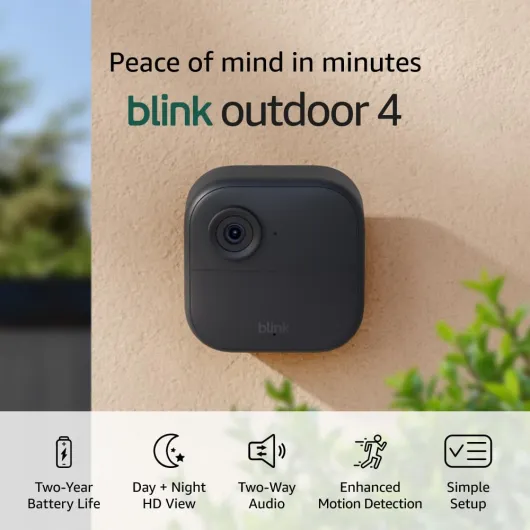
- + Wireless design for flexible installation
- + 2-year battery life reduces maintenance
- + 1080p HD day and infrared night live view
- + Two-way talk for real-time communication
- + Sync Module Core included for simplified setup

Discreet security and access control through elegant switching
Security in a luxury smart home must feel invisible, and home automation switches play a subtle but crucial role. Rather than obvious alarm keypads, designers specify scene controller panels and smart switch modules that quietly arm zones, trigger cameras, and adjust lighting controls with a single touch. A guest pressing a wall switch near the entrance might simply see a graceful lighting transition, while in the background the system activates exterior cameras and adjusts motion sensors for perimeter monitoring.
High end projects often integrate biometric access, where lighting control and home automation respond the moment a resident is authenticated. When a fingerprint or facial recognition event unlocks the door, a controller switch can cue a personalized lighting scene, adjust smart dimmers, and even power specific smart plugs for preferred appliances. For a deeper look at this convergence of access and ambience, the analysis of biometric access in the luxury home explains how cameras, sensors, and switches collaborate to create both security and theatre.
Discretion extends to panic and safe room strategies, where certain light switches or dimmer switch positions act as silent triggers. A long press on a specific smart dimmer can signal the home assistant to lock doors, activate cameras, and freeze selected smart plugs without changing the visible lighting scene. In these scenarios, the reliability of home systems and the quality of app support through a professional pro portal are as important as the tactile feel of the switch itself.

- + Iconic Wayfarer design with a sleek matte black finish
- + 12 MP camera for high-quality still photos
- + Video recording capability for hands-free capture
- + Open-ear speakers allow ambient listening and situational awareness
- + Bluetooth connectivity for easy pairing with phones
Materiality, craftsmanship, and the tactile language of control
For luxury clients, the feel of a wall switch matters as much as its function. A home automation project that uses plastic light switches beside bronze door hardware will never feel coherent, so specifiers now treat every smart switch and dimmer switch as part of the interior’s jewelry. The best manufacturers offer a series of finishes from brushed brass to blackened steel, allowing switches, plugs, and scene controller panels to align with the home’s broader material palette.
Craftsmanship also extends to how quickly and quietly switches respond, because latency breaks the illusion of analog control. When a resident taps a controller switch, the lighting control system must respond in a fraction of a second, with dimmer curves tuned so that smart bulbs and smart dimmers fade smoothly rather than stepping in visible increments. This is where professional configuration through a pro portal and careful commissioning of home systems separates true luxury installations from mass market smart home kits.
Even the placement of switches and smart plugs along a wall can change how a room feels. Designers often align home automation switches with art sightlines, ensuring that motion sensors and cameras are hidden while the user only sees a minimal grid of controls. In some projects, a single elegant scene controller replaces a bank of traditional switches, with the app and home assistant handling deeper configuration so that the physical interface remains calm and legible.
System architecture, interoperability, and the role of professional platforms
Behind every refined keypad lies a complex network of devices, protocols, and services that must operate as a single home smart ecosystem. Luxury integrators design home automation architectures where switches, smart plugs, motion sensors, cameras, and lighting controls all speak the same language, even when sourced from different brands. This interoperability ensures that a smart switch in the kitchen can reliably trigger a scene involving exterior light switches, interior dimmer switch modules, and security cameras without delay.
Professional grade pro portal platforms now sit at the center of these projects, giving integrators remote access to every controller switch, smart dimmer, and app configuration. When a client requests a quick change to a scene controller in the dining room, the integrator can adjust fade times, motion sensor behavior, and smart plug assignments without rolling a truck. Articles such as the analysis of what watch collectors understand about technology highlight a similar mindset, where long term reliability, serviceability, and subtle refinement matter more than headline specifications.
Home assistant platforms also play a growing role, especially when clients want voice and app based control alongside tactile switches. In a well designed system, the app mirrors the physical layout of wall switches and scene controllers, so that users can move seamlessly between digital and physical interfaces. This alignment reduces cognitive load, encourages consistent use of energy efficient smart lighting scenes, and ensures that the investment in premium home systems continues to feel intuitive years after installation.
Shopping, evaluation, and long term ownership for luxury clients
When affluent buyers shop for home automation switches, they rarely start with price; they start with feel, finish, and ecosystem. A curated shop or showroom that allows clients to touch different smart switch and dimmer switch options under real lighting conditions will always outperform a purely online catalog. In these spaces, designers can demonstrate how smart bulbs, smart plugs, and scene controller panels behave together, showing the difference between basic smart home kits and fully integrated home systems.
Expert reviews play a crucial role, but luxury buyers read them differently from mainstream consumers. They look for long term reliability data, app support quality, and how quickly manufacturers respond to firmware issues that affect lighting control, motion sensors, and cameras. Over time, patterns in reviews reveal which brands maintain their pro portal platforms, keep home assistant integrations updated, and continue to refine dimmer curves for new generations of LED lighting.
Ownership in this segment is measured in decades, not product cycles, so the ability to reprogram switches and controller switch modules as lifestyles change is essential. A nursery’s wall switch might later become a teenager’s gaming scene controller, with smart dimmers and smart plugs reassigned through the app rather than rewiring the room. Clients who understand this flexibility tend to invest in higher quality home automation ecosystems, knowing that their light switches, sensors, and plugs will adapt as their definition of home evolves.
Key figures shaping luxury home automation switches
- According to a report from Fortune Business Insights, the global smart home market exceeded 80 billion USD in value, with lighting control and smart switches representing one of the fastest growing segments by revenue share (Fortune Business Insights, “Smart Home Market Size, Share & COVID-19 Impact Analysis,” 2022). The study notes that premium residential projects are a major driver of this growth.
- Research from Parks Associates indicates that more than 40 % of smart home households with incomes above 150 000 USD use some form of smart lighting controls, including dimmer switch modules and smart bulbs integrated with motion sensors (Parks Associates, “Smart Home Buyer Journey and User Segmentation,” 2021). Adoption is highest in homes that also deploy centralized control systems.
- A study by the American Council for an Energy Efficient Economy found that advanced lighting control systems can reduce residential lighting energy consumption by around 35 % on average when occupancy sensors, dimmers, and scene controllers are properly configured (ACEEE, “Energy Savings from Networked Lighting Controls,” 2018). The report highlights luxury homes as early adopters of these strategies.
- Surveys from the Custom Electronic Design and Installation Association show that over 70 % of luxury residential integrators now specify centralized home automation systems with app based control, pro portal access, and smart switches in at least half of their projects (CEDIA, “Size and Scope of the Residential Technology Systems Market,” 2020). Many of these installations also integrate security and shading.
- Data from the International Association of Lighting Designers suggests that projects using coordinated smart dimmers and light switches achieve higher client satisfaction scores, particularly when circadian lighting scenes are integrated into daily routines (IALD, “Residential Lighting Design Trends and Client Feedback,” 2019). Designers report fewer callbacks when scenes are carefully programmed.
FAQ about luxury home automation switches
How do luxury home automation switches differ from mass market smart switches ?
Luxury home automation switches typically offer superior materials, more refined dimming performance, and deeper integration with professional home systems compared with mass market smart switches. They are designed to coordinate with high end hardware and finishes while supporting complex scenes that involve lighting, motion sensors, cameras, and smart plugs. Professional configuration through a pro portal also ensures that these switches remain reliable and adaptable over many years.
Can premium smart dimmers work with any type of LED lighting ?
High quality smart dimmers are compatible with a wide range of LED fixtures, but not every combination will perform perfectly. Luxury integrators usually test specific pairings of dimmer switch modules and smart bulbs to ensure smooth fades, low flicker, and accurate color rendering. The best practice is to select lighting and lighting control hardware from compatibility lists provided by manufacturers or verified by experienced installers.
Is it possible to keep traditional looking wall switches while adding smart home features ?
Many luxury systems allow traditional looking wall switch plates to hide advanced home automation electronics. Behind the scenes, these switches can act as scene controllers, triggering complex lighting controls, motion sensor logic, and smart plug behaviors. This approach preserves the aesthetic of classic interiors while delivering the convenience and flexibility of a modern smart home.
How important is professional programming for high end home automation switches ?
Professional programming is critical in luxury projects because it aligns every switch, sensor, and controller switch with the homeowner’s routines and expectations. Integrators use pro portal tools and home assistant integrations to fine tune response times, dimming curves, and scene transitions across the entire property. Without this level of configuration, even expensive hardware can feel inconsistent or unintuitive.
Can a luxury lighting control system be expanded over time without major renovation ?
Most premium home automation platforms are designed for incremental expansion, allowing new smart switches, motion sensors, and smart plugs to be added as needs evolve. Wireless modules, retrofit dimmer switch units, and flexible controller switch options make it possible to upgrade rooms individually without opening walls. This scalability protects the initial investment and ensures that the system can adapt to new technologies and lifestyle changes.