Summary
Editor's rating
Value for money: cool gadget, but not cheap for what it is
Design: looks like normal sunglasses, which is the whole point
Battery life: fine for a day out, not for heavy all-day filming
Comfort: depends a lot on your face, and they’re not exactly featherweight
Materials and build: solid plastic feel, not ultra premium but not cheap either
Performance: camera, audio and AI – where it shines and where it’s just okay
What these Meta Fury AI Glasses actually do
Pros
- Discreet design that looks like normal sunglasses, not a sci-fi gadget
- Good open-ear audio and very clear call quality with multiple microphones
- Hands-free POV photos and short videos are genuinely useful for everyday moments
Cons
- Heavier than normal sunglasses and not comfortable for everyone over long periods
- No direct live streaming to Instagram or Facebook and video clips limited to around 5 minutes
- Non-polarized lenses and mixed reliability on Bluetooth/app connections for the price

Specifications
View full product page →| Brand | Meta |
Smart glasses that actually look wearable… but are they worth it?
I’ve been using the Meta Fury AI Glasses in Sandstone with Dark Amber lenses for a bit now, mostly for walks, commuting, and some quick photos instead of pulling out my phone. On paper, they tick a lot of boxes: camera, speakers, microphones, AI assistant, translations, music, calls, the whole thing. In practice, they sit somewhere between “pretty cool toy” and “useful, but with limits you really feel day to day.”
The first thing that stood out to me is that they actually look like normal sunglasses. Compared to older Ray-Ban Meta models I’ve tried, these feel less geeky and less like a gadget glued onto glasses. People around me mostly didn’t notice they were smart glasses unless I told them, which is honestly what I’m looking for in this kind of product. I don’t want a mini VR headset on my face when I’m just going to the shop.
On the usage side, I mainly used them for three things: listening to Spotify and podcasts while walking, taking quick hands-free photos/videos of the kids and the dog, and answering calls without getting my phone out. For that, they’re pretty solid. But there are clear drawbacks: recording limits, connection quirks, and comfort that really depends on your face shape. Some days I kept them on for hours, other days I took them off after 30 minutes because my nose was complaining.
If you’re expecting a full-on camera replacement or some kind of sci‑fi assistant that can do everything, you’ll be disappointed. If you see them more as decent sunglasses with extra features that sometimes make life easier, you’ll probably enjoy them more. The trick is accepting that they’re still a bit of a gadget, not a perfect everyday essential for everyone.
Value for money: cool gadget, but not cheap for what it is
Price-wise, these sit firmly in the “expensive toy” zone. You’re paying for a pair of sunglasses, a camera, headphones, microphones, and the Meta AI ecosystem all in one. If you actually use all of that regularly – photos, videos, calls, music, translations – then the cost starts to make sense. If you just want a good pair of sunglasses, this is overkill and not the smartest use of your budget.
Compared to a decent pair of normal sunglasses plus a pair of wireless earbuds, you’re paying extra mainly for the hands-free camera and the integrated experience. If you never film or you’re fine pulling out your phone, the value drops fast. On the other hand, if you have kids, pets, or hobbies where your hands are busy, capturing moments from your viewpoint is genuinely useful and kind of addictive. That’s where the product actually earns its keep.
The Amazon rating around 3.7/5 reflects the reality: some people love the concept and are happy with the design and audio; others hit issues with comfort, connection, or limitations like the 5-minute recording cap and lack of live streaming. So it’s not a universally loved product. You’re buying into something that’s still a bit niche and not bulletproof in terms of user experience.
For me, I’d say the value is decent but not amazing. If you find them on sale or at a discount, they become more interesting. At full price, you really need to be sure you’ll use the camera and audio features often. Otherwise, you might end up like a few reviewers: a bit disappointed, feeling like you paid a lot for sunglasses that are heavier and more fussy than they should be.
Design: looks like normal sunglasses, which is the whole point
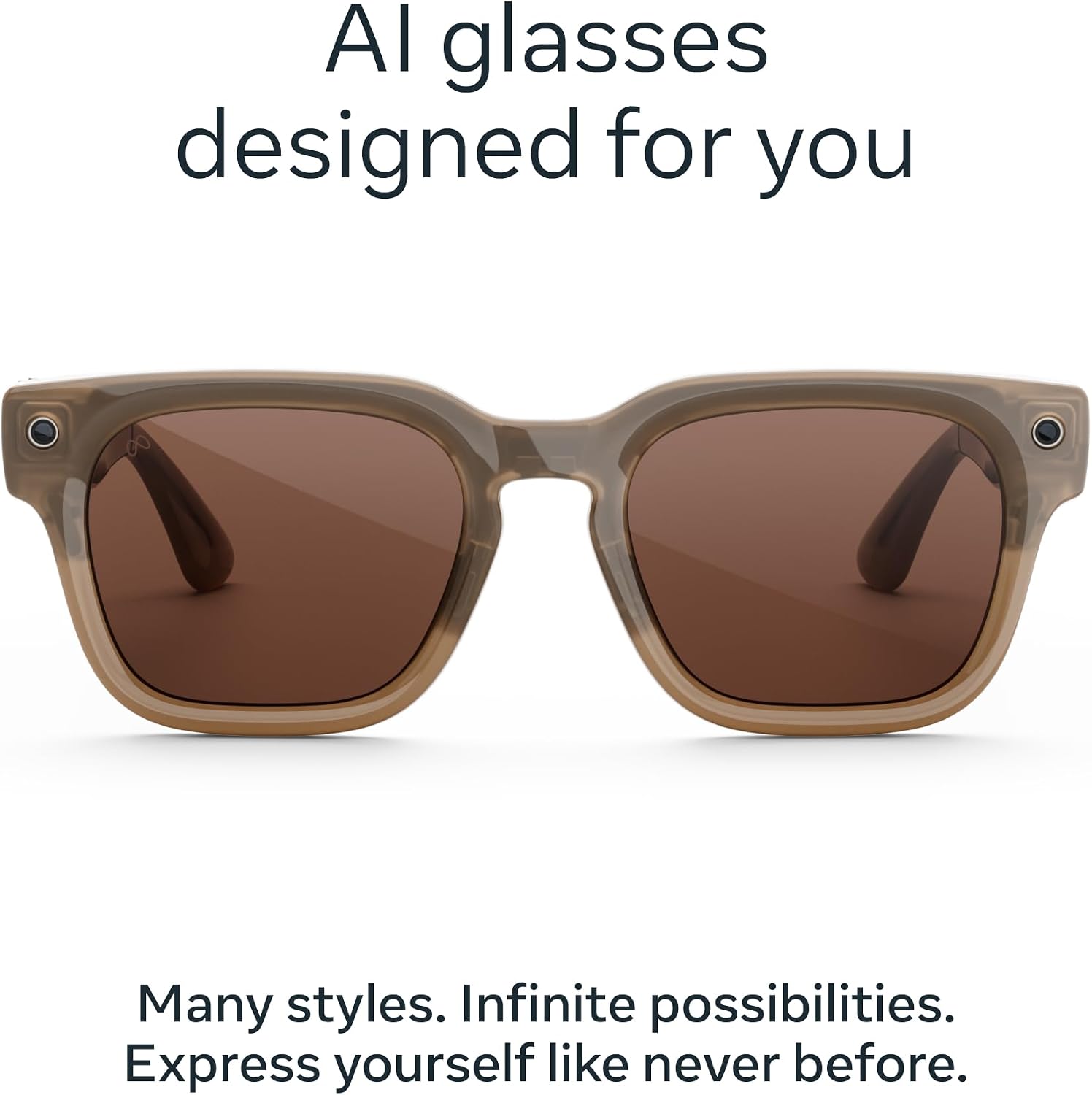
Design-wise, this Fury model is one of the main reasons I picked it over the Ray-Ban styles. The frame is rectangular and a bit wrap-around, with a Sandstone color that’s more like a light beige/cream than pure white. It’s not flashy, but it stands out just enough without screaming “tech gadget.” If you usually wear sporty or slightly chunky sunglasses, this style will feel familiar. If you’re into super thin, minimalist metal frames, this will feel bulkier.
What I liked: the camera window and the LED are pretty discreet. One long Amazon review mentioned this, and I agree. Compared to older Meta Ray-Ban versions I’ve seen, these don’t have that big obvious camera circle. Most people I was with didn’t notice I was recording unless they saw the LED flash. That’s good for aesthetics, but the LED is still bright enough that you won’t be secretly filming people without them noticing, which is probably for the best.
The arms are thicker than normal sunglasses because of the electronics, but Meta did a decent job of shaping them so they don’t look like weird plastic bricks on your head. They’re still chunkier than regular frames, though, and you do feel that when you lie down on a sofa or rest your head on something – the arms press into the sides of your head more than usual. It’s not painful, just noticeable.
Style is personal, but for me, these pass the “would I wear them even if they weren’t smart?” test. They look like a mid-range pair of sporty sunglasses that you’d buy on purpose. Not luxury, not super cheap, just solid. That’s honestly what this category needs: tech that doesn’t shout “I’m tech” from 10 meters away.
Battery life: fine for a day out, not for heavy all-day filming
Battery life really depends on how you use these. With my typical use – a few calls, some music during a 45-minute walk, and maybe 10–15 short videos/photos – I got through a day without stressing. By the evening, the glasses were usually sitting at around 25–40%. That’s acceptable for normal use. You’re not going to get multiple full days without touching the charger, though.
If you start recording video a lot, the battery drops faster. With a couple of longer 4–5 minute clips and some extra photos, I could see the percentage drop noticeably in an afternoon. Same thing if you leave music playing for hours. So if you plan to use them like a GoPro on your face all day, forget it. They’re not built for that. They’re more for “catch moments here and there” than “document the whole day in video.”
The charging case helps, but it’s not as seamless as true wireless earbuds. You have to put the glasses in the case properly so the contacts line up. Once you get used to it, it’s fine, but the first few times I thought they were charging and they actually weren’t. The case itself adds some extra charges, so if you’re out for a weekend trip and remember to dock them during breaks, you’ll be okay.
In real life, I ended up throwing them in the case at night, same as I do with my phone on the charger. If you accept that habit, the battery is good enough. If you’re the type who forgets to charge stuff and expects it to just last forever, you’ll probably get caught out with dead glasses more than once.

Comfort: depends a lot on your face, and they’re not exactly featherweight
Comfort is where opinions really split, and I get why. Personally, I’d say they’re okay but not super comfortable. For about 1–2 hours of continuous wear, I was fine. Beyond that, I started to feel pressure on the bridge of my nose and a bit behind my ears. The weight is clearly higher than normal sunglasses because of all the tech in the arms. It’s not painful right away, but you don’t forget you’re wearing them.
The adjustable nose pads help, but they don’t fix everything. On my face, if I tighten them too much, they leave red marks on the bridge of my nose, like one Amazon reviewer mentioned. If I loosen them, the glasses slide down a bit when I’m walking or sweating. I ended up doing small adjustments during the day. It’s manageable, but if you’re sensitive to pressure on your nose, you might get annoyed quickly.
The arms are long (149 mm) and fairly thick. On the plus side, that makes them stable, especially if you bend the ends a bit inward to grip your head. On the downside, if you have a big head, the pressure on the sides can be noticeable after a while. On a hot day, I definitely felt them more than my usual sunglasses. I wouldn’t wear these all day at the beach; I’d probably swap to lighter frames after a few hours.
In short: for short to medium sessions (walks, commuting, errands, dog walks, bike rides), comfort is acceptable. For full-day wear, especially if you’re sensitive or already wear prescription glasses most of the time, it’s more hit-and-miss. This is one of those products where I’d really say: if possible, try them on somewhere before buying, because your experience can range from “fine” to “nope” depending on your nose and head shape.
Materials and build: solid plastic feel, not ultra premium but not cheap either
The frame is made of nylon, and the lenses are polycarbonate. In the hand, they feel sturdy and dense, not flimsy. When you twist the frame a bit (gently), there’s very little flex or creaking, which is reassuring. The finish on the Sandstone color is matte and smooth, so fingerprints don’t show much. They don’t feel like luxury designer glasses, but they also don’t feel like the 20-quid gas station specials.
The hinges feel decent. They’re not buttery smooth like high-end eyewear, but they open and close without grinding or feeling loose. Over the testing period, I didn’t notice any play developing in the arms. The adjustable nose pads are a nice touch; they’re plastic, not silicone, but you can tweak them a bit to better match your nose. One Amazon reviewer praised those, and I agree – without that, they would probably sit badly on a lot of faces because of the weight.
The lenses themselves are what you’d expect from polycarbonate: light, impact-resistant, and optically fine for everyday use. They’re not polarized, which is a shame at this price. In bright sun, they do the job, but reflections on water and car windshields are more annoying than with polarized lenses. If you’re picky about sunglasses quality, you’ll feel that. For casual outdoor use, they’re okay, just not impressive.
The included accessories are straightforward:
- Charging case (plastic but feels reasonably robust)
- Cleaning cloth
- Reference guide
Performance: camera, audio and AI – where it shines and where it’s just okay
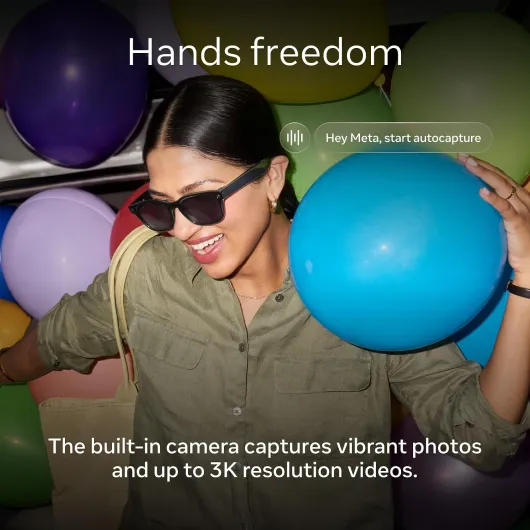
Let’s start with the camera. For quick POV photos and short clips, it’s honestly pretty solid. Colors look natural, not too washed out, and not too over-processed. That matches what one of the detailed Amazon reviewers said: compared to older Ray-Ban Meta versions, the images look more realistic. It’s perfect for grabbing moments when your hands are busy – playing with kids, walking the dog, riding a bike. But the 5-minute recording limit per video is annoying. One reviewer called that out, and I agree: if you’re trying to film something longer, you’re stuck stitching together multiple clips.
Audio performance is good for open-ear speakers. Music and podcasts are clear, with enough volume even in the street. Bass is obviously limited – these are tiny speakers pointing at your ears, not headphones – but for casual listening, it’s fine. The nice part is that you stay aware of your surroundings; I used them on walks and could still hear traffic and people. Sound leakage is there if you push the volume too high, but at normal levels, people next to you don’t hear much.
Call quality is one of the strong points. The six microphones do a good job at reducing background noise. People I called said I sounded clear, even outside with some wind. That matches the positive Amazon review about call clarity. I actually like taking calls with these more than with my phone on speaker, especially while walking or carrying bags. It feels natural to just talk without holding anything.
On the AI and connectivity side, it’s a bit less polished. When it works, saying “Hey Meta” to ask for directions, a translation, or a quick fact is handy. But I had a few moments where the glasses just didn’t wake up, or the connection to the phone dropped. One reviewer said they couldn’t connect at all; I didn’t have it that bad, but I did have to re-pair once and restart the app a couple of times. So, performance is good when everything is behaving, but there’s still that “early product” feeling sometimes.
What these Meta Fury AI Glasses actually do
On the spec sheet, the Meta Fury AI Glasses are basically sunglasses with a built-in camera, open-ear speakers, multiple microphones, and Meta AI on board. You connect them to your phone, and then you can say “Hey Meta” to start a call, play music, ask for info, or launch translations. There’s a button on the frame to take photos and videos. The lenses on this model are Dark Amber, so they’re proper sun lenses, not clear or blue-light ones.
In day-to-day use, the main features I actually used are:
- Photos and short videos from my point of view.
- Music and podcasts via Spotify/Apple Music/Audible.
- Phone calls with the built-in microphones.
- Occasional AI stuff like asking for directions, translations, or quick info.
One important thing: you need the Meta app and a Meta account, and you’re tied into their ecosystem. If you hate that idea, this product is not for you, period. Also, you can’t go live directly to Instagram or Facebook from the glasses, which one Amazon reviewer rightly complained about. For a Meta product, it feels like a weird gap. You can record, then share, but no real live POV streaming.
Overall, as a product concept, it’s fairly clear: these are sunglasses first, with the bonus of a wearable camera and audio system. They’re not AR glasses, they don’t show anything in your field of view, and they won’t replace your phone. If you keep that in mind and don’t expect miracles, you’ll judge them more realistically.
Pros
- Discreet design that looks like normal sunglasses, not a sci-fi gadget
- Good open-ear audio and very clear call quality with multiple microphones
- Hands-free POV photos and short videos are genuinely useful for everyday moments
Cons
- Heavier than normal sunglasses and not comfortable for everyone over long periods
- No direct live streaming to Instagram or Facebook and video clips limited to around 5 minutes
- Non-polarized lenses and mixed reliability on Bluetooth/app connections for the price
Conclusion
Editor's rating
Meta’s Fury AI Glasses are one of the more wearable smart glasses I’ve tried. They look like normal sporty sunglasses, the camera is discreet, audio is good enough for daily use, and call quality is actually strong. For quick POV photos and videos and for listening to music or podcasts while staying aware of your surroundings, they do the job and are pretty fun to use. If you’re into the idea of capturing moments hands-free and you already live in the Meta/Instagram/WhatsApp world, you’ll probably find them useful.
On the flip side, they’re not lightweight, comfort really depends on your face, and there are some frustrating limits: no direct live streaming to Instagram/Facebook, video clips capped at about 5 minutes, and occasional connection quirks. The lenses aren’t polarized, and at this price, that stings a bit. The battery is fine for a normal day but not built for heavy continuous recording. Overall, they feel like a solid step in the right direction for smart glasses, but still more of a nice gadget than an essential daily tool for everyone.
Who should consider them? People who like tech, take a lot of casual videos, walk or commute a lot, and want audio without blocking their ears. Who should skip them? Anyone mainly wanting premium sunglasses, folks very sensitive to weight on the nose, and those expecting a perfect, friction-free experience. If you go in with realistic expectations, they’re enjoyable; if you expect miracles, you’ll find the flaws quickly.