Summary

Editor's rating

★★★★★ ★★★★★

Value: cheaper than a monitored system, but extras add up

★★★★★ ★★★★★

Design: looks okay, clearly security gear, not home decor

★★★★★ ★★★★★

Battery and power: mostly hassle-free, but think ahead for the siren

★★★★★ ★★★★★

Durability and reliability: feels robust, and spare parts shouldn’t be a problem

★★★★★ ★★★★★

Performance: loud, reliable most of the time, with some smart quirks

★★★★★ ★★★★★

What you actually get in the box (and what’s missing)

★★★★★ ★★★★★

Pros

  • Easy DIY installation with pre-paired components and clear app guidance
  • Loud internal and external sirens plus flexible part-arm/full-arm modes

  • Good value compared to monitored systems, no mandatory subscription, and expandable up to 40 devices

Cons

  • Hub occasionally shows as offline in the app, breaking remote control until rebooted
  • Base kit only includes one door/window contact, so extra sensors are almost a must
  • Hub isn’t designed for easy wall-mounting and external siren battery changes require a ladder unless you modify the install
Brand Yale

A DIY alarm that doesn’t make you regret starting

I’ve been using the Yale IA-320 Sync Smart Home Alarm kit for a while now, and the short version is: it’s a pretty solid DIY alarm if you want something serious without paying an alarm company a subscription every month. It’s not perfect, the app can be a bit flaky at times, and it still needs some basic DIY skills, but overall it does what you buy it for: it makes noise and tells you on your phone when something’s up.

I installed it in a typical UK semi, with the hub downstairs near the router, the external siren at the back, a contact on the main door and the two PIRs covering hallway and living room. I didn’t bother getting an installer; I just followed the manual and a couple of YouTube videos. From unboxing to having the system properly running took me around an hour including faffing about with ladder placement for the siren.

What I noticed very quickly is that Yale has made this pretty idiot-proof: most of the bits are pre-paired, the app walks you through adding extra devices, and the sticky pads mean you can get going without drilling every wall in the house. If you’re reasonably comfortable with a drill and a phone app, you’ll be fine. If the idea of pairing devices and climbing a ladder terrifies you, this might feel like a bit of a chore.

So this review is from the angle of a normal user, not a security pro. I’m looking at it as: does it feel secure, is it annoying to live with day to day, and is it worth the money compared to paying for something like ADT or just sticking with a dumb bell-only alarm. Overall, it’s good value for a family home, but I’ll go through the good and the annoying parts in detail.

Value: cheaper than a monitored system, but extras add up

★★★★★ ★★★★★

In terms of value for money, I’d put the Yale IA‑320 in the “good, but be realistic” category. The base kit is fairly priced for what you get: a proper external siren, internal hub siren, keypad, 2 PIRs, and a door contact, plus the app and smart integrations. If you compare it to paying a company like ADT to install and monitor an alarm, the numbers speak for themselves. One reviewer mentioned a quote of around £800 install plus £40/month – that’s a huge difference over even the first year.

Where the cost creeps up is when you start adding extra sensors and accessories. Another contact here, a PIR there, maybe a key fob, maybe a camera – suddenly the overall spend isn’t tiny. That said, at least you can spread that cost over time. You don’t have to fully kit out every window and door on day one; you can start with the most vulnerable points and expand. Also, running costs are low: standard alkaline batteries and no subscription needed for basic features.

What you’re paying for here is a mix of DIY flexibility and decent brand backing. Yale is well-known in locks and security, and that does count for something. You’re not buying a random no-name alarm that may not get app updates or might vanish next year. The 2-year warranty is standard but fine, and the long spare-part availability is a plus. If you just want a loud, simple bell-only alarm, you could probably find something cheaper, but you’d lose the app control and smart home features.

So, is it worth it? If you’re a typical homeowner who wants a solid deterrent, notifications on your phone, and no monthly fee, then yes, it’s good value. If you live in a high-risk scenario (jewellery shop, very isolated house) and want guaranteed monitoring and instant police calls, this is not that – you’d need to budget for a professional system. For regular home use, it hits a good balance between cost, features, and peace of mind.

51tFM1xpSgS._AC_SL1500_

Design: looks okay, clearly security gear, not home decor

★★★★★ ★★★★★

Design-wise, the Yale IA‑320 is practical more than pretty. The external siren is the usual big yellow/white Yale box you see on a lot of houses in the UK. It’s not exactly pretty, but that’s kind of the point: it’s meant to shout “this place has an alarm” from a distance. As a deterrent, it does its job. The hub, keypad, PIRs and contact are all white plastic, fairly standard, and they blend into a typical white wall reasonably well. No one is going to compliment you on how stylish your motion sensor looks, but it doesn’t look cheap or toy-like either.

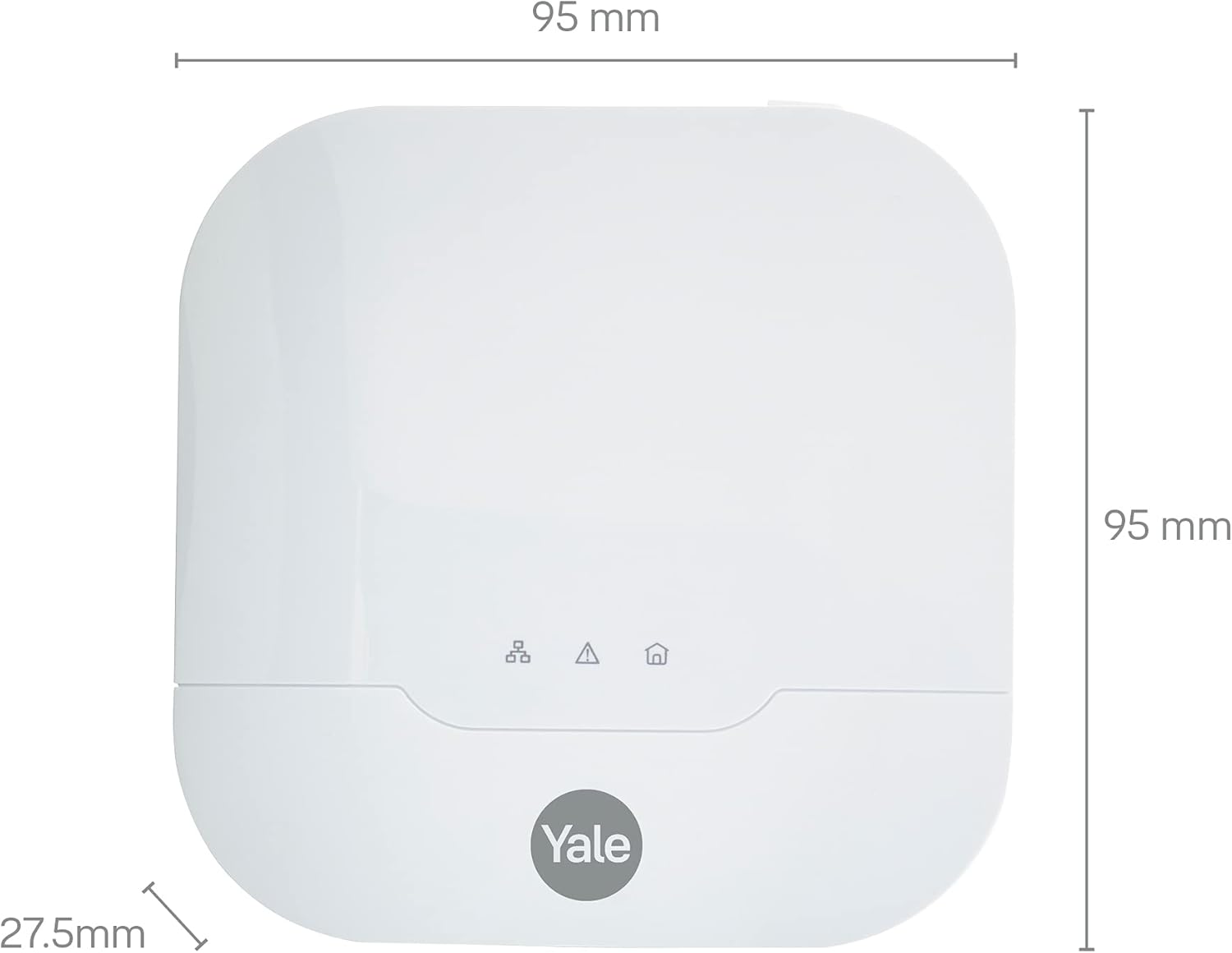
The hub is shaped like a small rounded box that just sits on a shelf near your router. This is one thing that annoyed me slightly: there’s no proper, official wall-mount solution. I would have preferred to mount it where my old alarm panel was, but in the end it just lives on a piece of furniture. It’s not a deal-breaker, but it feels like Yale could have added two mounting holes and solved this. The LEDs are clear enough and you can hear the internal siren pretty much anywhere in a normal-sized house.

The keypad is basic but usable. Buttons are clicky, digits are clear, but I agree with other buyers: it would be nicer if the arm/part-arm/disarm buttons were colour-coded or at least more obvious for low-light use. At night you do have to look twice to make sure you’re pressing the right thing. That said, once you get used to it, muscle memory kicks in. If you rely more on the app or voice assistants, you’ll hardly touch the keypad anyway.

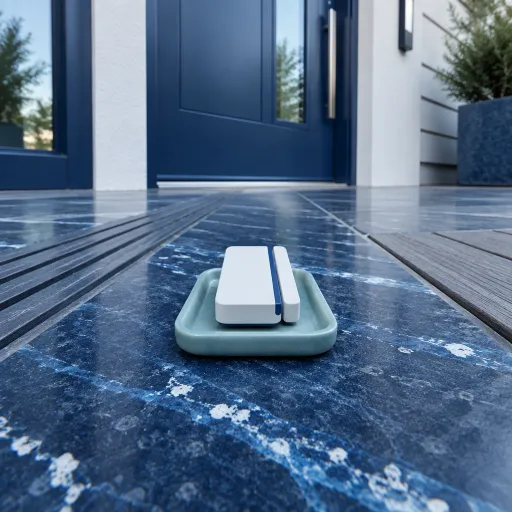
The sensors themselves are fairly compact, nothing huge. The PIRs don’t stick out too much on the wall, and the contact sensor on the door is fine as long as you line it up properly. I used the supplied sticky pads first to test positions, then screwed them in once I was happy. Overall, the design is what I’d call “decent and sensible”: not stylish, not ugly, just functional security kit that doesn’t draw attention indoors and is clearly visible outdoors where it matters.

Battery and power: mostly hassle-free, but think ahead for the siren

★★★★★ ★★★★★

The system is a mix of mains-powered hub and battery-powered sensors and siren. The hub plugs into AC and also connects via Ethernet, which is good because it avoids Wi‑Fi dropouts. If your power or broadband goes, you obviously lose remote notifications and app control, but the sensors still talk to the hub and the siren will still sound locally. Just don’t treat this like a fully monitored, always-online security service – it’s still a consumer product sitting on your home network.

All the sensors and the siren use standard alkaline batteries (AA/AAA or similar, depending on the device). That’s a big plus in my book: no weird proprietary packs. The app sends you a notification when a battery is getting low, so you can buy replacements in advance instead of being caught out. I haven’t had to replace everything yet, but based on other users and Yale’s info, you’re generally looking at months to years of battery life depending on how often a sensor is triggered and your temperature conditions.

The main pain point is the external siren. Changing batteries up on the wall is a ladder job, and it’s not something you’re going to enjoy doing in bad weather. A neat trick I’ve seen (and one reviewer mentioned) is running a cable from the siren through the wall to a battery holder inside the house, so you can swap batteries from indoors. That requires a bit more effort at installation but saves you climbing the ladder every few years. If you’re not up for that, just accept that every so often you’ll need to get up there.

Overall, I’d say the battery situation is pretty low-maintenance if you’re a bit organised. The app warnings help, and the fact that everything uses easily available alkaline cells keeps it simple and cheap to maintain. Just don’t ignore the warnings, and maybe keep a small stash of batteries at home so you can swap them quickly without leaving the system half-disabled.

713tmmheo8S._AC_SL1500_

Durability and reliability: feels robust, and spare parts shouldn’t be a problem

★★★★★ ★★★★★

Build quality is better than I expected for a consumer DIY kit. The plastic on the sensors and keypad is solid enough, not brittle. The siren casing feels sturdy once it’s mounted properly. I’ve had a couple of accidental bumps into the PIR in the hallway while moving furniture and it didn’t crack or come loose. The contact sensor on the door also holds up fine to daily slams, which is always a good test in a busy house.

One reassuring thing is that Yale lists 10 years of spare part availability in the EU. That doesn’t magically guarantee everything will last a decade, but it does suggest they’re planning to support this platform for a while. And given how many reviews there are and the 4.3/5 average rating, it’s clearly not some short-lived gadget that vanishes after a year. Also, the system components are fairly modular, so if a single PIR dies, you can just replace that bit instead of scrapping the whole kit.

Reliability-wise, the hardware itself has been stable for me. No random siren triggers, no sensors constantly misfiring. The only reliability issues I’ve seen are on the software/connection side (hub going offline in the app occasionally). But in terms of physical durability, it feels like it can handle normal family-house abuse: kids, pets, doors being slammed, that kind of thing. I wouldn’t say it’s industrial grade, but for a home environment it’s reasonable.

If you’re careful during installation – good fixings, don’t over-tighten screws, and keep the sensors away from obvious trouble spots (like right next to a constantly slamming door frame) – I don’t see any major durability red flags. And the fact that customer service seems to swap out faulty parts quickly, based on user reviews, is a plus. You’re not stuck if one sensor is dodgy.

Performance: loud, reliable most of the time, with some smart quirks

★★★★★ ★★★★★

In day-to-day use, the system does the core job well: when something triggers, it makes a lot of noise and sends you a notification (when the hub is online). The external siren is properly loud outside, and the hub siren inside is more than enough to wake you up or scare someone off. I tested it deliberately by opening the door while armed and walking past the PIRs, and the delay/instant modes behaved as configured. There’s no weird lag between a door opening and the alarm starting, and the part-arm/full-arm modes are handy for night vs leaving the house.

Range-wise, it’s pretty solid. My hub is at the front of the house and one PIR is near the back; signal has been stable. Other users mention covering sheds at the bottom of the garden, and I can believe it – the stated 200 m max range is obviously line-of-sight, but for a normal house and small garden it’s fine. I haven’t had sensors randomly dropping offline, which was my main worry with a fully wireless system.

The smart part is where it’s good but not perfect. The app occasionally reports the hub as offline even though my internet is fine. When that happens, you lose push notifications and remote control until you power-cycle the hub. It’s not constant, but it’s annoying when you notice it. I’d say in my case it’s been up most of the time, but I’ve seen the same thing other reviewers mention: it’s not 100% bulletproof like a fully monitored pro system. If you absolutely need guaranteed connectivity, this isn’t it.

On the positive side, when the app is behaving, it’s very handy: you can arm/disarm remotely, check which sensor last triggered, set part-arm profiles, and it all syncs quickly. The integration with Alexa and Google Assistant works, but you do need to spend a bit of time setting it up and understanding what’s exposed (for example, only certain devices show in Alexa). Once it’s configured, “Alexa, arm the alarm” becomes second nature. Overall, in performance terms, I’d say: as a traditional alarm it’s strong, as a smart alarm it’s good but with occasional connection hiccups you need to accept.

71MDk T9sWS._AC_SL1500_

What you actually get in the box (and what’s missing)

★★★★★ ★★★★★

The kit I tried is the 6‑piece IA‑320 set: one Sync hub, one external siren, one door/window contact, two PIR motion sensors, and one keypad. That’s enough to cover a small to medium house in a basic way: front door, main downstairs areas, and a keypad by the door. You also get screws, wall plugs, sticky pads, and a short instruction manual that’s actually readable, plus the usual paperwork. Everything comes pre‑paired, which is a big plus – you pull the battery tabs and the app sees them straight away.

In practice, this base kit is more like a starter pack. One contact sensor is a bit tight if you have multiple external doors or a back door that’s easy to reach from a garden. I quickly realised I’d want at least one more contact and probably another PIR to feel properly covered. The good news is the system can handle up to 40 devices, so you can add door contacts, extra PIRs, fobs, and even smoke/heat detectors later. The bad news is the extras aren’t cheap, so the price creeps up fast if you want full coverage.

Setup is mostly done through the Yale app (iOS/Android). You plug the hub into power and Ethernet, press the pairing button, and the app walks you through. Compared to older non‑smart alarms I’ve used, this is miles easier. No messing with dip switches or weird key sequences on a panel. The hub doubles as an internal siren (around 100 dB), which is handy because it means you already have two sound sources with just this kit: the hub inside and the siren outside.

If you’re expecting the kind of polished, hand‑holding experience you get from something like a Nest product, you’ll notice this is a bit more no-frills but functional. The app design is decent but not pretty, and some options are buried in menus. Still, for a DIY security system at this price, the contents are sensible: enough to secure the basics and see if you like the system before you invest more in extra sensors.

Pros

  • Easy DIY installation with pre-paired components and clear app guidance
  • Loud internal and external sirens plus flexible part-arm/full-arm modes

  • Good value compared to monitored systems, no mandatory subscription, and expandable up to 40 devices

Cons

  • Hub occasionally shows as offline in the app, breaking remote control until rebooted
  • Base kit only includes one door/window contact, so extra sensors are almost a must
  • Hub isn’t designed for easy wall-mounting and external siren battery changes require a ladder unless you modify the install

Conclusion

Editor's rating

★★★★★ ★★★★★

The Yale IA‑320 Sync Smart Home Alarm is, in simple terms, a solid DIY alarm that covers the basics well and adds some genuinely useful smart features. The hardware feels decent, the sirens are loud, and the app control, Alexa/Google/Philips Hue integration, and part-arm modes make it much easier to live with than an old-school panel system. Setup is straightforward if you’re comfortable with a ladder and a smartphone, and the fact that you can expand up to 40 devices means you can grow the system as your budget or needs change.

It’s not perfect. The app/hub connection can be flaky at times, and if you absolutely need 100% reliable remote access, this will probably annoy you. The base kit also only gives you one contact sensor, so you’ll likely end up buying extras for full coverage. And little design quirks like the non-wall-mountable hub and slightly bland keypad show that this is built more for function than polish. But taken as a whole, for a normal house where you want a strong deterrent and the ability to know what’s happening when you’re away, it gets the job done and feels like good value.

I’d recommend this to: homeowners or renters who are comfortable with light DIY, want a no-subscription alarm with phone notifications, and like the idea of voice control and smart light integration. I’d say skip it if: you want professional 24/7 monitoring, hate dealing with apps and Wi‑Fi, or live in a place where climbing a ladder to maintain the siren is a no-go. For most everyday users, though, this is a pragmatic, reliable enough choice that makes your home feel a lot less like an easy target.

See offer Amazon

Sub-ratings

Value: cheaper than a monitored system, but extras add up

★★★★★ ★★★★★

Design: looks okay, clearly security gear, not home decor

★★★★★ ★★★★★

Battery and power: mostly hassle-free, but think ahead for the siren

★★★★★ ★★★★★

Durability and reliability: feels robust, and spare parts shouldn’t be a problem

★★★★★ ★★★★★

Performance: loud, reliable most of the time, with some smart quirks

★★★★★ ★★★★★

What you actually get in the box (and what’s missing)

★★★★★ ★★★★★
Published on
IA-320 Sync Smart Home Alarm 6 piece kit - Includes Sync Alarm Hub, External Siren, 1x Door/Window Contacts, 2x PIR Motion Detector, Keypad - Works with Alexa, Google Assistant & Philips Hue IA 320 - 6 piece
Yale
IA-320 Sync Smart Home Alarm 6 piece kit - Includes Sync Alarm Hub, External Siren, 1x Door/Window Contacts, 2x PIR Motion Detector, Keypad - Works with Alexa, Google Assistant & Philips Hue IA 320 - 6 piece
🔥
See offer Amazon