Summary
Editor's rating
Value: solid deal if you’re already in the Apple world
Design: small, discreet, and still clearly an Apple Watch
Battery life: one solid day, not much more
Comfort: you forget it’s there most of the time
Durability and water resistance: fine for daily abuse
Performance and features: fast enough, smart enough
What you actually get with the Apple Watch SE 3
Pros
- Smooth performance and tight integration with iPhone, Apple Pay and notifications
- Comfortable and light 40mm design with a soft sport band suitable for all-day and night wear
- Decent fitness and health features plus safety tools like fall and crash detection at a lower price than flagship models
Cons
- Battery life is basically one day with normal use, needs frequent charging
- Lacks some advanced health features (like ECG and blood oxygen) found on higher-end Apple Watches
- 40mm size and thicker bezels may feel small or less premium for users used to larger, edge-to-edge displays
Specifications
View full product page →| Brand | Apple |
A no-nonsense Apple Watch for everyday use
I’ve been using the Apple Watch SE 3 GPS 40mm in Midnight for a bit now, and the short version is: it does the job if you want a simple Apple watch that handles notifications, fitness tracking and Apple Pay without going into luxury territory. I’m not coming from a high-end model like the Ultra, I’m more in the camp of someone who used basic trackers (Fitbit, cheap bands) and wanted to see if a real Apple Watch actually brings something useful day to day. So this is not a fanboy review, just daily usage stuff.
In practice, the watch feels like an extension of the iPhone, not a device that replaces it. You still need your phone nearby for most things, but you stop pulling it out every 2 minutes. Messages, calls, timers, weather, Apple Pay, music control – that’s where it shines. I quickly got used to glancing at my wrist instead of hunting for my phone in my pocket or on the sofa.
The 40mm size, which I was a bit worried about, turned out fine for my medium wrist. It looks more like a normal watch instead of a mini TV stuck on the arm. If you’re used to big watches you might find it small, but in daily life I actually liked that it didn’t shout for attention. The Midnight colour is low-key, almost disappears with dark clothes, which I prefer.
It’s not perfect. Battery is clearly one full day and not much more if you use most features, and the always-on display is nice but not life-changing. The sensors and health stuff are decent, but if you’re a hardcore endurance athlete there are better tools. For regular people who walk, run a bit, go to the gym and want notifications and contactless payments, it’s a pretty solid balance between price and features.
Value: solid deal if you’re already in the Apple world
In terms of value, the Apple Watch SE 3 sits in a weird but fairly logical spot. It’s not cheap if you compare it to basic fitness bands from Xiaomi or older Fitbits, but for an Apple Watch, it’s on the more reasonable side. You skip some high-end features from the Series 11 (like blood oxygen or ECG), but you keep the core experience: smooth performance, tight iPhone integration, Apple Pay, safety features, and a big app ecosystem.
If you’re already using an iPhone and you mainly want: notifications on the wrist, contactless payments, decent workout tracking, and some health monitoring, the SE 3 offers good value for money. You don’t pay extra for fancy sensors you might never use. The always-on display and faster charging compared to older SE models make it feel less "budget" and more like a current device. Also, 64 GB of storage is overkill for a lot of people, but it means you won’t be juggling apps and music all the time.
Where the value drops a bit is if you don’t care about Apple Pay or deep iOS integration. In that case, there are cheaper wearables that will track steps, sleep, and heart rate just fine, and last a week on a charge. Also, if you’re a serious runner or triathlete, you might be better off putting the same money (or a bit more) into a sports-focused watch with better battery life and more detailed metrics. The SE 3 is more of a "smart everyday companion" than a dedicated sports tool.
So, who gets the best value? iPhone users who want their first Apple Watch, or people coming from a basic Fitbit-style tracker and wanting something smarter without paying for the top-tier model. For that crowd, it’s a pretty solid deal. If you’re on Android or don’t care about smart features beyond simple tracking, your money is probably better spent elsewhere.
Design: small, discreet, and still clearly an Apple Watch
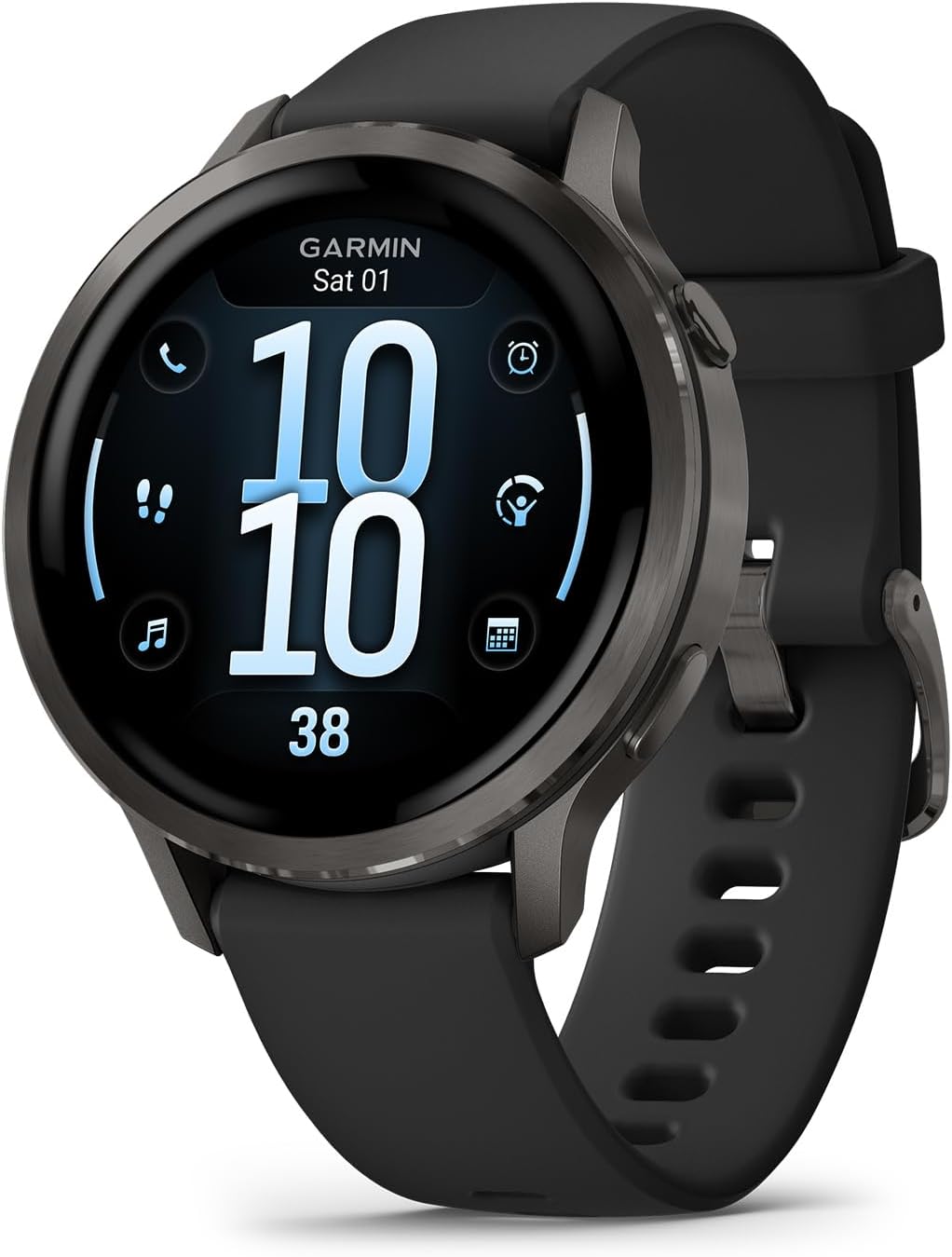
Design-wise, it’s exactly what you expect from an Apple Watch: square case, rounded corners, digital crown on the side, single button under it. Nothing surprising, but it feels familiar and easy to use. The 40mm size is on the compact side. On my wrist (around 17.5–18cm), it looks like a normal watch, not a chunky gadget. If you’ve tried the 44/45mm models and found them a bit like a mini phone on the wrist, this 40mm will probably feel more natural.
The Midnight aluminium case is basically a very dark blue/black that just blends in. It doesn’t scream for attention and doesn’t look cheap. The bezels around the screen are there – they’re not as thin as on the more premium models – and if you’ve seen a Series 11 up close you’ll notice it. But after a couple of days, I honestly stopped thinking about it. Text and complications are still readable; you just don’t get that edge-to-edge look.
Buttons and controls are straightforward: the crown scrolls through menus and lists and can be pressed to go home or open apps; the side button brings up recent apps or Apple Pay. Haptics (the little vibrations) are precise and feel good, not buzzy or cheap. I’ve used cheaper smartwatches where every tap feels like a mini phone call – this one is more controlled, which matters when you wear it all day.
In day-to-day use, the design is more about getting out of the way than wowing anyone. It looks fine in the office, at the gym, or with casual clothes. You can swap bands easily if you want something more formal, but with the included sport band I never felt it looked out of place. If you want a flashy watch that makes a statement, this probably isn’t it. If you just want something that looks clean and doesn’t annoy you visually, it hits the mark.
Battery life: one solid day, not much more
Battery is probably the main point where you need to be honest with yourself. Apple claims around 18 hours, and in real life that’s pretty much what I saw. With always-on display enabled, all-day notifications, a couple of short workouts (30–45 minutes with GPS), and sleep tracking at night, I usually ended the day with 20–30% left. That’s fine if you’re okay charging it daily, but forget the idea of wearing it for two or three days straight like some dedicated fitness watches.
If I skipped sleep tracking and did just light usage – fewer notifications, no long workouts, screen brightness slightly down – I could stretch it into a day and a half. But it always felt like I was pushing it, and I still ended up charging it almost every day anyway. For me, the easiest routine was: quick top-up in the morning while showering and getting ready, or in the evening while watching TV. The good point is the charging speed: going from low battery to around 80% in roughly 30 minutes is realistic, and Apple’s claim of up to 8 hours in 15 minutes for a quick top-up isn’t far off.
Compared to Fitbit or Garmin watches I’ve used, the battery here is clearly worse, but you also get a brighter screen, more apps, and tighter integration with the phone. It’s a trade-off. If you’re coming from another Apple Watch, this won’t shock you; it’s in the same ballpark, maybe slightly better than older SE models thanks to efficiency gains. If you’re used to charging a watch only once a week, you’ll find this annoying.
So, is the battery a deal-breaker? For heavy iPhone users who already charge their phone nightly, adding a watch to the routine is not a huge change. If you plan to track sleep every night and train a lot with GPS, just accept that it’s a one-day device and plan small charging windows. For ultra-runners or people doing long hikes over multiple days, this is not the right tool – you’ll be babysitting the battery too much.
Comfort: you forget it’s there most of the time
On comfort, Apple did a good job. The 40mm aluminium case is light, and with the sport band it basically disappears after a few hours. I wore it all day, including at work, workouts, and even while sleeping to test the sleep tracking. No rubbing issues, no weird pressure points, and the underside sensors didn’t leave marks on my skin, which I’ve had with some bulkier watches.
The S/M band size covers 130–180mm wrists. My wrist is near the top end of that range and I still had a couple of holes left, so there’s a bit of margin. The band is soft and slightly stretchy, so you can tighten it enough for workouts without cutting circulation. For sleep, I just loosened it one notch and it was fine. I’m usually annoyed by watches at night, but after the second night I got used to it and stopped paying attention.
One small thing: because the watch is fairly small and light, it moves a bit less than bigger models when you swing your arm or run. That helps the heart rate sensor stay in place and probably helps with accuracy. I’ve had bulkier sport watches that slid around and needed constant adjusting mid-run. Here I only tweaked the strap once at the start and then forgot about it. The only time I really felt it was when sweat built up under the band during a longer workout – not dramatic, just the usual silicone band issue.
If you have thicker wrists and go for the 40mm anyway, be aware of one thing: the watch will still be comfortable, but visually it might look a bit small and more "jewellery" than "sports watch". That’s a taste thing. From a pure comfort standpoint, the combination of low weight, soft strap and decent ergonomics makes it easy to wear from morning to night, including during sleep. No miracle here, but no big downside either.
Durability and water resistance: fine for daily abuse
On durability, I didn’t baby the watch. I wore it in the shower, under the rain, while washing dishes, and during sweaty workouts. Water resistance held up fine – it’s designed to handle swimming and general water exposure, and I had zero issues with fogging, weird touch behaviour, or corrosion. For everyday stuff like getting caught in a downpour or rinsing your hands, you just stop thinking about it.
The aluminium case will pick up small hairline marks over time if you bump into things, like door frames or gym equipment, but nothing dramatic. After a period of normal use, I had a couple of very faint marks on the case that you only see if you go hunting for them under bright light. The screen itself resisted scratches pretty well during my test; no deep marks or visible lines. That said, it’s still glass, not some indestructible material, so if you’re clumsy or work in a rough environment, a screen protector might be a good idea.
The sport band also held up nicely. No cracking, no weird stretching, and it’s still soft after exposure to sweat and soap. You can rinse it under the tap and it dries quickly. The quick-release system for swapping straps is solid – you push the button on the back, slide the band out, and it clicks back in with a reassuring feel. I changed bands a few times for testing and never had the impression it could slide out by accident.
Overall, I’d say durability is "good enough for normal people". If you’re doing construction work or heavy manual labour, I’d be more careful and maybe go for a tougher case or a different watch. For office, gym, commuting, outdoor walks, and the occasional swim, it handles daily abuse without drama. You’re still wearing a small computer on your wrist, not a tank, but for the price range it’s pretty solid.
Performance and features: fast enough, smart enough
In terms of speed and overall performance, I had no real complaints. Menus are smooth, apps open quickly, and I never had the feeling it was lagging or freezing. The SE 3 uses the same processor generation as the more expensive Series 11, and you can tell: scrolling through notifications, switching watch faces, or jumping between workouts feels snappy. Compared to older Apple Watches or cheap Android watches I’ve tried, it’s clearly a step up.
For daily tasks, it covers the essentials: texts, calls (when the phone is nearby), calendar reminders, timers, alarms, and music control. I used Apple Pay a lot, and it’s honestly one of the main reasons to own this thing. Double-click the side button, wrist to terminal, done. It’s quicker than digging for the phone, especially in public transport or supermarkets. Notifications on the wrist also cut down the number of times I pulled my phone out just to see a useless message or spam email.
On the fitness side, it tracks the usual suspects: steps, calories, heart rate, and workouts like running, walking, cycling, gym sessions, etc. GPS accuracy for outdoor runs was fine for me – distances were in the same ballpark as my phone and my older Garmin. You also get the classic Apple "rings" system (Move, Exercise, Stand), which is simple but pretty motivating if you like closing circles. Workout Buddy and the new Apple Intelligence bits that rely on a nearby iPhone are a nice extra, but not essential. They give some coaching-style prompts, but I wouldn’t buy the watch just for that.
The health features are more "safety net" than medical tools: high/low heart rate alerts, irregular rhythm notifications, sleep apnoea alerts, fall detection, crash detection, and Check In to notify someone when you get somewhere. I didn’t crash a car or throw myself down the stairs to test those, but it’s reassuring to know they’re there, especially for older relatives or kids. If you want hardcore sports tracking or super-detailed metrics, something like a dedicated Garmin or Polar will go deeper. For regular gym-goers and casual runners, the SE 3 is more than enough.
What you actually get with the Apple Watch SE 3
On paper, the Apple Watch SE 3 40mm GPS version is the "entry" Apple Watch, but it’s not some toy. You get a 40mm aluminium case in Midnight, an S/M Midnight sport band (fits roughly 130–180mm wrists), GPS, heart rate monitoring, sleep tracking, fall detection, crash detection, and all the classic Apple stuff: notifications, calls, Apple Pay, Siri, music control. Storage is 64 GB, which is way more than most people will ever fill with apps and music.
This version is GPS only, not cellular, so you still need your iPhone nearby or at least on the same Wi‑Fi for calls and data. If you were dreaming of leaving your phone at home and still streaming music on a run, this is not it. For me that was fine, I usually run with my phone anyway for safety and headphones. The watch connects cleanly to Wi‑Fi when available, so iMessage and notifications still come through even if the phone is in another room.
Setup is classic Apple: open the box, bring the watch near the iPhone, scan the animation and follow the steps. It took me maybe 10–15 minutes including installing updates and choosing watch faces. The annoying part is digging through all the options and toggles afterwards. There are a lot of settings for notifications, health tracking, complications, etc. The first evening I spent a good half hour messing around to stop it buzzing for nonsense and keep only what I care about.
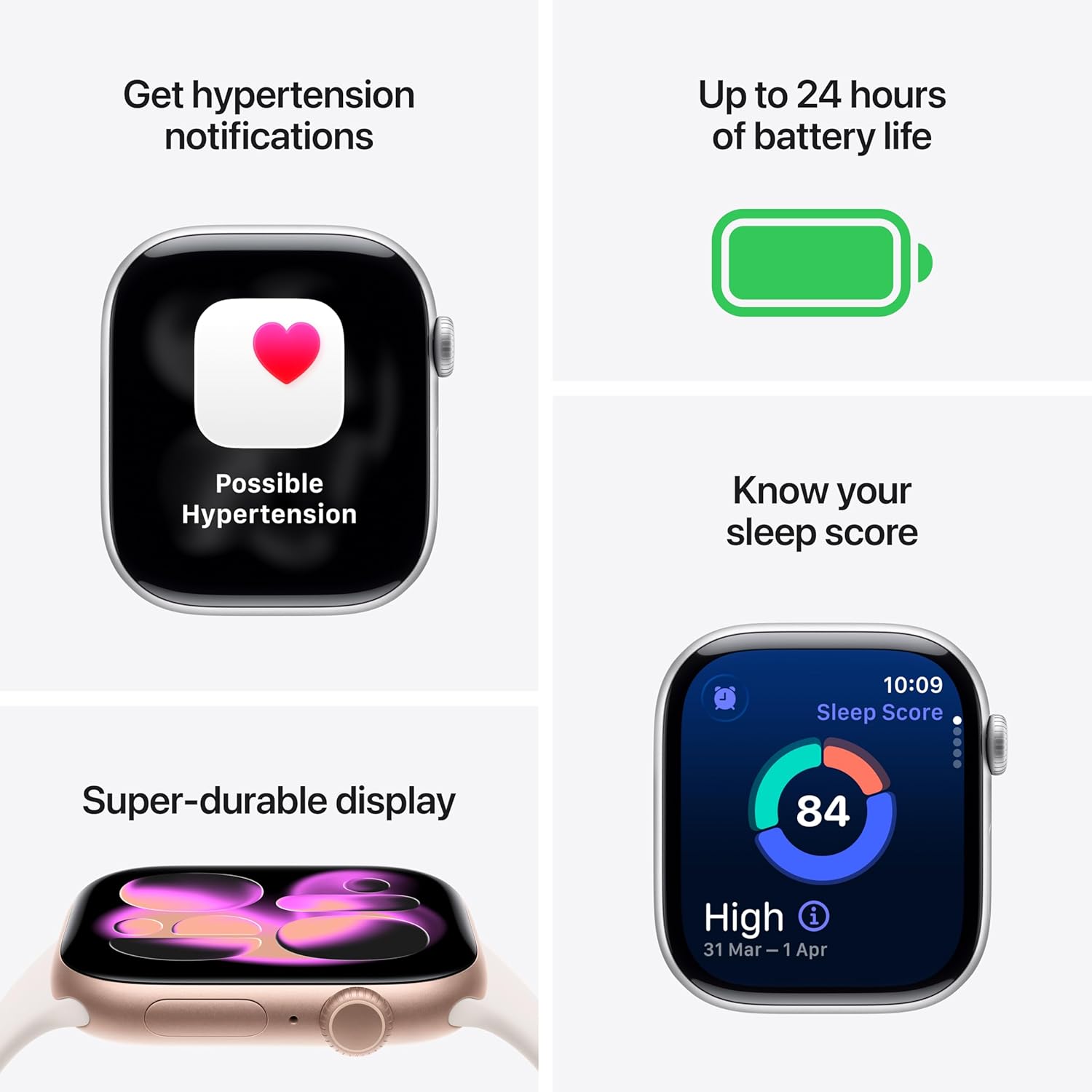
In real life, the watch sits in this middle ground: clearly more capable than a basic fitness band, but not overloaded like the top Apple models. You don’t get things like blood oxygen or the full ECG like on the Series 11, but you get enough health stuff for a regular user: heart rate alerts, sleep score, sleep apnoea notifications, temperature-based ovulation estimates for those who need that, and the new Vitals app insights. If you’re just trying to move more and keep an eye on your general health, it’s plenty. If you want medical-level data, that’s not what this is.
Pros
- Smooth performance and tight integration with iPhone, Apple Pay and notifications
- Comfortable and light 40mm design with a soft sport band suitable for all-day and night wear
- Decent fitness and health features plus safety tools like fall and crash detection at a lower price than flagship models
Cons
- Battery life is basically one day with normal use, needs frequent charging
- Lacks some advanced health features (like ECG and blood oxygen) found on higher-end Apple Watches
- 40mm size and thicker bezels may feel small or less premium for users used to larger, edge-to-edge displays
Conclusion
Editor's rating
The Apple Watch SE 3 GPS 40mm is a straightforward, no-nonsense smartwatch that focuses on the basics and does them well. It’s comfortable, light, and integrates cleanly with the iPhone. Notifications, Apple Pay, calls, and workout tracking work smoothly, and the always-on display plus good performance make it feel like a current product, not a cut-down relic. The safety features (fall detection, crash detection, alerts) are a nice safety net, especially if you’re buying this for a kid or an older family member.
On the downside, battery life is clearly one day for real use, and you need to accept charging it regularly. If you’re used to multi-day battery from other brands, this will feel a bit annoying. You also don’t get some of the flashier health metrics from Apple’s more expensive watches, and the 40mm size might be a bit small visually on larger wrists, even though it stays comfortable.
In short, it’s a good fit for iPhone users who want a simple, reliable Apple Watch for daily life, fitness, and payments without going all-in on the pricier models. If you’re a hardcore endurance athlete, someone who hates daily charging, or you’re not tied to the Apple ecosystem, there are better options for you. But if you just want a solid everyday smartwatch that gets the job done and plays nicely with your iPhone, the SE 3 is a sensible choice.