From beautiful chaos to invisible backbone: why protocols now define luxury smart homes
A luxury smart home used to be judged by the wall of touchscreens and the number of visible smart devices on the coffee table. Today, the real mark of sophistication is the invisible backbone that lets every home device, sensor, and interface work together with the effortlessness of a well rehearsed orchestra. When that backbone is built around a Thread Wi-Fi 7 luxury smart home network, the experience shifts from “sometimes impressive” to “always quietly perfect”.
Most affluent homes now run dozens of connected devices that share one congested Wi-Fi network and a few overworked hubs. Lighting scenes stutter, audio streaming drops when someone starts a video call, and even premium smart devices feel oddly dumb because the underlying standards were never designed for this density. Thread and Wi-Fi 7 change that dynamic by separating low power smart home traffic from high bandwidth audio and video streaming, while keeping everything under a single, coherent control layer using the Matter protocol.
Think of Thread as the dedicated lane for low power connected devices and sensors, and Wi-Fi 7 as the autobahn for multi gigabit streaming and gaming. Thread creates a self healing mesh network of smart devices that speak the same language smart enough to route around failures, while Wi-Fi 7 brings multi link operation and wider channels to your main home network. Together, they turn your smart home into a platform where devices connect instantly, scenes execute in under 50 milliseconds, and control through Apple HomeKit, Google Home, or Amazon Alexa feels as responsive as a hard wired lighting keypad.
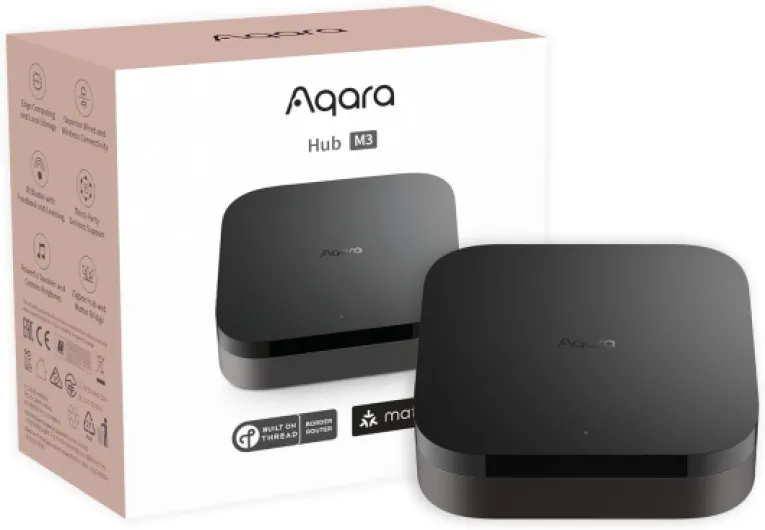
- + Supports multiple protocols: Zigbee, Bluetooth, Wi-Fi
- + Functions as a Matter Controller
- + Acts as a Thread Border Router
- + Integrates with Alexa, Apple HomeKit, SmartThings, Home Assistant, IFTTT
- + Supports Power over Ethernet (PoE)

Thread explained: the quiet mesh that makes Matter devices feel instant
Thread is a low power mesh networking protocol designed specifically for smart home devices, not laptops or televisions. Each Thread device can act as a router, so the more connected devices you add, the stronger the thread mesh becomes instead of weaker, which is the opposite of what happens on a traditional Wi-Fi network. In a large home, that means a smart lock at the far end of the garden can still respond instantly because nearby thread routers relay the signal back to a central border router.
In practice, a Thread border router is the small but critical box that bridges your Thread mesh network to your main IP network and the wider internet. Apple HomePod mini, Apple TV 4K, some Eero routers, and several new smart home hubs now ship with integrated border router capabilities, quietly upgrading your home automation backbone without changing the visible décor. When you pair Matter certified smart devices over Thread, they use the Matter protocol for interoperability but rely on Thread for low latency, low power communication that feels almost wired.
For a luxury installation, the ideal architecture is a multi hub layout where at least two Thread border routers sit on wired Ethernet backhaul, ensuring that even if one home device fails, the rest of the smart home continues to work seamlessly. A dedicated smart series hub such as the model reviewed in this Thread ready smart hub test can act as a discreet anchor for connected devices that need rock solid reliability. This is where the Thread Wi-Fi 7 luxury smart home network stops being a theoretical upgrade and becomes a tangible improvement in how quickly lights respond, blinds move, and sensors trigger scenes.
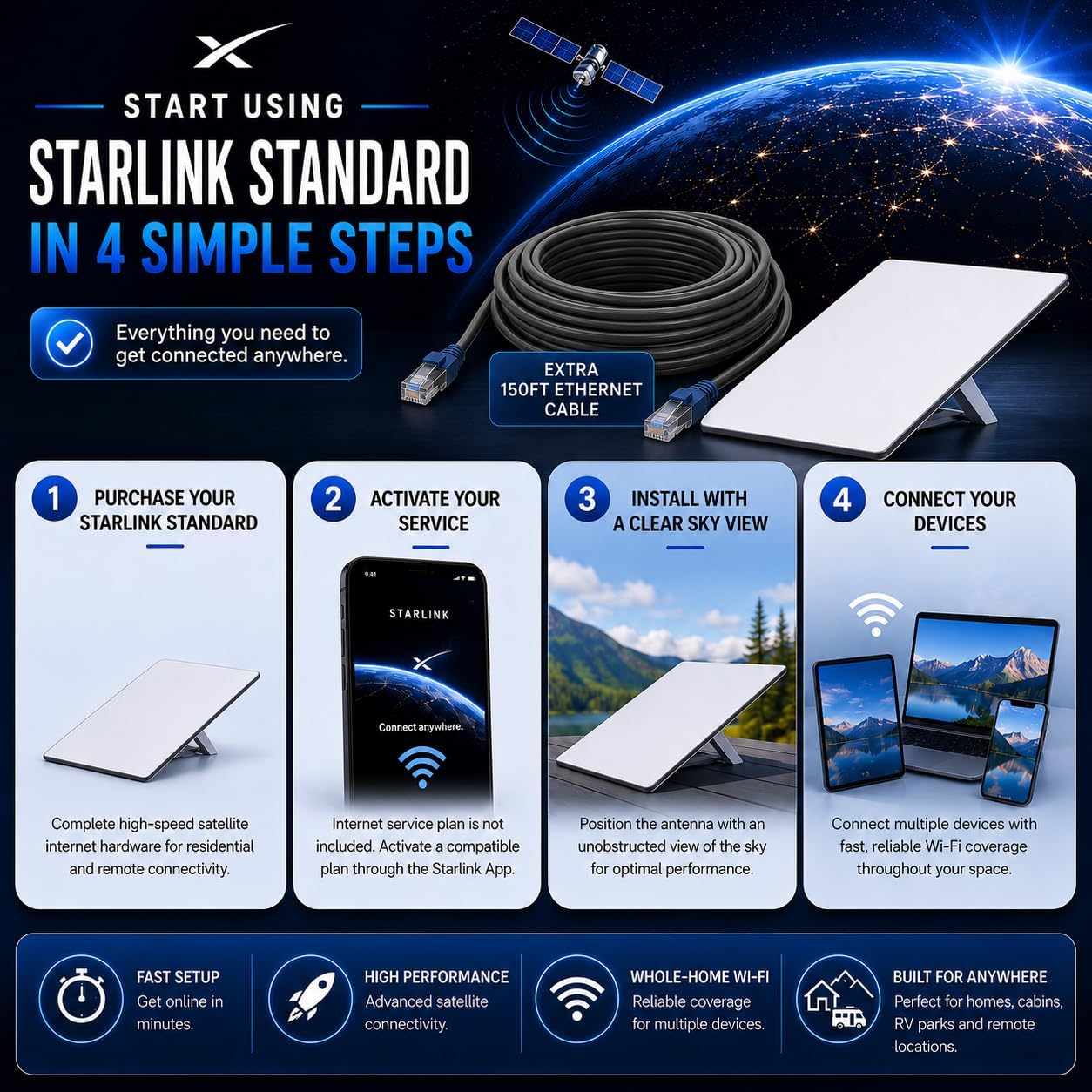
- + High-speed internet for areas without fiber
- + Low latency compared with traditional satellite services
- + Wi-Fi 6 router included for improved home network performance
- + 150FT cable allows flexible placement of equipment
- + Works in rural and remote locations where wired options are limited
Wi-Fi 7 as the performance spine: multi link power for dense luxury homes
While Thread quietly handles low power smart devices, Wi-Fi 7 becomes the performance spine for everything that needs serious bandwidth. The new standard, also known as 802.11be, brings wider 320 MHz channels, higher modulation, and multi link operation that lets a single device use several bands at once. In a luxury home with 50 to 100 connected devices, that extra headroom is not a luxury ; it is the difference between a flawless movie night and a buffering wheel.
Premium Wi-Fi 7 mesh network systems from Eero, TP-Link Deco, and Ubiquiti UniFi are already positioning themselves as the backbone for demanding homes. Eero focuses on effortless setup and deep integration with Amazon Alexa and other amazon services, while TP-Link often pushes raw specifications and aggressive pricing for multi node kits. Ubiquiti, by contrast, caters to design conscious owners and integrators who want ceiling mounted access points, wired backhaul, and granular control over every device and network segment.
For a Thread Wi-Fi 7 luxury smart home network, the right choice is usually a tri band or quad band Wi-Fi 7 mesh with Ethernet backhaul between nodes, leaving the wireless spectrum free for client devices. That architecture lets you reserve 6 GHz channels for high fidelity audio streaming, 5 GHz for general work and entertainment, and 2.4 GHz for legacy home devices that still need basic connectivity. When you pair this with dimmers and lighting controls such as the unit evaluated in this external dimmer performance review, you get a layered system where every device sits on the network it deserves, not the one it happens to find.
Apple, Google, Amazon, and the new Matter era of platform peace
The most meaningful shift for a luxury smart home is not a single gadget, but the détente between Apple, Google, and Amazon around the Matter protocol. Matter is an application layer standard that lets devices matter across ecosystems, so a single smart device can be controlled by Apple HomeKit, Google Home, or Amazon Alexa without vendor lock in. Thread is the preferred low power transport for Matter, which is why so many new smart devices now ship with both Thread and Wi-Fi radios.
In practice, this means you can buy a Matter certified thermostat or lighting panel once and expose it to multiple platforms, letting different members of the household use the interface they prefer. One person might rely on Siri through Apple HomeKit, another on Google Home voice commands, and a third on amazon alexa routines, yet the same connected devices respond because they share common standards. The old question of “Is this compatible with Apple or with Amazon ?” gives way to a more interesting one ; “Which platform offers the most elegant control for this room ?”.
For the Thread Wi-Fi 7 luxury smart home network, this platform peace has a practical upside ; you can mix and match best in class home devices without worrying about fragmentation. A sculptural Italian glass pendant can hide a Thread enabled smart module, while a discreet wall mounted tablet runs a language smart interface that unifies control scenes across brands. Even complex home automation logic, such as linking motion sensors, audio zones, and climate control, becomes easier when devices connect through shared Matter standards rather than proprietary bridges.
Designing the backbone: how to architect Thread, Wi-Fi 7, and local control
Building a truly resilient Thread Wi-Fi 7 luxury smart home network starts with a simple principle ; prioritize local control wherever possible. When your smart home logic runs locally on a hub or border router instead of a distant cloud, scenes execute faster and keep working even if your internet connection fails. That is why serious integrators still pull Ethernet to key locations, even in homes that appear entirely wireless.
A robust design usually combines three layers ; wired Ethernet for backhaul and fixed infrastructure, Wi-Fi 7 for high bandwidth client devices, and Thread mesh for low power smart devices and sensors. Place at least two Thread border routers on wired connections, ideally near areas with dense home devices such as kitchens, media rooms, and primary suites, so the thread mesh has multiple paths back to the main network. Then segment your Wi-Fi 7 network into logical SSIDs or VLANs, separating work devices, guest access, and critical smart home infrastructure to reduce interference and improve security.
Security itself is becoming more nuanced as connected devices proliferate in high value properties, and the same mindset that applies to elite AI security in industrial environments now belongs in residential design. For a deeper look at how advanced software reshapes critical infrastructure, the analysis in this elite AI security software feature offers a useful parallel for thinking about risk and redundancy. In a well designed smart home, devices connect through clearly defined paths, the network enforces least privilege access, and local processing ensures that even complex audio scenes or multi room streaming continue gracefully under load.
Real world upgrades: where Thread and Wi-Fi 7 change how the home feels
The easiest way to judge a Thread Wi-Fi 7 luxury smart home network is not by reading a spec sheet, but by walking through a lived in space. In a poorly designed system, you press a scene button and wait half a second for lights to fade, blinds to move, and audio to start, which subtly reminds you that the house is negotiating with distant servers. In a well tuned Thread and Wi-Fi 7 environment, that same scene feels instantaneous, as if the architecture itself anticipated your arrival.
Lighting is usually the first place owners notice the difference, because Thread enabled keypads and sensors trigger scenes with sub 50 millisecond latency. Motion sensors in corridors and dressing rooms no longer miss a step, and low power contact sensors on doors and windows report status changes without the random delays that plague older Zigbee or Wi-Fi only devices. Multi room audio also benefits when Wi-Fi 7 keeps high bitrate streaming isolated from the chatter of background smart devices, so a lossless playlist in the listening room is not interrupted when someone starts a 4K stream in the media room.
Even mundane tasks like adjusting climate control or checking home devices status from a phone become subtly more pleasant when the underlying network is tuned. The interface on your preferred platform, whether Apple HomeKit, Google Home, or Amazon Alexa, responds with the immediacy of a local light switch rather than a web page. That is the quiet luxury of a properly architected Thread Wi-Fi 7 luxury smart home network ; not the processor speed, but how the house itself feels under your fingertips.
Choosing your upgrade path: practical steps for affluent smart home owners
Upgrading to a Thread Wi-Fi 7 luxury smart home network does not require tearing out your existing installation, but it does benefit from a phased, intentional approach. Start by auditing your current smart devices and home devices, noting which already support Matter, Thread, or at least recent Wi-Fi standards. Then identify the rooms where latency and reliability matter most ; usually entryways, primary suites, kitchens, and media spaces.
The first hardware move is often to replace your existing router with a Wi-Fi 7 mesh network that supports Ethernet backhaul and, ideally, integrated Thread border router capabilities. From there, begin swapping critical smart devices for Matter certified models that can join a thread mesh, prioritizing lighting controls, sensors, and security related connected devices. Over time, as more devices connect through Thread and Matter, your reliance on proprietary bridges and cloud dependent platforms shrinks, leaving a cleaner, more future proof backbone.
Finally, work with an integrator or take the time yourself to rationalize your control surfaces across Apple, Google, and Amazon ecosystems. Decide where Apple HomeKit should dominate, where Google Home offers better shared access, and where amazon alexa voice control feels most natural, then align your scenes and automations accordingly. When every device, from low power sensors to high end audio components, sits on the right layer of the network and speaks the same standards, the entire smart home stops feeling like a collection of gadgets and starts behaving like a single, coherent device.
Key figures that highlight the value of a modern smart home backbone
- Wi-Fi 7 can deliver theoretical throughput up to 46 Gbit/s, which is several times higher than Wi-Fi 6, giving large homes enough headroom for simultaneous 4K and 8K streaming, cloud gaming, and dense smart device traffic (based on IEEE 802.11be specifications).
- Lighting scenes executed over Thread and Matter can reduce latency from around 200 milliseconds on older Wi-Fi 5 based systems to under 50 milliseconds, which is the threshold where most people perceive actions as effectively instantaneous (reported by multiple smart lighting vendors in their performance testing).
- Analysts estimate that premium homes can easily exceed 100 connected devices, including sensors, smart devices, and entertainment systems, making mesh network architectures and low power protocols like Thread essential for long term stability (based on market research from major networking manufacturers).
- Thread’s mesh topology allows each mains powered device to act as a router, which can increase effective range by tens of meters per hop, significantly reducing the need for dedicated repeaters in large properties (according to Thread Group technical documentation).
- Matter certified devices are projected to represent a majority share of new smart home products sold within a few product cycles, which means investing in Matter and Thread compatible infrastructure today reduces the risk of early obsolescence (based on forecasts from major smart home ecosystem providers).
FAQ: Thread, Wi-Fi 7, and luxury smart home networks
Do I really need both Thread and Wi-Fi 7 in a luxury home ?
Yes, because Thread and Wi-Fi 7 serve different classes of devices and complement each other. Thread is optimized for low power sensors and smart devices that benefit from a self healing mesh, while Wi-Fi 7 is designed for high bandwidth tasks like 4K streaming, gaming, and large file transfers. Using both lets you separate traffic intelligently and avoid congestion that would otherwise degrade the experience.
Will my existing smart devices work on a new Thread Wi-Fi 7 network ?
Most existing Wi-Fi based smart devices will continue to work on a Wi-Fi 7 router because the standard is backward compatible. Older devices that rely on proprietary hubs or non Matter protocols will still function, but they will not gain the latency and interoperability benefits of Thread and Matter. Over time, replacing key components with Matter certified, Thread capable models will unlock the full value of the upgrade.
How many Thread border routers should a large home have ?
A typical luxury property benefits from at least two Thread border routers on wired Ethernet, placed in different zones of the home. Very large or multi wing residences may require three or more, especially if there are outbuildings, guest houses, or extensive outdoor lighting. The goal is to ensure that every Thread device has multiple paths back to the main network for resilience.
Is wired Ethernet still necessary if I deploy Wi-Fi 7 mesh ?
Wired Ethernet remains highly recommended for backhaul between Wi-Fi 7 mesh nodes and for fixed infrastructure such as media cabinets and network closets. Using Ethernet for backhaul frees up wireless spectrum for client devices and reduces latency, which is especially valuable in dense smart homes. It also improves reliability during high load situations, such as large gatherings or simultaneous streaming sessions.
How should I choose between Apple HomeKit, Google Home, and Amazon Alexa ?
With Matter and Thread, you no longer need to choose a single platform for every room. Instead, you can select Apple HomeKit where deep integration with Apple devices matters, Google Home where shared household access and casting are priorities, and Amazon Alexa where voice control and skills are strongest. The key is to ensure your underlying devices support Matter so they can participate in whichever ecosystem you prefer in each space.